
Key Points
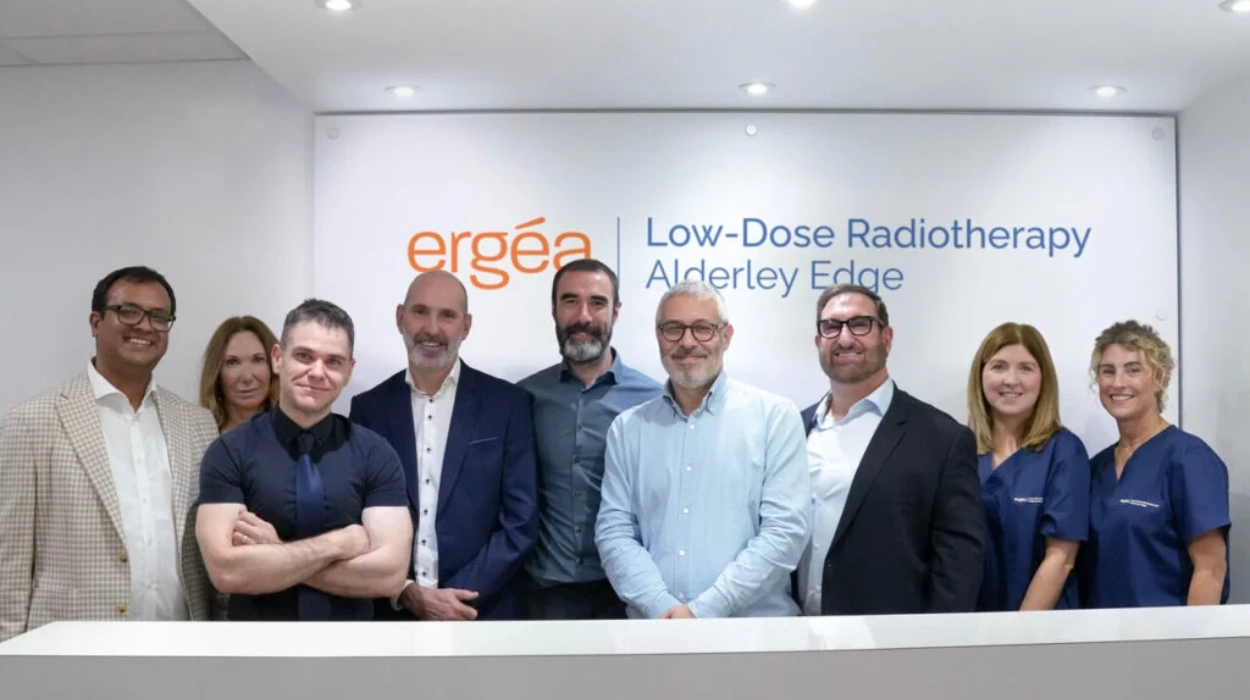
- Ergéa has opened its first dedicated UK low-dose radiotherapy (LDRT) clinic at Alderley Edge Medical Centre in Cheshire.
- The clinic provides consultant-led assessment and treatment for selected non-cancer conditions, including osteoarthritis, plantar fasciitis, tendonitis, bursitis, tennis elbow, Dupuytren’s disease, Ledderhose disease and keloid scarring.
- The opening represents a new direction for Ergéa UK, which has traditionally focused on providing managed medical equipment services to NHS and independent healthcare providers.
- LaingBuisson reported on 16 November 2026 that the company intends to draw on experience from its German radiotherapy network, where more than 20,000 patients receive low-dose radiotherapy each year.
- The clinic’s Chief Medical Officer, Dr Richard Shaffer, has treated more than 3,000 patients using low-dose radiotherapy and has co-authored Royal College of Radiologists guidance on the treatment.
- Chief Executive Officer Abe Elkinson said the clinic aims to help relieve pain and disability, with the potential to reduce the need for surgery or long-term medication in some patients.
- Individual clinical assessments will consider patients’ symptoms, previous treatments and whether low-dose radiotherapy is suitable.
- Patients can contact the clinic directly, while referrals are also accepted from GPs, consultants and other healthcare professionals.
- Ergéa UK is part of the pan-European Ergéa group, which operates in Germany, Italy, Luxembourg and the UK.
A dedicated low-dose radiotherapy clinic has opened at Alderley Edge Medical Centre in Cheshire, marking the first UK facility of its kind established by pan-European healthcare company Ergéa. The clinic will provide consultant-led assessment and treatment for selected benign conditions, including osteoarthritis, plantar fasciitis and tendon disorders. The development expands Ergéa UK’s activities beyond its established managed medical equipment services business and brings experience from the group’s radiotherapy operations in Germany into a dedicated UK clinical setting.
What does the opening of the Cheshire clinic mean for Ergéa’s UK operations?
The opening of the Ergéa Alderley Edge Low-Dose Radiotherapy Clinic represents an expansion of the company’s healthcare activities in the UK. Based at Alderley Edge Medical Centre, the facility is intended to provide specialist treatment for people experiencing selected musculoskeletal, inflammatory and other benign conditions.
In its report published on 16 November 2026, Maria Davies of LaingBuisson reported that pan-European healthcare company Ergéa had opened its first dedicated UK low-dose radiotherapy clinic in Alderley Edge, Cheshire. The report described the development as a new direction for Ergéa UK, whose established work has centred on Managed Equipment Services for NHS and private hospitals.
The move brings the group into a more direct patient-care role through a specialist clinic, while building on its wider experience in radiotherapy and medical technology.
According to the company information distributed through EIN Presswire by Pulse Digital Health on 16 November 2026, the clinic provides consultant-led assessments and treatment for a range of conditions. These include osteoarthritis, plantar fasciitis, Achilles and other tendinopathies, bursitis, tennis elbow, Dupuytren’s disease, Ledderhose disease and keloid scarring.
The opening also reflects the wider role of independent healthcare providers in developing specialist services outside conventional hospital settings. However, the establishment of a new clinic does not in itself demonstrate how many patients will use the service or how much it will affect access to treatment across the North West. Those outcomes will depend on clinical suitability, patient demand, affordability and the clinic’s ability to deliver the service over time.
What conditions will the low-dose radiotherapy clinic treat?
The Alderley Edge clinic is intended to assess and treat selected conditions that are not cancers. These include disorders affecting joints, tendons, connective tissue and skin.
The conditions identified in the clinic announcement include:
- Osteoarthritis: a condition affecting joints that can cause pain, stiffness and reduced mobility.
- Plantar fasciitis: a condition associated with pain around the heel and sole of the foot.
- Achilles and other tendinopathies: disorders involving tendons, which may cause persistent pain and restrict movement.
- Bursitis: inflammation affecting small fluid-filled sacs that help reduce friction around joints.
- Tennis elbow: a painful condition involving tendons around the elbow.
- Dupuytren’s disease: a condition affecting connective tissue in the hand and potentially causing fingers to bend towards the palm.
- Ledderhose disease: a condition involving thickened tissue in the sole of the foot.
- Keloid scarring: raised scar tissue that develops beyond the boundaries of an original wound.
The clinic’s service is focused on selected benign conditions rather than the high-dose radiotherapy commonly associated with cancer treatment. The treatment approach uses carefully targeted, lower doses of radiation, with the intended effect varying according to the condition being considered.
The company announcement states that low-dose radiotherapy may be used with the aim of reducing inflammation, improving mobility or slowing disease progression. These are treatment objectives rather than guaranteed outcomes, and the suitability of the approach will vary between patients.
The clinic’s website, Theralife Clinics, also describes its service as specialist treatment for benign conditions intended to address pain, stiffness and problems affecting joints, soft tissues and scars. It identifies osteoarthritis, plantar fasciitis, tendonitis, bursitis, Dupuytren’s disease and Ledderhose disease among the conditions it treats.
How does low-dose radiotherapy work?
Low-dose radiotherapy uses carefully controlled radiation at doses substantially lower than those generally used in cancer radiotherapy. It is being offered at Alderley Edge for selected non-cancer conditions, with the aim of influencing inflammatory processes and reducing symptoms.
The approach is not the same as simply applying a conventional cancer treatment to a different condition. Treatment protocols, radiation doses and clinical objectives differ, and decisions must be made according to the patient’s diagnosis and circumstances.
The announcement distributed by Pulse Digital Health explains that the clinic will assess each patient individually before treatment is considered. The assessment is intended to cover symptoms, previous treatments and whether low-dose radiotherapy is appropriate.
This is an important distinction because the opening of a specialist facility does not mean that every person with joint pain, tendon problems or a benign condition will be suitable for radiotherapy. A clinician must consider the potential benefits and risks in the context of the individual case.
The clinic’s own website states that low-dose radiotherapy uses much lower doses than cancer radiotherapy and aims to reduce pain and disability while balancing possible benefits against potential risks.
For patients, the central question is therefore not simply whether the treatment is available, but whether there is a sound clinical reason to consider it as part of an individual treatment plan.
Who is leading the clinic’s clinical service?
The clinic’s Chief Medical Officer is Dr Richard Shaffer, a consultant radiation oncologist with experience in low-dose radiotherapy.
According to the announcement published through EIN Presswire, Dr Shaffer has treated more than 3,000 patients using low-dose radiotherapy. It also states that he has co-authored Royal College of Radiologists guidelines on the treatment and trains and mentors other doctors working in the field.
His role is central to the clinic’s consultant-led model, under which patients are assessed before a decision is made about treatment.
In a statement carried in the Pulse Digital Health announcement, Dr Shaffer highlighted the effect that persistent pain can have on everyday life. He said:
“Persistent pain can affect a person’s ability to move, disrupt sleep, limit everyday activities and prevent people from doing the things they enjoy.”
He added that low-dose radiotherapy may help reduce pain for suitable patients with conditions such as osteoarthritis and plantar fasciitis when physiotherapy, pain medication and other treatments have not provided sufficient relief.
Dr Shaffer also said the Alderley Edge clinic would assess patients carefully, explain potential benefits and risks, and help them understand whether the treatment was appropriate.
His comments set out the clinic’s intended approach, but they should be understood as statements from its clinical leadership rather than evidence that the treatment will produce the same result for every patient.
What has Ergéa said about the clinic’s objectives?
The clinic is led by Chief Executive Officer Abe Elkinson, whom the company announcement describes as having more than 20 years of experience developing and delivering patient-centred healthcare services in partnership with the NHS and other healthcare organisations.
Elkinson said the organisation wanted to provide radiotherapy services that could improve patient well-being by helping to relieve pain and disability.
In the statement distributed through EIN Presswire, he said the service could potentially reduce the need for surgery and long-term medication for some patients. He also referred to the clinic’s clinical team, purpose-built radiotherapy technology and approach to personalised patient care.
The potential to reduce the need for other interventions is a stated ambition, not a confirmed outcome from the newly opened facility. Whether an individual patient can avoid surgery or reduce medication will depend on their condition and the advice of their treating clinicians.
Elkinson’s statement also emphasised the importance of supporting patients throughout their treatment journey. This includes providing professional and personalised care and ensuring that patients understand the process.
The clinic’s opening therefore combines a new treatment location with a service model built around specialist assessment and individual decisions about care.
How does the clinic draw on Ergéa’s European healthcare network?
The Cheshire opening is linked to the wider operations of Ergéa, a pan-European specialist healthcare company working through hospital partnerships and its own medical centres.
The announcement distributed by Pulse Digital Health states that Ergéa operates in Germany, Italy, Luxembourg and the UK. It also says the group’s radiotherapy centres in Germany treat more than 20,000 low-dose radiotherapy patients each year.
That experience provides the background for the company’s decision to establish a dedicated UK clinic. The group can draw on its existing European radiotherapy activities while developing a local service led by UK-based clinical professionals.
LaingBuisson’s report by Maria Davies also highlighted the importance of Ergéa’s German radiotherapy network to the UK expansion.
The scale of the German operation indicates that low-dose radiotherapy is an established part of the group’s healthcare activities. However, the number of patients treated across its German centres should not be interpreted as a measure of clinical outcomes or as a prediction of demand for the Alderley Edge clinic.
The UK service will operate within its own clinical and regulatory environment. Its development will depend on the needs of patients in the region, the availability of suitably trained professionals and the clinic’s ability to maintain appropriate standards of assessment and treatment.
What is Ergéa UK’s existing role in the healthcare sector?
Before the opening of the Alderley Edge clinic, Ergéa UK’s established business focused on Managed Equipment Services for NHS and independent healthcare providers.
According to the company information included in the Pulse Digital Health announcement, Ergéa UK works in long-term partnerships with healthcare organisations to help them plan, procure, manage and maintain essential medical equipment.
These services support the delivery of clinical care, including radiotherapy services in hospitals and other healthcare settings.
Managed Equipment Services can involve more than supplying individual machines. They may include equipment planning, procurement, maintenance and ongoing management over the course of a partnership. Such arrangements are intended to help healthcare providers maintain access to the technology needed for clinical services.
The Alderley Edge clinic adds a different element to this business. Rather than focusing solely on equipment and hospital partnerships, the group is also operating a specialist patient-facing service through a dedicated medical centre.
This development brings together two areas of healthcare provision: the management of medical technology and the delivery of specialist treatment.
For organisations working across Healthcare Management, the expansion illustrates how healthcare businesses can develop from equipment and service partnerships into more direct clinical operations. It also highlights the importance of coordinating clinical expertise, technology, patient pathways and operational management when establishing a specialist facility.
How can patients access the Alderley Edge clinic?
The clinic is located at Alderley Edge Medical Centre in Cheshire. The announcement states that patients can contact the service directly, while referrals are also accepted from general practitioners, consultants and other healthcare professionals.
This provides more than one route for people seeking an assessment. Patients do not necessarily have to rely on a referral from a single source, although they must still undergo an individual clinical assessment before treatment is considered.
The clinic’s website identifies its address as:
Second Floor, Alderley Edge Medical Centre, Talbot Road, Alderley Edge, Cheshire, SK9 7HR.
The website also states that the service operates on a self-pay basis and that patients do not need a GP referral or an insurance policy to arrange an appointment. It says that, following consultation, the clinician will confirm whether low-dose radiotherapy is suitable and provide a written quotation setting out the full cost of the proposed treatment.
These arrangements are relevant to patients considering private treatment, as the cost and suitability of care need to be understood before proceeding. The availability of direct contact does not remove the need for clinical evaluation or guarantee that treatment will be recommended.
What could the opening mean for specialist healthcare provision in the North West?
The opening adds a dedicated low-dose radiotherapy service to the range of specialist healthcare facilities available in Cheshire.
For people living with persistent musculoskeletal symptoms or selected benign conditions, access to a specialist assessment may provide another option to discuss with a qualified clinician. The clinic’s focus on conditions such as osteoarthritis, plantar fasciitis and tendon disorders also reflects demand for services addressing problems that can affect mobility and daily activities.
However, the wider significance of the opening will depend on how the service develops. Relevant measures will include the number of patients assessed, the proportion considered suitable for treatment, clinical outcomes, patient experience and the affordability of private care.
The facility also demonstrates how international healthcare groups can use experience gained in one market to establish services in another. Ergéa’s German network provides the operational background for its UK expansion, while the Alderley Edge clinic places the service within reach of patients in Cheshire and the wider North West.
The development may also have implications for the management of specialist healthcare facilities. Establishing a clinic requires coordination between clinical leadership, radiotherapy equipment, patient assessment, staffing, maintenance and service administration. These operational requirements are relevant to professionals working in Healthcare Management, particularly those responsible for planning and delivering specialist services.
What should patients understand before considering low-dose radiotherapy?
The availability of a new clinic does not mean that low-dose radiotherapy is suitable for every person with a painful or long-term condition.
Patients should receive an individual assessment and discuss the possible benefits, risks and alternatives with an appropriately qualified clinician. Previous treatment, diagnosis, symptoms and general circumstances may all influence whether the approach is appropriate.
Dr Shaffer’s statement specifically refers to patients for whom physiotherapy, pain medication and other treatments have not provided sufficient relief. Even in those circumstances, suitability must be established through clinical assessment.
Patients should also understand the difference between the clinic’s treatment objectives and guaranteed results. The stated aims include reducing inflammation, improving mobility and helping to slow disease progression in selected conditions. The actual response to treatment may vary.
The clinic’s stated approach is to explain potential benefits and risks before proceeding. This is particularly important for a treatment involving radiation, even at low doses, because patients need clear information to make informed decisions.
The opening of the Alderley Edge facility creates an additional point of access for people seeking specialist advice about benign conditions. Its longer-term contribution will be judged by the quality of clinical assessment, the appropriateness of treatment decisions and the outcomes experienced by patients.
For Ergéa, the clinic marks an expansion of its UK healthcare activities and a move into a more direct clinical service model. For Cheshire and the wider North West, it introduces a dedicated facility focused on low-dose radiotherapy for selected non-cancer conditions.