
Key Points
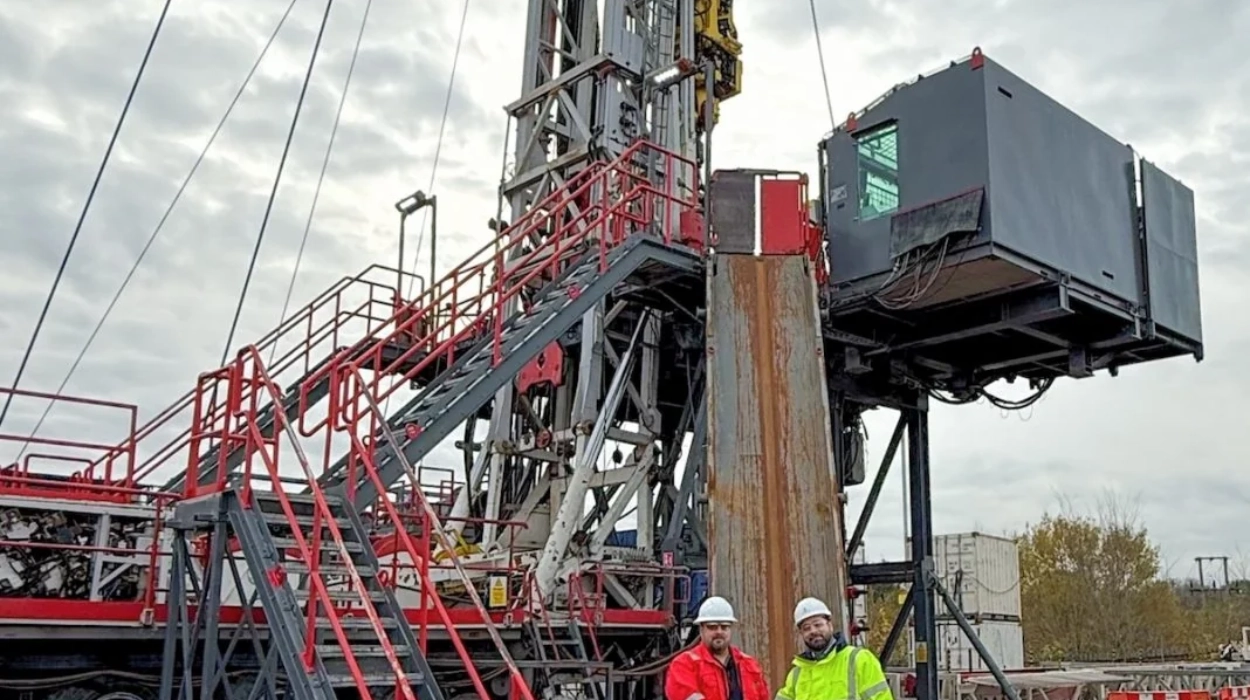
- Cornish Lithium has awarded a major drilling contract to Marriott Drilling Group for its Cross Lanes Geothermal Lithium Project near Truro, Cornwall.
- Marriott Drilling, headquartered in Chesterfield, Derbyshire, is described as the UK’s largest onshore deep drilling company.
- The contract covers a two-well geothermal drilling programme, with each well designed to reach approximately 2,000 metres underground.
- Drilling is expected to begin in December 2026 and continue for several months.
- The project aims to establish whether naturally occurring lithium-rich geothermal waters beneath Cornwall can support commercially viable lithium production.
- Marriott Drilling will provide the drilling rig, specialist equipment and experienced personnel required for the deep-well programme.
- The drilling work will operate alongside Halliburton’s previously awarded contract for subsurface modelling, well engineering and integrated well services.
- The Cross Lanes project forms part of a £14.5 million drilling and testing programme, supported by a £7.2 million grant from the UK Government’s DRIVE35 programme and matching funding from Cornish Lithium.
- The programme will include a demonstration-scale Direct Lithium Extraction (DLE) plant to assess the preferred lithium extraction technology.
- Results from the drilling and testing activities will help inform a final investment decision on the commercial development of the project.
- Cornish Lithium aims to establish a network of modular geothermal lithium production hubs across Cornwall.
- Combined with anticipated production from its Trelavour hard-rock lithium project, the company aims to produce 20,000 tonnes of lithium annually for UK industry.
- The development is intended to strengthen domestic lithium supplies for electric vehicle batteries, consumer electronics, renewable energy storage and advanced manufacturing.
Cornish Lithium has awarded a major drilling contract to Marriott Drilling Group, the UK’s largest onshore deep drilling company, to undertake a two-well programme at its Cross Lanes Geothermal Lithium Project near Truro, Cornwall. The contract will support the next stage of investigations into the commercial production of lithium from naturally occurring geothermal waters beneath the region. Each well is designed to reach approximately 2,000 metres, with drilling expected to begin in December 2026 and continue for several months. The work forms part of a £14.5 million drilling and testing programme supported by £7.2 million in UK Government funding through the DRIVE35 programme, matched by Cornish Lithium.
Why Has Cornish Lithium Awarded Marriott Drilling the Cross Lanes Contract?
Cornish Lithium has selected Marriott Drilling Group to undertake specialist deep geothermal drilling at its Cross Lanes project, marking another significant development in the company’s plans to establish a domestic lithium supply in the United Kingdom.
As reported by Tim McManan-Smith in The Energyst on 16 November 2026, the contract covers the drilling of two wells at the geothermal lithium development near Truro in Cornwall.
Marriott Drilling will provide the specialist drilling services required to construct both wells, each with a target depth of approximately 2,000 metres.
The project is designed to investigate the commercial potential of extracting lithium from naturally occurring geothermal waters, also known as brines, located deep beneath Cornwall.
The contract represents an important stage in moving the project beyond its initial exploration activities towards a more detailed assessment of production potential.
According to the report, Marriott Drilling will supply the drilling rig, specialist equipment and experienced personnel required to undertake the programme.
The company will work alongside Halliburton, which has already been appointed to provide subsurface modelling, well engineering and integrated well services.
The development also reflects Cornish Lithium’s approach to combining specialist contractors to deliver technically demanding activities within a larger domestic mineral development programme.
For professionals working in Project Management, Legal, Contracts and Procurement and Management, the contract provides an example of how major industrial projects depend on specialist suppliers, technical partnerships, procurement arrangements and coordinated project delivery.
Who Is Marriott Drilling and Why Was It Selected?
Marriott Drilling Group is a specialist drilling contractor headquartered in Chesterfield, Derbyshire.
The company is described by The Energyst as the UK’s largest onshore deep drilling company.
According to the publication’s report, Marriott operates a fleet of more than 25 drilling rigs and has offices in the UK, Central America, Africa and Indonesia.
Its operations support drilling projects across several geographical markets, with expertise in deep drilling and geothermal applications.
For the Cross Lanes development, this experience is particularly relevant because the programme requires the construction of two deep wells reaching approximately 2,000 metres.
Deep geothermal drilling requires specialist equipment, technical planning and personnel capable of working under demanding subsurface conditions.
Cornish Lithium’s decision to appoint a Derbyshire-based contractor reflects the specialist capabilities required for this phase of the project.
Martin Geissler, Vice President and General Manager for Lithium in Geothermal Waters at Cornish Lithium, explained the reasoning behind the appointment.
In comments published by Tim McManan-Smith in The Energyst, Geissler described Marriott as a trusted delivery partner whose experience would help the company gather the information required to determine the next stage of the project.
He also highlighted the importance of using local contractors and suppliers wherever possible to support employment and economic development in Cornwall.
However, Geissler explained that highly specialised activities, including deep-well construction, require expertise that is not currently available locally.
He noted that Marriott’s Derbyshire base and technical capabilities would allow the contract to contribute to the wider UK economy while providing the specialist services needed by Cornish Lithium.
The appointment therefore demonstrates how regional industrial projects can involve suppliers from different parts of the country while maintaining a focus on domestic economic development.
How Deep Will the Cross Lanes Geothermal Lithium Wells Be?
The drilling programme will involve two wells, each designed to reach approximately 2,000 metres below the surface.
These wells will investigate lithium-rich geothermal waters circulating through underground geological formations in Cornwall.
The objective is to establish whether the resource can support commercial lithium production.
The Cross Lanes site has already undergone exploration drilling.
According to The Energyst, an exploration borehole drilled in 2023 successfully confirmed the presence of naturally occurring lithium-rich geothermal waters beneath the site.
This earlier work provided the foundation for the next stage of development.
The new drilling programme will provide further information about the resource and its potential for commercial exploitation.
The two wells are intended to support the assessment of geothermal water production and the testing of lithium extraction processes.
The project is not limited to identifying the presence of lithium underground. It must also establish whether the resource can be accessed, processed and developed at a commercially viable scale.
Information gathered during drilling and subsequent testing will therefore be important in determining the technical and economic feasibility of the proposed development.
Cornish Lithium’s official Cross Lanes project information also identifies the two 2,000-metre wells as a central component of its first development phase.
When Will Drilling Begin at the Cross Lanes Project?
Drilling at Cross Lanes is expected to begin in December 2026 and continue for several months.
The programme will involve specialist drilling equipment, technical personnel and supporting services supplied by Marriott Drilling.
The timing represents the transition from earlier exploration work towards a more advanced appraisal and testing phase.
The drilling programme will operate alongside Halliburton’s technical involvement.
According to The Energyst, Halliburton was previously awarded a separate major contract covering subsurface modelling, well engineering and support services.
The two companies will therefore undertake different but complementary responsibilities.
Marriott Drilling will be responsible for drilling the two appraisal wells, while Halliburton will provide the specialist engineering and integrated well services required to support the programme.
This division of responsibilities is intended to bring together the technical capabilities needed for the development.
The arrangement also highlights the importance of contractor coordination in complex energy and mineral projects.
Managing drilling schedules, specialist equipment, engineering requirements and operational safety will be important throughout the programme.
How Much Funding Has the UK Government Provided for the Project?
The Cross Lanes Geothermal Lithium Project forms part of a £14.5 million drilling and testing programme.
The project has received £7.2 million in grant funding through the UK Government’s DRIVE35 programme, with Cornish Lithium providing matching funding.
The funding arrangement was also reported by Business Cornwall in August 2026.
In its report, Business Cornwall explained that the grant would support drilling and testing at Cross Lanes, as well as appraisal work at the adjacent Baldhu site.
The funding will help finance the two production-scale wells at Cross Lanes and the operation of a demonstration-scale Direct Lithium Extraction plant.
The wider programme also includes an appraisal well at Baldhu to investigate the potential presence of additional lithium resources.
The DRIVE35 programme is delivered by the Department for Business, Innovation, Science and Trade in partnership with the Advanced Propulsion Centre UK and Innovate UK.
The funding is intended to support industrial development and technologies relevant to the UK’s future manufacturing and transport requirements.
Lithium is particularly important to these sectors because it is a key component in lithium-ion batteries used in electric vehicles, consumer electronics and large-scale energy storage systems.
The investment in Cross Lanes therefore forms part of a wider effort to investigate domestic sources of critical minerals.
The Government’s financial support does not, however, establish that the project is already commercially viable. That determination will depend on the technical and economic results of the drilling and testing programme.
What Is Direct Lithium Extraction and How Will It Be Tested?
A central component of the Cross Lanes development is the planned demonstration-scale Direct Lithium Extraction (DLE) plant.
Direct Lithium Extraction refers to a group of technologies designed to separate lithium from lithium-containing liquids, including geothermal brines.
Rather than relying on conventional hard-rock mining alone, the technology aims to recover lithium from naturally occurring underground waters.
At Cross Lanes, the demonstration plant will allow Cornish Lithium to evaluate its preferred extraction technology using geothermal waters obtained through the drilling programme.
The purpose is to establish how effectively lithium can be recovered from the brines and whether the process can support a future commercial operation.
Testing will also provide information about the relationship between geothermal water production and lithium extraction.
This is important because the presence of lithium in underground water does not automatically establish that it can be extracted economically.
The company must assess the resource, the performance of the extraction technology and the wider operational requirements before committing to full commercial development.
ThinkGeoEnergy reported on 12 August 2026 that the £7.2 million DRIVE35 grant would support the drilling and demonstration activities at Cross Lanes.
Its report also identified the earlier exploration results, which indicated geothermal water temperatures of approximately 70°C and lithium concentrations of around 100 parts per million.
These figures relate to the previously investigated resource and should not be interpreted as guaranteed production specifications for the proposed commercial facility.
The upcoming drilling and testing programme is intended to provide more information about the resource and its suitability for development.
How Will the Project Support the UK’s Domestic Lithium Supply?
Cornish Lithium is developing Cross Lanes as part of its wider strategy to establish a domestic source of lithium for British industry.
Lithium is an important raw material for several industrial sectors, particularly electric vehicle manufacturing and battery production.
It is also used in consumer electronics and renewable energy storage systems.
The UK’s transition towards electric mobility and the development of battery manufacturing capabilities have increased the importance of reliable access to critical minerals.
Developing domestic lithium resources could provide another source of supply for manufacturers and reduce dependence on imported materials.
The Cross Lanes project is intended to contribute to this objective through geothermal lithium extraction.
According to The Energyst, Cornish Lithium aims to establish a network of modular geothermal lithium production hubs across Cornwall.
The Cross Lanes development represents the first stage of this wider ambition.
The company is also progressing its Trelavour Lithium Project, which is designed to extract lithium from hard-rock deposits.
Combining anticipated output from Cross Lanes and Trelavour, Cornish Lithium aims to produce 20,000 tonnes of lithium annually for UK industry.
This figure represents the company’s longer-term production ambition rather than current output.
The achievement of that target will depend on the successful development of the individual projects, technical performance, investment decisions and commercial conditions.
What Is the Role of Halliburton in the Cross Lanes Development?
Marriott Drilling is not the only specialist contractor involved in the Cross Lanes project.
Cornish Lithium has also appointed Halliburton to provide integrated well services.
The appointment was reported by Tim McManan-Smith in The Energyst on 25 August 2026.
Halliburton’s contract covers subsurface modelling, well engineering and the technical services required for drilling and testing the two appraisal wells.
Its involvement will support the technical planning and execution of the programme.
The company is an international provider of energy industry services, bringing specialist expertise to the development.
The arrangement between Marriott Drilling and Halliburton reflects the different technical requirements involved in geothermal well construction.
While Marriott will undertake the physical drilling work, Halliburton will contribute engineering and subsurface expertise.
Both contractors will work with Cornish Lithium to deliver the programme.
The collaboration is particularly important because the information generated through drilling and testing will help determine whether the geothermal resource can support future commercial development.
What Is the Expected Economic Impact on Cornwall and the UK?
The Cross Lanes project forms part of Cornish Lithium’s broader ambition to develop a domestic critical minerals industry in Cornwall.
The company has highlighted the potential economic contribution of its projects through employment, supplier contracts and investment in local industrial activities.
In its August 2026 report, Business Cornwall quoted Cornish Lithium chief executive Jamie Airnes discussing the significance of the Government’s grant funding.
Airnes said the company’s projects had the potential to meet nearly 40% of the Government’s domestic lithium production target.
He also estimated that the projects could contribute £3.8 billion to the Cornish economy over 25 years and create more than 700 long-term jobs.
These figures are company projections and should be understood as potential economic outcomes rather than confirmed results.
The report also included comments from Jayne Kirkham, MP for Truro and Falmouth.
Kirkham described critical minerals as important to the UK’s economy, national security and clean energy transition.
She also highlighted the potential for the development to support employment, local communities and economic activity in Cornwall.
The Marriott Drilling contract adds another dimension to the economic impact because it involves a specialist contractor based in Derbyshire.
Martin Geissler’s comments in The Energyst emphasised the importance of using local suppliers wherever possible while recognising that some specialised services must be sourced from elsewhere in the UK.
This approach could support a broader domestic supply chain involving engineering companies, drilling contractors, equipment suppliers and specialist technical service providers.
For professionals involved in Legal, Contracts and Procurement, Logistics and Supply Chain, Construction and Civil Engineering and Project Management, the project illustrates the role of procurement strategy and contractor coordination in major industrial developments.
What Planning Approvals Have Been Granted for Cross Lanes?
The Cross Lanes project has progressed through several planning stages with Cornwall Council.
According to Cornish Lithium’s official project information, temporary planning permission for earlier exploration activities was granted under reference PA22/00830.
Full planning permission for the pre-commercial development was subsequently approved in February 2025 under reference PA24/06661.
A further non-material amendment was approved in September 2025 under reference PA25/05631.
This amendment allowed both wells to be drilled from a single drill pad rather than requiring separate drilling locations.
The revised arrangement is intended to accommodate the two-well programme within the approved site layout.
Cornish Lithium’s project information also identifies the relevant planning documents and updates through Cornwall Council’s planning register.
The company has established a Cross Lanes Community Liaison Group, which meets regularly to provide project updates and respond to questions from the local community.
Community engagement is an important part of the development because geothermal drilling and mineral extraction projects can involve operational, environmental and local infrastructure considerations.
The planning approvals provide the regulatory framework for the first development phase, while the ongoing drilling and testing work will establish the project’s technical potential.
What Happens After the Two Wells Have Been Drilled?
The drilling programme will generate technical information required to evaluate the Cross Lanes geothermal resource.
Once the wells have been constructed, testing and demonstration activities will help Cornish Lithium assess the resource’s suitability for commercial production.
The demonstration-scale DLE plant will provide an opportunity to evaluate the company’s preferred extraction technology.
The results will be used alongside information from the drilling programme to inform a final investment decision.
A final investment decision is a significant stage in industrial project development because it determines whether a company proceeds with the proposed commercial investment.
For Cross Lanes, this decision will depend on the technical performance of the wells, the lithium extraction process and the wider commercial considerations.
If the results support further development, the project could become the first stage of Cornish Lithium’s proposed network of modular geothermal lithium production facilities across Cornwall.
The company’s wider strategy also includes the Trelavour hard-rock project, which is intended to complement geothermal lithium production.
Together, these developments form the basis of Cornish Lithium’s ambition to establish a scalable domestic lithium supply for British industry.
The drilling contract awarded to Marriott Drilling is therefore an important operational step, although the commercial outcome remains dependent on the results of the forthcoming programme.
Why Is the Cross Lanes Project Relevant to the UK’s Energy and Industrial Strategy?
The development of Cross Lanes reflects the growing importance of critical minerals to the UK’s manufacturing and energy industries.
As demand for electric vehicles and energy storage systems develops, access to materials used in battery production remains an important consideration for manufacturers.
Lithium is among the materials required for many lithium-ion battery technologies.
Developing domestic resources could provide additional supply options for the UK industrial sector and support the development of related supply chains.
The Cross Lanes project also demonstrates how geothermal resources may offer opportunities beyond conventional energy generation.
By investigating lithium-rich geothermal waters, Cornish Lithium is exploring a potential route to combine underground resource development with mineral extraction.
However, the project’s commercial viability has yet to be established.
The forthcoming drilling programme, demonstration-scale extraction activities and subsequent investment assessment will be important in determining whether the proposed development can progress towards commercial production.
The appointment of Marriott Drilling, together with Halliburton’s engineering involvement, brings specialist UK and international capabilities into the project.
For those working in Environmental and Agriculture, Oil and Gas, Power Systems and Maintenance and Management, the development provides a relevant example of how technical expertise, environmental considerations, industrial investment and project governance intersect in emerging resource industries.
With drilling expected to begin in December 2026, the next phase of Cross Lanes will provide further information about the potential for geothermal lithium production in Cornwall and its contribution to the UK’s longer-term domestic critical minerals ambitions.