
Choose CQM‑C if you need to meet contract requirements on USACE or NAVFAC projects; choose ASQ’s CCQM if you want a formal, construction‑specific quality manager qualification. Short CPD modules and employer upskilling suit day‑to‑day QC staff who need practical skills rather than a standalone credential.
TL;DR:
- Contractor course sessions usually last two days and teach preparatory, initial, and follow up controls; certificates commonly last five years, subject to contract deadlines.
- CCQM spans planning through closeout, covering statistical tools, leadership, and risk; candidates can prepare with ASQ’s handbook, practice questions, and instructor led reviews.
- Self paced study fits unpredictable site schedules but requires discipline, while live virtual sessions preserve instructor access; blended courses mix live teaching with independent work.
- Before paying, request a module map tied to staff tasks, then confirm the syllabus, assessment, certificate validity, facilitator experience, and hands on project planning exercises.
Table of Contents
- Popular construction quality management certifications explained
- What the CQM‑C course covers and how it works
- ASQ CCQM and other construction‑specific routes
- Course formats, duration and what drives the cost
- How to choose the right training or certification
- Career outcomes and professional benefits of certification
- Why we focus on practical, customisable quality training
- How we can support your team’s quality management training
- FAQ
- Sources
Popular construction quality management certifications explained
Construction quality management training splits broadly into contract‑driven courses and career‑building certifications, and knowing which one your role needs saves time and money. The Construction Quality Management for Contractors course, known as CQM‑C, grew out of a partnership between USACE and NAVFAC, and many government construction contracts name it as a condition of the contractor’s quality control representative. It carries contractual weight rather than broad career recognition on its own.
ASQ’s Certified Construction Quality Manager credential takes a different approach. Launched by ASQ as a construction‑specific certification, CCQM tests managerial and technical competence against a dedicated Body of Knowledge, aimed at professionals who want a formal qualification rather than a contract checkbox.
Beyond these two, several credential types fill supporting roles:
- Quality management certifications such as CMQ/OE, aimed at broader organisational quality leadership rather than construction specifically.
- CPD modules covering inspection, documentation or specific trades, useful for targeted skill gaps.
- ISO‑aligned training that teaches how to build and apply project quality plans within a wider management system.
What the CQM‑C course covers and how it works
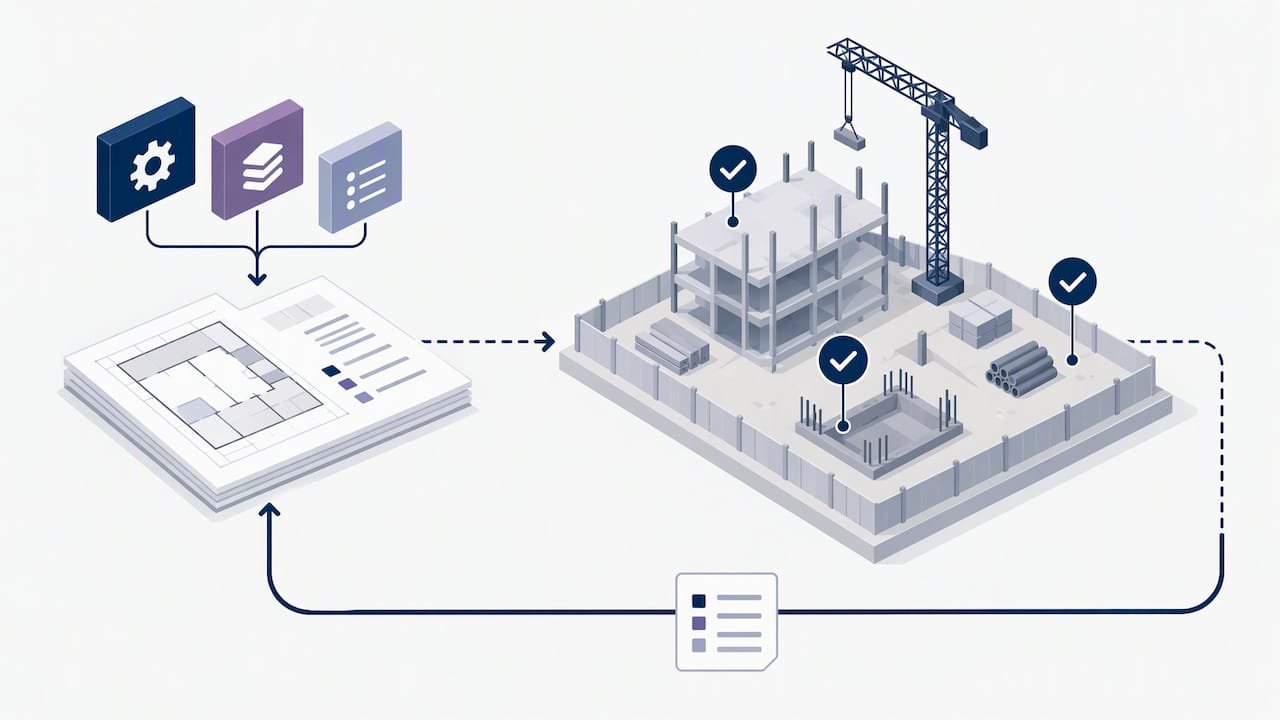
CQM‑C training centres on the three‑phase control system that structures quality oversight through a project’s life: preparatory, initial and follow‑up phases. The course also draws a clear line between contractor quality control (CQC) and government quality assurance (QA), reflecting how USACE frames the course as a partnership rather than an adversarial process.
Course delivery and practical content typically follow this pattern:
- Classroom sessions usually run two days, with condensed webinar versions available for distributed teams.
- Student manuals and exercises walk through Definable Features of Work (DFOW), three‑phase checklists and documentation tools such as RMS and eCMS, as set out in official CQM study guide materials.
- Certificates are commonly valid for a multi-year period, and many contracts require the QC representative to complete the course within a set period after contract award.
Study guide revisions reference ER1180‑1‑6 and relevant UFGS clauses, so candidates arrive familiar with the contractual language they will meet on site.
ASQ CCQM and other construction‑specific routes
CCQM’s Body of Knowledge covers the project lifecycle from planning through closeout, including statistical quality tools, team leadership and risk management, which puts it closer to a management qualification than a site compliance course.
- The exam format tests both technical knowledge and managerial judgement across the BoK domains.
- Recommended preparation includes the official handbook and a CCQM practice question bank, often paired with instructor‑led review sessions.
- Professionals aiming at a quality manager or quality director role benefit most from CCQM, while site‑based QC staff may get more immediate value from shorter CPD‑style courses tied to daily inspection tasks.
Treat CQM‑C as a contract compliance tool rather than a standalone career credential, and pair it with CCQM or organisation‑level quality planning knowledge for broader professional standing, a distinction USACE’s own Baltimore District guidance reinforces by framing CQM as a partnership between contractor QC and government QA.
Course formats, duration and what drives the cost
Delivery mode matters as much as content when you are balancing site duties against study time.
- Classroom training suits teams who learn better face to face and need hands‑on exercises with inspection documents.
- Live virtual sessions work well for distributed crews who still want real‑time instructor access.
- Self‑paced e‑learning fits site staff with unpredictable schedules, though it demands more self‑discipline to finish.
- Blended formats combine short live sessions with independent study, often the best fit for busy project teams.
Duration ranges from single‑day CPD units to the standard one to two day CQM‑C course, up to multi‑session CCQM preparation spread over several weeks. Cost is driven mainly by facilitator expertise, cohort size and whether materials and formal assessment are included in the fee.
How to choose the right training or certification
Start with what your contract or role actually demands, then work through a short checklist before committing to a provider:
- Does the course satisfy a named contractual requirement, such as CQM‑C on a USACE or NAVFAC project?
- Does the syllabus match a recognised Body of Knowledge rather than a generic quality overview?
- Is the certificate issued by an established body with clear accreditation, and how long does it remain valid?
- Does the course include hands‑on exercises, such as building a project quality plan under ISO 10005 guidance?
- How is competence assessed, and is the resulting certificate recognised by employers and contracting officers?
Before enrolling, ask the provider about class size, facilitator background, exactly what the delivery format involves day to day, and whether any post‑course support is available. Managing the resulting certificates across a team is its own task, something covered well in this certification tracking guide for field operations.
Pro Tip: Ask any provider for a module map showing exactly which course modules correspond to the project tasks your staff will perform, so you can judge relevance before you pay.
Career outcomes and professional benefits of certification
Quality management training typically leads toward roles such as quality control officer, CQC systems manager, project manager or design quality manager, each drawing on a different slice of the training content. Employers gain from certified staff through fewer defects, stronger bid credentials on contracts that name CQM‑C or similar requirements, and better long‑term maintenance outcomes on completed work.
Short courses deliver the fastest return when paired with on‑the‑job application: a quality plan built in training, for instance, becomes genuinely useful once it is tested against a live project, an approach also reflected in practical exercises on reducing RFIs through document control.
Why we focus on practical, customisable quality training
We built our construction and quality management courses around real project tasks rather than generic theory, because a certificate only earns its keep once staff can apply it on site. Our trainers bring practical delivery experience, and we design exercises that mirror the documentation and inspection work our learners actually face day to day.
— Sam
How we can support your team’s quality management training
We deliver quality and project management training across various delivery formats, so teams can fit learning around active projects rather than around a fixed classroom schedule. Our project management courses cover the planning and quality disciplines construction teams rely on, and every programme can be adapted to match a specific contract’s requirements rather than a generic syllabus.
If you are weighing up bespoke training for a team, get in touch with the number of delegates, your preferred delivery mode and the outcomes you want staff to reach, and we will shape a programme around those details. Visit our course catalogue to see current formats and start the conversation about accredited, customisable training for your organisation.
FAQ
What is the difference between CQM‑C and ASQ CCQM?
CQM‑C is a contract‑focused course developed through a USACE and NAVFAC partnership, often required on government contracts and valid for around five years. ASQ’s CCQM is a broader managerial certification tested against a dedicated Body of Knowledge, better suited to professionals seeking formal career recognition.
Who should take the CQM‑C course?
Contractors and quality control representatives working on USACE or NAVFAC projects typically need CQM‑C because many contracts name it as a requirement for the QC role. The course is also useful for government personnel who oversee contractor quality processes.
How long does a CQM‑C certificate stay valid?
A CQM‑C certificate is commonly valid for five years, after which holders typically need to retake the course to maintain their qualification. Contracts often specify that the course must be completed within a set period after contract award.
Is a quality management certification worth it for a project manager?
A construction‑specific certification such as CCQM can strengthen a project manager’s credentials, particularly where quality planning and risk management form a large part of the role. For site‑based QC tasks rather than management, a shorter CPD course tied to daily inspection work may deliver faster practical value.
What should I look for when choosing a training provider?
Check that the syllabus matches a recognised Body of Knowledge, that the certificate is issued by an established body, and that the course includes hands‑on exercises such as drafting a project quality plan under ISO 10005. It also helps to ask about class size, facilitator background and any support offered after the course ends.
Sources
Download official study guides from USACE, review ASQ’s CCQM Body of Knowledge, and check ISO 10006 for project‑level quality management guidance before choosing a course.