
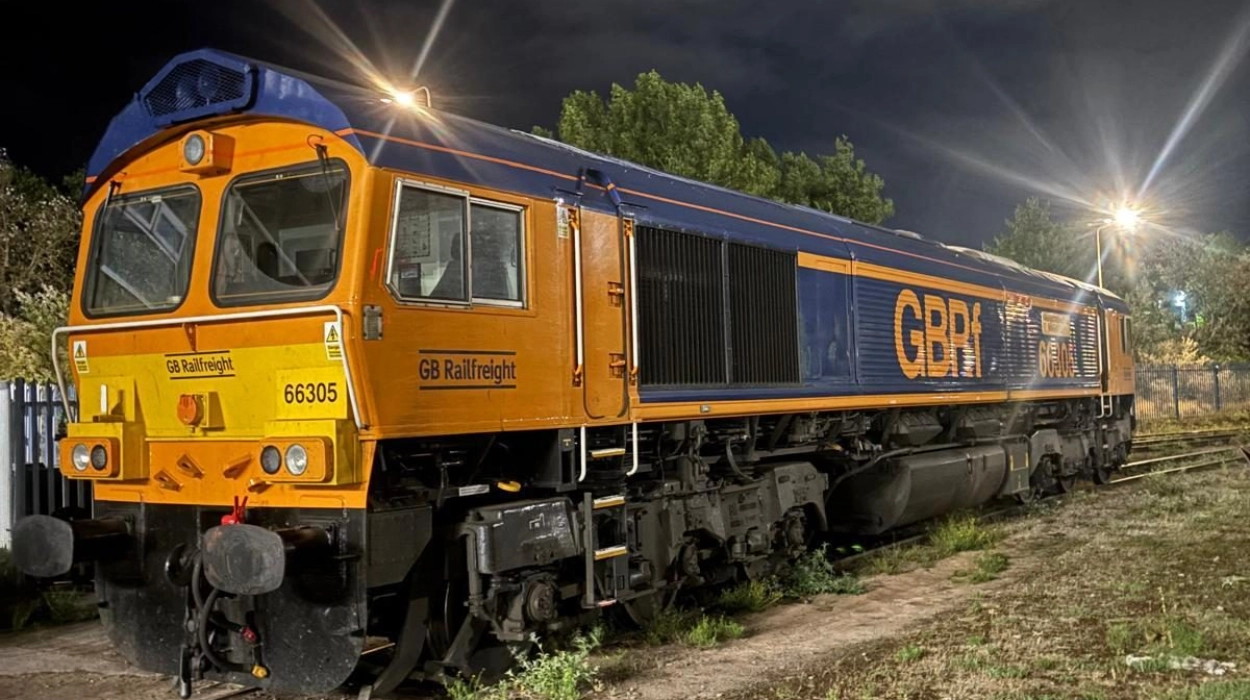
Key Points
- GB Railfreight (GBRf) has signed a long-term agreement with 7 Steel UK to transport steel products to and from the manufacturer’s Cardiff operations for at least 11 years.
- The agreement covers the movement of scrap steel into the Cardiff facility and the delivery of finished steel products to customers across the UK.
- The contract expands GBRf’s existing on-site shunting activities, combining rail haulage and site operations within an integrated logistics arrangement.
- Services are scheduled to begin in October 2026.
- GBRf plans to introduce two new sets of purpose-built scrap wagons during 2027, alongside specially modified wagons for transporting reinforcing bar (rebar) and coiled steel.
- The companies have worked together for more than 15 years, and the new agreement extends their existing relationship.
- Alex Kirk, Commercial Director at GB Railfreight, said the contract would support the movement of raw materials and the distribution of finished products.
- Vorn O’Hennessy, Head of Supply Chain Management at 7 Steel UK, said the agreement would strengthen the company’s supply chain and support its long-term commitment to steelmaking in Cardiff.
- The companies expect the expanded use of rail freight to support more efficient logistics, reduce road congestion and lower transport-related carbon emissions.
What Has GB Railfreight Agreed with 7 Steel UK?
GB Railfreight has signed an agreement with 7 Steel UK to manage the transportation of scrap steel and finished steel products for at least 11 years, expanding its role in the manufacturer’s Cardiff supply chain. The agreement combines rail freight services with on-site shunting operations and is scheduled to commence in October 2026.
According to GB Railfreight’s corporate announcement, published on 5 October 2026 and written by Sam Batey, the arrangement will cover the inbound movement of scrap steel to 7 Steel UK’s Cardiff facilities and the outbound distribution of finished products to customers throughout the UK. The announcement identifies the agreement as an expansion of an established commercial relationship between the two companies.
Rail Business UK subsequently reported the contract award on 13 October 2026 under the headline GB Railfreight awarded long-term steel transport contract. The central development is the extension of GBRf’s responsibilities beyond transporting materials by rail to include a wider range of logistics activities at the steelmaking site.
The agreement gives both businesses a long-term framework for coordinating the movement of raw materials and finished steel products. For 7 Steel UK, this means working with an established rail freight operator across more stages of its supply chain. For GBRf, it expands its involvement in the UK steel sector and provides a basis for delivering transport and site services over an extended period.
The contract also includes investment in specialised rail wagons, with two new sets of purpose-built scrap wagons planned for introduction in 2027. Additional specially modified wagons will support the movement of finished rebar and coiled steel.
The financial value of the agreement has not been disclosed in the available company announcement.
How Will the Steel Transport Contract Work?
The agreement covers the movement of materials in both directions through 7 Steel UK’s Cardiff operations. Scrap steel will be transported into the facility, while finished steel products will be carried to customers across the UK.
The arrangement brings together two connected elements of the logistics process: rail haulage between locations and shunting activities within the steelmaking site. Shunting involves moving rail wagons between sidings, loading areas and other designated parts of a railway facility.
By extending its existing site operations alongside the rail transport contract, GBRf will provide a more integrated service for the steelmaker. This structure is intended to coordinate the movement of incoming materials with the dispatch of finished products.
The company announcement states that the services will combine rail haulage and site operations to support the transportation of raw materials and finished goods. It does not specify individual customer destinations, shipment volumes, train frequencies or the total annual tonnage covered by the agreement.
The precise operational timetable and detailed service arrangements have not been published in the available announcement. However, the stated commencement date of October 2026 places the agreement within the current operating year, with the planned wagon introductions following in 2027.
The contract’s long duration also provides a framework for both companies to plan their logistics requirements beyond the immediate start-up period.
Why Is the Agreement Significant for 7 Steel UK’s Cardiff Operations?
The agreement strengthens the logistics arrangements supporting 7 Steel UK’s Cardiff steelmaking activities. Reliable access to incoming scrap steel and the ability to distribute finished products are important elements of a manufacturing supply chain.
Under the new arrangement, the company will have a single rail freight partner responsible for both the inbound movement of scrap steel and the outbound transportation of finished products, alongside the expanded on-site shunting activities.
Vorn O’Hennessy, Head of Supply Chain Management at 7 Steel UK, said in the company’s announcement: “This agreement strengthens our supply chain, supports more sustainable logistics and reflects our long-term commitment to steelmaking in Cardiff.”
O’Hennessy added that the company looked forward to continuing its partnership with GB Railfreight to deliver reliable and efficient service for customers across the UK.
His comments identify three priorities behind the agreement: supply chain strength, sustainability and the continued operation of steelmaking activities in Cardiff. The statement does not, however, provide a quantified forecast of production growth, new employment or changes in manufacturing capacity.
The contract should therefore be understood primarily as a long-term logistics agreement rather than an announcement of a new steelworks, a new production line or a specified expansion in output.
For 7 Steel UK, the ability to coordinate raw material deliveries and finished product distribution through an established transport partner may help support operational planning. The actual benefits will depend on implementation, service reliability and the transport requirements of its customers.
How Will GB Railfreight Expand Its Rail Wagon Fleet?
A central part of the agreement is the planned introduction of additional rolling stock for the Cardiff operation.
GB Railfreight has confirmed that it intends to introduce two new sets of purpose-built scrap wagons during 2027. These wagons are intended to support the movement of scrap steel into the site, while also helping modernise the fleet used for the contract.
The agreement also provides for an additional set of specially modified wagons designed to carry 7 Steel UK’s outbound finished products, including reinforcing bar and coiled steel.
Rebar is steel reinforcement used in concrete construction. Coiled steel is supplied in coil form for handling, processing or use in manufacturing and other industrial applications. These products have different handling and transport requirements, making suitable wagon configurations important to their movement by rail.
The use of purpose-built and modified wagons allows the transport arrangements to reflect the characteristics of the materials being carried. The company has linked the planned investment to operational efficiency and fleet modernisation.
The announcement does not disclose the precise cost of the wagons, their carrying capacity, their manufacturer or the number of individual wagons in each set. It also does not provide a quantified estimate of the additional freight capacity expected from the investment.
The planned 2027 introductions nevertheless demonstrate that the contract involves more than a continuation of existing services. The expanded arrangement includes dedicated equipment intended to support the longer-term movement of scrap and finished steel.
What Did GB Railfreight Say About the Long-Term Contract?
Alex Kirk, Commercial Director at GB Railfreight, described the agreement as an important development in the company’s relationship with 7 Steel UK.
In the statement published by GBRf on 5 October 2026, Kirk said: “This agreement is a significant milestone for GB Railfreight and we’re proud to be expanding our relationship with 7 Steel UK and supporting both the inbound movement of raw materials and the distribution of finished products across the country.”
Kirk also said that the contract provides “a strong foundation for future growth” and demonstrates the role rail freight continues to play in supporting UK industry.
He added that GBRf looked forward to working with 7 Steel UK over the coming years and delivering the safe, reliable and efficient service expected by its customer.
The commercial director’s comments reflect the operator’s intention to deepen its involvement in the steel sector. The agreement gives GBRf responsibility for a broader combination of transport and site activities while extending a relationship that has already lasted more than 15 years.
However, the announcement does not identify additional steel customers secured as a direct result of the deal, nor does it specify revenue targets or projected financial returns. The stated opportunity for future growth is therefore a company objective rather than a quantified financial forecast.
For freight operators, long-term industrial contracts can provide greater visibility over future operating requirements and help inform decisions about specialised equipment. In this case, the planned wagon investment is directly connected to the expanded service for 7 Steel UK’s Cardiff operations.
How Long Have the Two Companies Worked Together?
GB Railfreight and 7 Steel UK have worked together for more than 15 years through an existing contract. The new agreement builds on that relationship and expands its scope.
The length of the partnership is relevant because the latest contract is not an entirely new commercial relationship. Instead, it extends an established arrangement into a broader logistics service covering both inbound scrap steel and outbound finished products.
The expanded contract also incorporates on-site shunting activities, giving GBRf a more extensive operational role at the Cardiff facility.
Long-term agreements can help businesses coordinate equipment requirements, operating procedures and transport schedules. For an industrial customer, consistency across the logistics process can be important when materials must arrive at production facilities and finished goods must reach customers.
Nevertheless, neither company has published detailed performance figures for the previous contract in the announcement. There is no disclosed comparison of historic transport volumes, service costs or delivery performance against the new arrangement.
The available information establishes the duration of the relationship and the wider responsibilities included in the latest agreement, but it does not quantify the contract’s financial or operational improvement against previous arrangements.
Could the Contract Support More Sustainable Steel Logistics?
The companies have presented the agreement as supporting the continued movement of freight by rail, with potential benefits for road safety, congestion and carbon emissions.
Rail freight can move substantial quantities of goods in fewer individual vehicle journeys than road transport, depending on the cargo, route, train capacity and operational arrangements. For steel products and scrap materials, rail can provide an alternative to moving the same goods entirely by lorry.
GB Railfreight’s announcement states that the expanded service is intended to help improve safety, reduce congestion on UK roads and lower carbon emissions.
O’Hennessy’s comments also connect the agreement with 7 Steel UK’s commitment to more sustainable logistics. These statements indicate the companies’ intended benefits, rather than a published measurement of the contract’s environmental performance.
No specific emissions-saving figure has been provided for the Cardiff operation. The announcement also does not state how many road journeys will be avoided annually or give a comparison of emissions between the new service and the previous transport arrangement.
The environmental outcome will depend on factors including the distance travelled by rail, the share of freight transferred from road, train utilisation and the arrangements for moving goods to and from rail facilities.
The contract therefore supports a rail-based logistics model, but its precise contribution to emissions reduction cannot be calculated from the information disclosed.
What Does the Agreement Mean for UK Rail Freight and Industrial Supply Chains?
The contract illustrates how rail freight operators can support manufacturing businesses through services that extend beyond the movement of goods between railway terminals.
By combining mainline transport with on-site shunting, GBRf will cover a larger part of the logistics process associated with 7 Steel UK’s Cardiff operations. The addition of specialised wagons also links the agreement to equipment planning over the coming years.
For industrial supply chains, the arrangement brings together the inbound delivery of raw materials and the outbound distribution of finished products. Coordinating these activities can help businesses plan transport around production and customer requirements, although the agreement alone does not establish a quantified improvement in efficiency.
The deal also provides a practical example of the relationship between Logistics and Supply Chain planning and the movement of industrial materials. Companies managing manufacturing and distribution networks must consider transport capacity, suitable equipment, site operations, delivery reliability and the coordination of different stages of a supply chain.
These considerations are relevant to businesses across manufacturing, construction materials and other sectors that depend on the movement of heavy or bulky goods. The operational details of the GBRf agreement show why logistics planning can involve both transport services and the activities required to move materials within industrial facilities.
For professionals responsible for freight operations, procurement and industrial logistics, understanding these interconnected requirements is an important part of managing complex supply chains. Oxford Training Centre’s Logistics and Supply Chain programmes are relevant to the wider professional field, particularly the planning and coordination of transport, materials movement and distribution operations.
The contract does not, however, announce a new industry-wide rail freight policy or establish a change in national freight volumes. Its confirmed scope is the long-term agreement between GB Railfreight and 7 Steel UK.
What Happens Next Under the 11-Year Agreement?
The immediate next step is the commencement of services, scheduled for October 2026. GBRf will begin providing the agreed combination of rail haulage and site operations for 7 Steel UK’s Cardiff facilities.
The subsequent equipment milestone is planned for 2027, when two new sets of purpose-built scrap wagons are due to be introduced. The agreement also includes specially modified wagons for transporting outbound rebar and coiled steel.
Over the contract period, the two businesses will continue their partnership under an arrangement expected to last at least 11 years. The long-term structure provides a basis for maintaining the expanded logistics service, although the announcement does not set out detailed annual performance targets or future review dates.
The key operational measures to watch will include the implementation of the service, the introduction of the planned wagons, the reliability of material movements and the effectiveness of the arrangements for distributing finished steel products.
Further details about financial value, annual volumes, wagon capacity and measurable environmental savings would be needed to assess the contract’s full commercial and operational impact.
For now, the confirmed development is a long-term expansion of an established partnership: GB Railfreight will support the movement of scrap steel into 7 Steel UK’s Cardiff facilities and finished steel products to customers across the UK, while extending its existing on-site role and investing in equipment for the service.