
Key Points
- Barhale has been appointed by Anglian Water to construct a £14.6 million twin pumped rising main at Alconbury Weald in Cambridgeshire.
- The new pipeline will extend for 7,460 metres and provide additional wastewater network capacity for the growing development.
- The project will be delivered through Anglian Water’s @one Alliance, with Barhale acting as prime contractor.
- The scheme will include 10 horizontal directional drilling (HDD) locations, including crossings beneath the East Coast Main Line and the River Great Ouse.
- Barhale will install twin 355-metre-long 630mm sleeves beneath the East Coast Main Line to accommodate the 400mm pipeline.
- At the River Great Ouse, twin 292-metre-long 400mm sleeves will accommodate the 250mm pipeline.
- The pipeline will mainly be constructed using open-cut techniques around the eastern side of Huntingdon, with 1.5km running through the Alconbury Weald development site.
- The new infrastructure is being designed for a projected wastewater load of 3,840m³ per day, with a flow rate of 144 litres per second.
- Urban&Civic will build a new terminal pumping station because the existing Alconbury Weald pumping station does not have sufficient capacity.
- Barhale will use track mats and Bailey bridges at the River Great Ouse crossing to manage drainage dykes and avoid an archaeologically sensitive ridge-and-furrow feature.
- Barhale is also trialling a Wacker Neuson off-road dumper with a skip-change system to improve materials management and safety across the nearly 7.5km site.
- Ashley Jordan, Construction Manager at Barhale, said housing and commercial growth, climate change and urban creep mean the existing sewer network will no longer meet demand by 2027.
- The project is scheduled for handover to the developer in November 2027.
Barhale has been appointed by Anglian Water to deliver a £14.6 million wastewater infrastructure project at Alconbury Weald in Cambridgeshire, involving a 7,460-metre twin pumped rising main and technically demanding HDD crossings beneath the East Coast Main Line and River Great Ouse. The project is intended to increase wastewater capacity in line with the planned expansion of the development, with completion and handover scheduled for November 2027.
What is Barhale building at Alconbury Weald?
According to the report published by Construction UK Magazine, Barhale, a civil engineering, infrastructure and tunnelling specialist, has been appointed by Anglian Water to construct a £14.6 million twin pumped rising main at Alconbury Weald.
The development is centred on the former RAF Alconbury base in Cambridgeshire. The new pipeline is planned to provide additional wastewater network capacity as the area continues to develop.
The Construction UK Magazine report, published on 1 October 2026, states that the pipeline will measure 7,460 metres and will incorporate complex horizontal directional drilling crossings beneath two significant pieces of infrastructure: the East Coast Main Line and the River Great Ouse.
The same project was reported earlier by Grant Prior of Construction Enquirer, who described Barhale’s appointment as a £14.6 million deal to build a twin pumped rising main to support future development at Alconbury Weald. Grant Prior reported that the project would provide wastewater network capacity for the former RAF Alconbury site, which has planning permission for approximately 6,200 homes.
New Civil Engineer, in a report by Lee Kenny dated 24 September 2026, also reported that Barhale had been appointed by Anglian Water to construct the £14.6 million twin pumped rising main. Lee Kenny identified the project as infrastructure intended to provide wastewater network capacity for future development at Alconbury Weald.
Why is the Alconbury Weald pipeline being built?
The principal purpose of the scheme is to provide wastewater capacity for future development.
According to Construction UK Magazine, Alconbury Weald is a fast-growing new town centred on the former RAF Alconbury base. The development has planning permission for up to 190,000 square metres of employment floorspace and approximately 6,200 homes, alongside supporting infrastructure and facilities.
Water Briefing also reported that the new 7,460-metre pipeline is intended to provide wastewater network capacity for the future development at Alconbury Weald. The publication reported that the scheme would be delivered through Anglian Water’s @one Alliance, with Barhale serving as prime contractor.
The capacity requirement is substantial. The new network infrastructure is expected to accommodate a projected volumetric wastewater load of 3,840m³ per day at a flow rate of 144 litres per second.
The project therefore links the expansion of a major development site with the need for supporting wastewater infrastructure. Rather than serving as an isolated pipeline replacement, the scheme is being delivered to increase network capacity in anticipation of further development at Alconbury Weald.
How will the pipeline route around Huntingdon?
The twin pipeline will have three different pipe diameters — 400mm, 315mm and 250mm — and will predominantly be installed using open-cut construction.
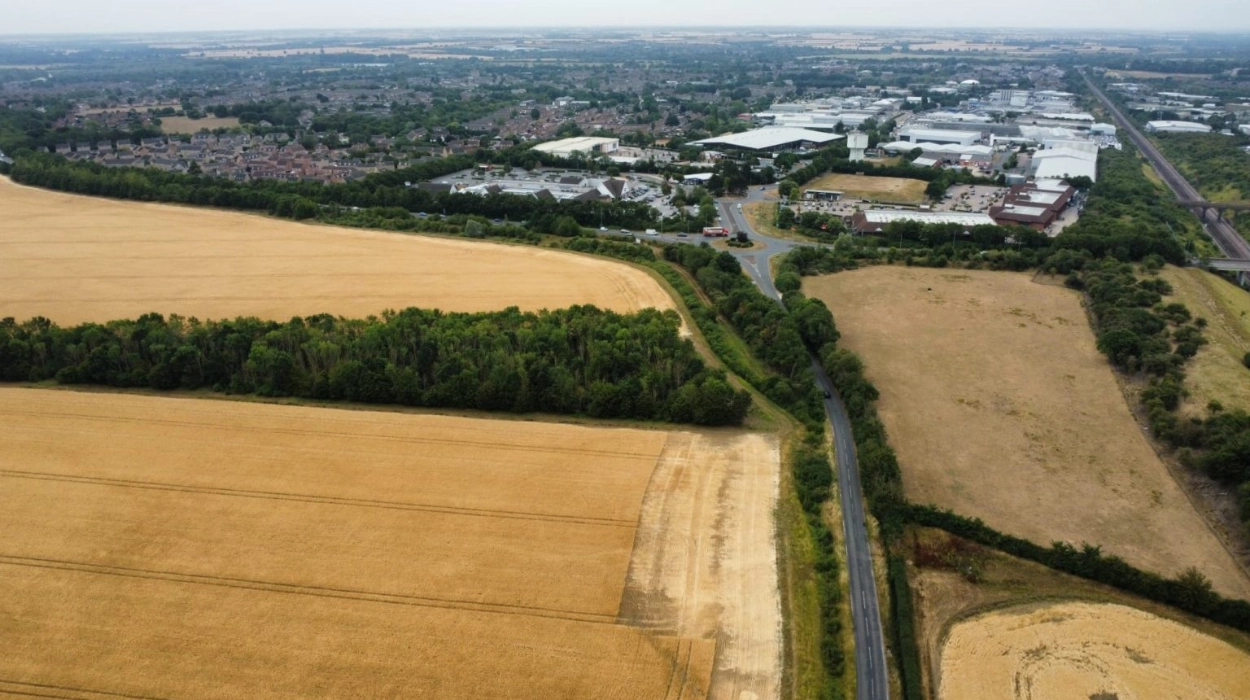
The route will run around the eastern side of Huntingdon. Construction UK Magazine reported that approximately 1.5km of the pipeline will pass through the Alconbury Weald development site, while most of the remaining route will cross agricultural land.
The selected route also has a practical construction consideration. According to the project details reported by Construction UK Magazine and Water Briefing, the alignment avoids the greater disruption that could have resulted from taking a more direct route through Huntingdon town centre.
Once completed, the pipeline will discharge directly into the inlet works at Huntingdon Water Recycling Centre.
The combination of open-cut installation and trenchless construction is therefore intended to allow Barhale to deliver the pipeline across a varied route while managing crossings where conventional excavation would create additional constraints.
Where will horizontal directional drilling be used?
One of the most technically significant elements of the project is the use of horizontal directional drilling (HDD).
According to Construction UK Magazine, HDD will be used at 10 locations along the route. The two most substantial crossings will take the pipeline beneath the East Coast Main Line and the River Great Ouse.
At the East Coast Main Line, Barhale plans to install two 355-metre-long, 630mm sleeves. These sleeves will be used to slipline the 400mm pipeline.
The River Great Ouse crossing will involve another set of twin sleeves. Barhale will install two 292-metre-long, 400mm sleeves, which will accommodate the 250mm pipeline.
Grant Prior of Construction Enquirer also highlighted the HDD crossings in his report, noting that the project includes crossings beneath both the East Coast Main Line and River Great Ouse.
For a project stretching almost 7.5km, these crossings represent particular engineering considerations because the pipeline must pass beneath existing transport and water infrastructure without using a conventional open trench at those locations.
What challenges will Barhale face during construction?
Ashley Jordan, Construction Manager at Barhale, addressed the project’s construction challenges in comments carried by Construction UK Magazine, Construction Enquirer and Water Briefing.
Jordan said that housing and commercial growth, alongside climate change and urban creep, meant the existing sewer network would no longer meet demand by 2027. He said the project would provide the additional capacity required.
Jordan also distinguished between the conventional and trenchless parts of the scheme. He said most of the pipeline would be installed using conventional open-cut methods, while the HDD installations beneath the East Coast Main Line and River Great Ouse would present particular challenges, especially because of relatively wet ground conditions.
At the River Great Ouse crossing, Barhale plans to use track mats and Bailey bridges to cross drainage dykes. The measures will also help the contractor avoid an archaeologically sensitive ridge-and-furrow feature identified along the route.
These details mean the project involves not only the installation of wastewater infrastructure but also management of existing transport infrastructure, waterways, agricultural land, drainage features and archaeological considerations.
What pumping infrastructure will Urban&Civic provide?
The new pipeline is being developed alongside additional pumping infrastructure.
According to Construction UK Magazine, the existing pumping station at Alconbury Weald does not have sufficient capacity to support the projected requirements. As a result, developer Urban&Civic will build a new terminal pumping station.
The terminal pumping station will form part of the wider infrastructure arrangement required to move wastewater through the new rising main and towards Huntingdon Water Recycling Centre.
Water Briefing also confirmed Urban&Civic’s role in constructing the new terminal pumping station as part of the wider project arrangements.
How will Barhale manage materials and site safety?
Barhale is also introducing a piece of equipment as part of its approach to materials management on the project.
According to Construction UK Magazine, the contractor will trial a Wacker Neuson off-road dumper with a skip-change system along the nearly 7.5km-long site.
The machine can operate as a conventional dumper but can also be fitted with a flatbed. In that configuration, it can provide greater carrying capacity than a standard pickup while retaining off-road capability.
The equipment trial is intended to improve materials management and safety across the project site, particularly given the length and varied nature of the construction route.
The combination of open agricultural areas, the development site, drainage crossings and technically demanding HDD locations means the movement of materials and equipment will form an important part of project delivery.
What has Ashley Jordan said about the project?
Ashley Jordan, Construction Manager at Barhale, said the project was being delivered in response to anticipated pressure on the existing sewer network.
As reported by Grant Prior of Construction Enquirer, Jordan said the combination of housing and commercial growth, climate change and urban creep meant the existing sewer network would no longer meet demand by 2027. Jordan said the project would provide the necessary additional capacity.
Jordan also said that while most of the pipeline would use conventional open-cut construction, the HDD work beneath the East Coast Main Line and River Great Ouse would be challenging because of the relatively wet ground conditions.
He further said Barhale looked forward to working with Anglian Water and its @one Alliance partners to deliver infrastructure intended to support the continued growth of Alconbury Weald.
The comments were reported consistently across the Construction UK Magazine, Construction Enquirer and Water Briefing coverage of the project.
How will the project be delivered?
The project will be delivered through Anglian Water’s @one Alliance, which serves as the strategic delivery vehicle for Anglian Water’s Integrated Main Works programme.
Barhale will act as the prime contractor, bringing its civil engineering, infrastructure and MEICA expertise to the scheme.
The arrangement places the £14.6 million project within a wider delivery framework rather than treating it as a standalone contractor-led development.
The scope includes conventional pipeline installation, HDD construction, crossings of major infrastructure and waterways, pumping infrastructure coordination, site logistics and environmental and archaeological considerations.
For organisations working across Constructions and Civil Engineering, the project illustrates how large utility schemes can combine conventional excavation, trenchless technology, infrastructure interfaces and site-management requirements within a single delivery programme.
When will the Alconbury Weald pipeline project be completed?
The project is scheduled for handover to the developer in November 2027.
Construction UK Magazine, Construction Enquirer and Water Briefing all report November 2027 as the planned handover date.
By that stage, the planned 7,460-metre twin rising main is expected to provide the additional wastewater capacity required to support development at Alconbury Weald.
The project will connect the new infrastructure with Huntingdon Water Recycling Centre while incorporating the new terminal pumping station being delivered by Urban&Civic.
Ashley Jordan said Barhale intended to work with Anglian Water and its @one Alliance partners to deliver an asset that would support the continued growth of Alconbury Weald.
The £14.6 million contract therefore represents a significant civil engineering and wastewater infrastructure project linked directly to the expansion of a major Cambridgeshire development. Its delivery will require conventional pipeline construction alongside HDD crossings, specialist site logistics and coordination with existing rail, river, drainage, agricultural and archaeological features.
For professionals involved in Project Management, Construction and Civil Engineering, and Legal, Contracts and Procurement, the scheme also provides a practical example of how a major infrastructure contract brings together client requirements, contractor delivery, specialist construction methods, environmental constraints, land interfaces and long-term network capacity planning.