
Key Points
- Cyprus Deputy Minister of Shipping Marina Hadjimanolis used a two-day working visit to London to strengthen maritime cooperation between Cyprus and the United Kingdom.
- Hadjimanolis met UK Maritime Minister Keir Mather on 15 September 2026, with discussions focused on implementing the bilateral maritime cooperation agreement and addressing challenges facing global shipping.
- The Cyprus-UK Memorandum of Understanding (MoU), signed in February 2023, covers maritime safety and security, decarbonisation, pollution, seafarers’ welfare, education and training, research, innovation, digitalisation and cyber security.
- The agreement also provides for cooperation on piracy, fraudulent ship registrations, shipping-related sanctions and work through international organisations including the International Maritime Organisation (IMO).
- The two countries have identified seafarers’ welfare and safety and the green transition as priorities for implementing the agreement.
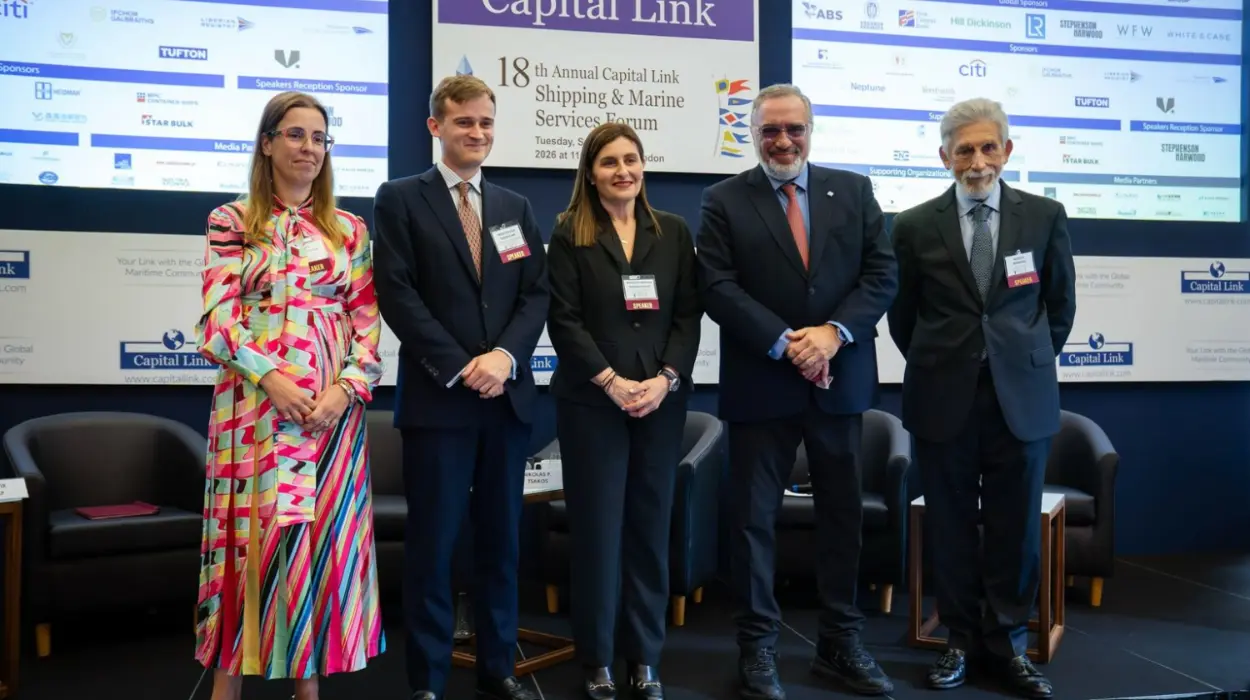
- Hadjimanolis and Mather participated alongside Dr Nikolas Tsakos, founder and chief executive of Tsakos Energy Navigation, in the 18th Annual Capital Link Shipping & Marine Services Forum in London.
- The forum examined trade, regulation, maritime competitiveness, tariffs, sanctions, supply-chain resilience and the role of regulators.
- Hadjimanolis also met Ravi K. Mehrotra, founder and executive chairman of Foresight Group, to discuss maritime and shipping cooperation.
- The London programme included meetings with senior shipping executives to promote the Cyprus ship registry and Cyprus as an international shipping centre.
- The visit formed part of Cyprus’ wider efforts to strengthen its maritime relationships and position within the international shipping sector.
The visit by Cyprus Deputy Minister of Shipping Marina Hadjimanolis to London has placed the implementation of the Cyprus-UK maritime cooperation agreement at the centre of bilateral discussions, with Hadjimanolis and UK Maritime Minister Keir Mather agreeing on next steps for advancing cooperation while also examining the competitiveness, green transition and wider challenges confronting international shipping. The two-day visit also brought together government and industry representatives at the 18th Annual Capital Link Shipping & Marine Services Forum, while Hadjimanolis held meetings with senior shipping executives to promote Cyprus’ registry and its position as an international maritime centre.
What did Marina Hadjimanolis and Keir Mather discuss in London?
According to Souzana Psara of Cyprus Mail, Cyprus and the United Kingdom agreed on the next steps for putting their maritime cooperation agreement into practice following talks between Hadjimanolis and Mather in London. The bilateral meeting addressed issues of shared interest, including shipping-industry competitiveness, the green transition and challenges affecting global shipping.
The Cyprus News Agency (CNA), as reported by Cyprus Business Now, said the meeting took place on 15 September and resulted in agreement on the next steps for implementing the Memorandum of Cooperation between the two governments. Hadjimanolis said the two ministers also exchanged views on current global shipping challenges and ways to strengthen Cyprus-UK maritime cooperation.
The discussions therefore covered both the practical implementation of an existing bilateral framework and broader developments affecting the international shipping industry.
The meeting was also consistent with the purpose of Hadjimanolis’ London visit, which had been announced before her arrival as an opportunity to promote Cyprus as a reliable and competitive international shipping centre and to strengthen relations with the UK.
What does the Cyprus-UK maritime cooperation agreement cover?
The bilateral maritime agreement was signed in February 2023 between the Cyprus Shipping Deputy Ministry and the UK’s Department for Transport.
As reported by Souzana Psara of Cyprus Mail, its scope is extensive. It includes maritime safety and security, decarbonisation, ship-source pollution, employment and welfare of seafarers, maritime education and training, research and innovation, digitalisation and cyber security.
The agreement also establishes areas of cooperation concerning piracy, fraudulent ship registrations and shipping-related sanctions. It provides for collaboration within international organisations, including the International Maritime Organisation (IMO).
Implementation is not limited to ministerial discussions. The agreement allows cooperation through exchanges of experts, technical workshops, training programmes, technical assistance and exchanges of best practice, while also encouraging greater private-sector participation.
According to Cyprus Mail, the two countries had already identified seafarers’ welfare and safety and the green transition as priority areas for implementation. A UK government review published in December 2024 also referred to plans to exchange expertise concerning implementation of the Maritime Labour Convention 2006.
These provisions mean that the latest London discussions concern an existing cooperation framework rather than the creation of an entirely new bilateral maritime relationship.
Who is Keir Mather and what is his UK maritime role?
Keir Mather has served at the UK’s Department for Transport since September 2025. According to Cyprus Mail, he is Parliamentary Under-Secretary of State for Aviation, Maritime and Logistics, with responsibilities including maritime policy, freight and borders, international transport, and security and resilience.
The Capital Link programme identifies Mather as a UK Department for Transport minister responsible for aviation, maritime and decarbonisation. The forum brought him together with Hadjimanolis and Dr Nikolas Tsakos for a ministerial-level discussion on the shipping sector.
His involvement provided a direct UK government counterpart for Hadjimanolis during the London programme and placed bilateral cooperation within a wider discussion involving shipping companies and industry representatives.
What was discussed at the Capital Link Shipping & Marine Services Forum?
Hadjimanolis and Mather also participated in the 18th Annual Capital Link Shipping & Marine Services Forum alongside Dr Nikolas Tsakos, founder and chief executive of Tsakos Energy Navigation.
According to Souzana Psara of Cyprus Mail, the keynote roundtable brought together government and industry perspectives on trade, regulation and maritime competitiveness.
The official Capital Link programme identified the session as a keynote roundtable on government and industry perspectives on trade, regulation and maritime competitiveness. The listed participants included Mather, Hadjimanolis and Tsakos, with Dora Mace-Kokota, partner and international head of Maritime, Trade and Offshore at Stephenson Harwood, serving as moderator.
The forum’s agenda covered issues including tariffs, sanctions, supply-chain resilience and the role of regulators.
The wider forum was designed to bring together government officials, regulators, shipowners, operators, classification societies, service providers and other maritime-sector participants to discuss shipping markets, regulation, investment opportunities and challenges facing the industry.
How did decarbonisation feature in the London discussions?
Decarbonisation was one of the important subjects surrounding the ministerial discussions.
Nick Savvides, Europe correspondent for Seatrade Maritime News, reported that Hadjimanolis and Mather agreed during the Capital Link conference that governments and the maritime industry need to work towards practical approaches to decarbonising a sector that is difficult to abate.
Savvides reported that both ministers emphasised the importance of an appropriate regulatory framework that allows industry to innovate. His report also highlighted a distinction in their emphasis during the discussion: Hadjimanolis stressed the importance of people and Cyprus’ maritime identity, while Mather discussed government support and investment directions for future shipping technologies.
The discussion illustrates how decarbonisation is being considered alongside competitiveness, regulation, investment and the maritime workforce rather than as an isolated policy issue.
For Cyprus, these questions are particularly relevant because the country is seeking to maintain its position as an international shipping centre while responding to changing environmental and regulatory requirements.
Why is the Cyprus ship registry important to the London visit?
Promoting the Cyprus ship registry was another significant element of Hadjimanolis’ London programme.
According to CNA reporting carried by Cyprus Business Now, the Deputy Minister held meetings with senior shipping-company executives with the aim of strengthening cooperation and further promoting the Cyprus registry and Cyprus as an international shipping centre.
The pre-visit announcement similarly stated that Hadjimanolis would meet senior shipping executives to discuss cooperation and promote the Cyprus ship registry and the country’s wider shipping sector.
This commercial and industry-facing element complemented the government-to-government discussions with Mather. It also provided an opportunity for Cyprus to present its maritime framework directly to companies operating in international shipping.
Who else did Marina Hadjimanolis meet in London?
During the visit, Hadjimanolis also met Ravi K. Mehrotra, founder and executive chairman of Foresight Group.
According to Souzana Psara of Cyprus Mail, the Shipping Deputy Ministry said the discussions focused on opportunities for collaboration and closer cooperation in maritime and shipping activities.
Foresight was established by Mehrotra in 1984 as a shipping company before expanding into offshore drilling and infrastructure. Cyprus Mail reported that its shipping business is now heavily focused on LPG transportation and that the company is targeting a fleet of 25 Very Large Gas Carriers (VLGCs) by 2034.
The meeting therefore extended the London programme beyond government relations and into discussions with private-sector maritime interests.
What does the visit mean for future Cyprus-UK maritime cooperation?
The latest discussions indicate that Cyprus and the UK are moving from the existence of a bilateral maritime agreement towards more detailed implementation.
The 2023 agreement already established a broad framework covering safety, security, environmental issues, seafarers, education, innovation, digitalisation and cyber security. The latest meeting between Hadjimanolis and Mather focused specifically on agreeing the next steps for putting that framework into practice.
The two governments have also identified seafarer welfare and safety and the green transition as priorities. These areas connect the bilateral relationship with wider international developments in shipping, including decarbonisation requirements, maritime safety and changing regulatory expectations.
The London programme also demonstrated that maritime cooperation is being pursued through several channels: government-to-government discussions, international shipping forums and direct engagement with industry executives.
For professionals working across shipping operations, maritime regulation, logistics and international trade, the developments underline the growing importance of understanding the interaction between regulation, technology, sustainability, safety and commercial competitiveness.
Against this backdrop, professional development in Shipping, Maritime and Ports can cover subjects relevant to the evolving operating environment, while Logistics and Supply Chain addresses the resilience and movement of goods that remain closely connected to international maritime trade. Training in Project Management can also support professionals involved in implementing complex maritime programmes involving multiple stakeholders, technical requirements and regulatory obligations.
What are the wider implications for the maritime sector?
The Cyprus-UK discussions come at a time when shipping companies and governments are managing several overlapping pressures.
Decarbonisation is requiring the industry to consider cleaner technologies and fuels while maintaining commercial viability. Digitalisation and cyber security are creating new operational and regulatory considerations. At the same time, seafarer welfare, maritime safety, sanctions, piracy and supply-chain resilience continue to require cooperation across national borders.
The Cyprus-UK MoU provides mechanisms through which some of these issues can be addressed through technical cooperation, training, expert exchanges and sharing of best practice.
The Capital Link forum meanwhile provided a broader industry setting in which policymakers and private-sector leaders could examine the relationship between regulation and competitiveness. The participation of Hadjimanolis, Mather and Tsakos brought government and industry perspectives into the same discussion.
The London visit consequently combined bilateral diplomacy with commercial and industry engagement, while keeping maritime competitiveness and the transition towards a more sustainable sector among the central issues.
What happens next for Cyprus and UK maritime cooperation?
The immediate next step is the implementation of the maritime cooperation agreement, following the understanding reached between Hadjimanolis and Mather in London.
The February 2023 MoU provides the framework, while the September 2026 meeting established the next steps for taking that framework forward. The identified areas include maritime safety and security, environmental protection, decarbonisation, seafarers, education, research, innovation, digitalisation and cyber security.
The continued involvement of shipping companies and industry organisations will also be relevant because the agreement allows for greater private-sector participation and exchanges of technical expertise.
As reported by Souzana Psara of Cyprus Mail, Hadjimanolis’ wider London programme included meetings with shipping executives aimed at strengthening cooperation and promoting both Cyprus’ registry and the country as an international shipping centre.
The London visit therefore leaves the Cyprus-UK maritime relationship with a practical implementation agenda alongside continued engagement with the international shipping