
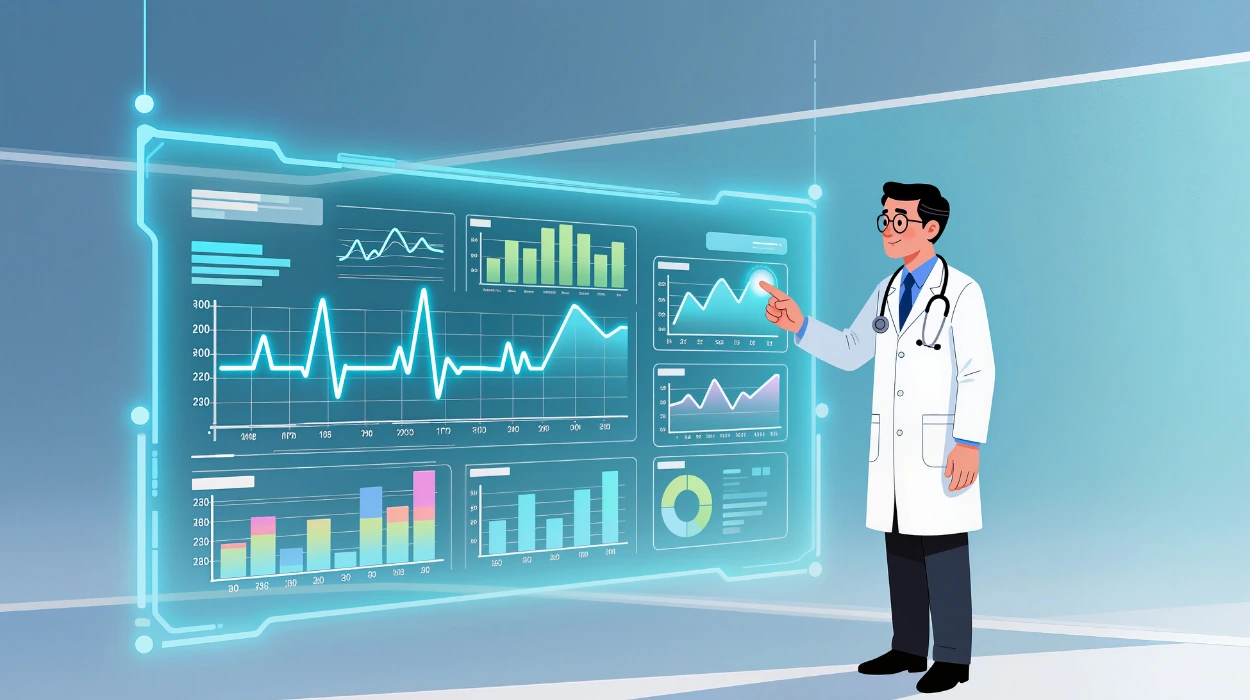
The healthcare industry is experiencing a profound transformation thanks to artificial intelligence (AI). From enhancing diagnostics to enabling predictive analytics, AI is reshaping patient care, hospital operations, and medical research. For healthcare professionals, understanding AI in healthcare training and practical applications is becoming essential to stay at the forefront of innovation.
This article explores how artificial intelligence in medical diagnostics, predictive analytics, and AI-driven tools are revolutionizing healthcare delivery and improving outcomes.
AI in Medical Diagnostics
One of the most impactful applications of AI in healthcare is AI in medical imaging and diagnostics. AI-powered systems can analyze medical images, detect abnormalities, and assist clinicians in diagnosing diseases with remarkable accuracy. These tools help identify conditions such as cancer, cardiovascular diseases, and neurological disorders early, improving treatment outcomes.
AI-powered medical tools reduce human error, enhance diagnostic speed, and provide decision support for clinicians. By combining machine learning algorithms with medical knowledge, AI enables AI-assisted clinical decision-making, ensuring that patients receive timely and accurate care.
Predictive Analytics in Healthcare
AI for predictive analytics in healthcare is revolutionizing how providers anticipate patient needs, prevent diseases, and allocate resources. Predictive models using AI analyze historical patient data, lifestyle factors, and clinical trends to forecast potential health risks.
These predictive healthcare models using AI allow healthcare professionals to implement proactive interventions, reducing hospital admissions, improving chronic disease management, and optimizing treatment plans. By leveraging healthcare data analytics with AI, hospitals and clinics can make informed decisions that enhance patient care and operational efficiency.
AI-Driven Patient Care
AI is enhancing patient care across multiple domains. AI-driven patient care includes personalized treatment plans, remote monitoring, and virtual health assistants that provide real-time guidance. AI tools can track patient vital signs, medication adherence, and recovery progress, enabling continuous care outside traditional clinical settings.
Through AI for personalized healthcare, patients receive tailored interventions based on genetic data, lifestyle, and medical history. This approach improves outcomes, increases patient satisfaction, and reduces healthcare costs.
Machine Learning in Healthcare
Machine learning in healthcare is central to unlocking insights from complex medical data. Algorithms can identify patterns, detect anomalies, and support research in genomics, drug discovery, and epidemiology. Machine learning models also enhance predictive analytics, allowing healthcare providers to anticipate outbreaks, resource demands, and patient health trajectories.
By integrating healthcare AI applications, hospitals can streamline operations, improve diagnostics, and deliver evidence-based care more efficiently than ever before.
AI in Hospital Operations
Beyond diagnostics and patient care, AI is transforming AI in hospital operations. AI tools optimize scheduling, resource allocation, and workflow management, reducing bottlenecks and improving efficiency. Administrative tasks, such as claims processing, billing, and patient documentation, can also be automated with AI-powered systems, freeing healthcare professionals to focus on direct patient care.
These digital health innovation with AI initiatives enhance operational efficiency while maintaining high standards of care, ensuring hospitals run smoothly and sustainably.
AI-Powered Medical Tools
Modern healthcare increasingly relies on AI-powered medical tools for tasks ranging from imaging analysis to robotic surgery. AI assists surgeons by providing real-time insights, predicting complications, and guiding precision interventions. AI applications are also used in telemedicine platforms, enabling remote diagnostics and patient monitoring.
Healthcare AI trends and applications indicate growing adoption of AI across clinical, administrative, and research functions. Hospitals and clinics leveraging these technologies gain a competitive advantage through improved patient outcomes and operational efficiency.
Real-World AI Applications in Healthcare
Numerous real-world examples highlight the transformative impact of AI in healthcare. AI algorithms detect early signs of diseases from imaging data, predict patient deterioration in intensive care units, and personalize treatment protocols based on predictive models. AI-driven chatbots and virtual health assistants provide patient support and information, enhancing accessibility and engagement.
Healthcare providers employing artificial intelligence in medical diagnostics and AI for predictive analytics in healthcare achieve measurable improvements in care quality, efficiency, and patient satisfaction. These healthcare AI applications are setting new standards for medical practice worldwide.
Challenges and Considerations
While AI offers immense benefits, its integration into healthcare must consider ethical, privacy, and regulatory issues. Ensuring patient data security, maintaining transparency in AI-driven decision-making, and providing proper training for healthcare professionals are essential. AI in healthcare training programs equip clinicians, administrators, and researchers with the skills to use AI responsibly and effectively.
Additionally, AI solutions should complement—not replace—human expertise. AI-assisted clinical decision-making works best when paired with professional judgment, ensuring safe, accurate, and ethical care.
Future of AI in Healthcare
The future of healthcare will be defined by AI-driven innovation. From AI in medical imaging and diagnostics to predictive analytics and personalized care, AI will continue to enhance accuracy, efficiency, and patient outcomes. Emerging technologies, including natural language processing, robotics, and wearable AI devices, will further expand the reach and capabilities of AI in healthcare.
As hospitals and clinics adopt AI-driven patient care models, the focus will shift toward proactive, preventive, and data-informed medicine, transforming the overall patient experience and healthcare delivery systems.
Final Thoughts
Artificial intelligence is revolutionizing healthcare by enabling AI-powered medical tools, predictive healthcare models using AI, and AI-assisted clinical decision-making. By implementing AI for personalized healthcare, healthcare data analytics with AI, and AI in hospital operations, providers can improve patient outcomes, optimize resources, and streamline workflows.
For healthcare professionals seeking structured training, the Oxford Training Centre offers comprehensive Artificial Intelligence Training Courses. These courses provide practical knowledge of AI in healthcare training, including diagnostics, predictive analytics, and patient care applications. By mastering healthcare AI applications and digital health innovation with AI, clinicians and administrators can lead the transformation of modern healthcare and maximize the benefits of AI in their organizations.