
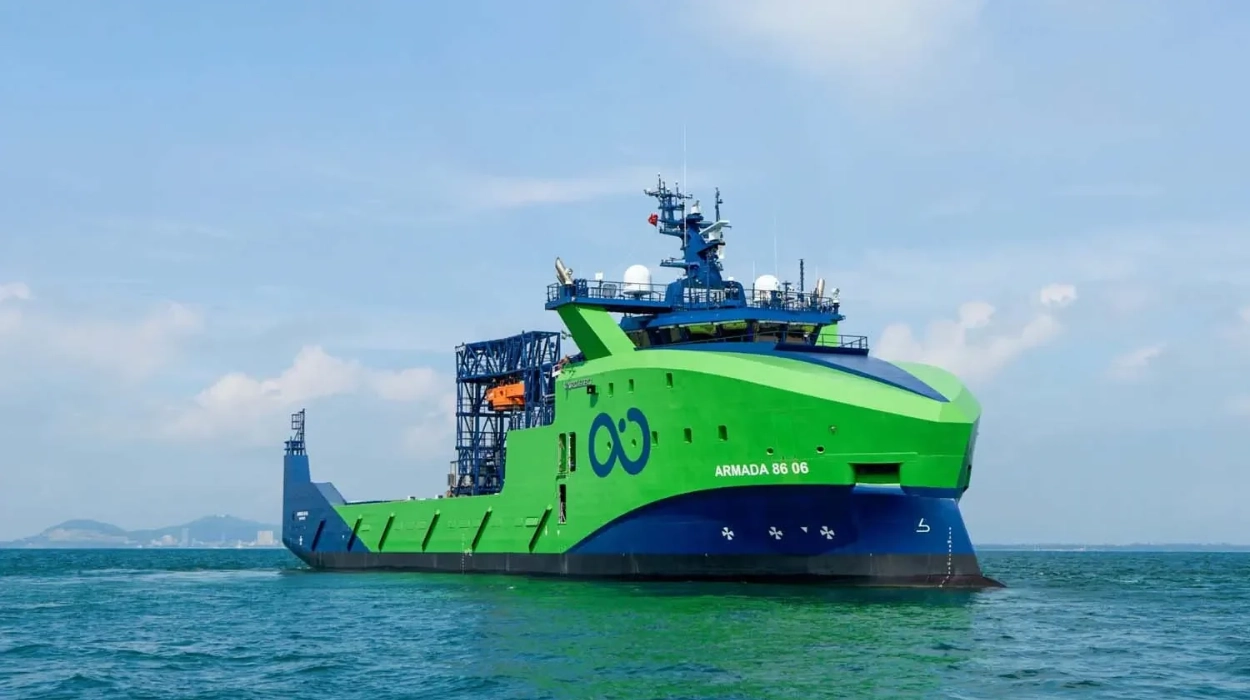
Key Points
- The UK Government has announced a £90 million investment in underwater drones, advanced sensors and artificial intelligence (AI) systems to strengthen the Royal Navy’s ability to detect Russian submarine activity and protect critical undersea infrastructure.
- The technology will form the first phase of the Royal Navy’s Atlantic Bastion programme and operate through a new surveillance capability known as Atlantic Net.
- Hampshire-based Ocean Infinity Solutions has been selected for a new framework agreement that will support the development and delivery of the system.
- The investment is expected to support almost 200 skilled jobs at Ocean Infinity Solutions and within its immediate supply chain.
- Atlantic Net will combine autonomous underwater systems, advanced sensors, maritime communications, remote operations and data services into a unified surveillance capability.
- The network will work alongside the Royal Navy’s crewed fleet, providing submarine-hunting warships and Astute-class submarines with earlier warnings and improved information about activity beneath the sea.
- The technology is intended to protect undersea communications cables, energy networks, important shipping routes and other critical infrastructure.
- The programme will also support protection of the UK’s nuclear deterrent and strengthen underwater surveillance across the North Atlantic.
- Minister for Defence Readiness and Industry Luke Pollard MP said the investment would help the Royal Navy identify threats earlier, protect critical infrastructure and support British businesses.
- The framework was announced at the International Sea Power Conference in Oslo, Norway, on 10 November 2026.
- The Atlantic Bastion programme follows a recommendation in the Strategic Defence Review to develop a hybrid naval force combining crewed and uncrewed vessels.
- The UK intends to work with NATO and Joint Expeditionary Force (JEF) allies to improve protection against interference, sabotage and other hostile activity.
- Reuters reported that Russia has denied allegations concerning hostile activity around undersea infrastructure, while Western officials have raised concerns about increased Russian activity near subsea assets.
- The Guardian’s Dan Sabbagh reported that Luke Pollard had cited a 41% increase in Russian naval activity around the UK during the first nine months of 2026.
- The wider Northern Navies Initiative is intended to improve cooperation between the UK, the Netherlands and Nordic and Baltic countries, including the ability to operate maritime drones alongside allied warships.
- The announcement adds to the UK’s wider investment in maritime defence, including a previously announced £1.5 billion programme for sea drones over four years.
Why Has the UK Announced a £90 Million Investment in Underwater Drones?
The UK Government has announced a £90 million investment in autonomous underwater drones, advanced sensors and artificial intelligence systems to strengthen the Royal Navy’s ability to detect Russian submarine activity and protect critical undersea infrastructure across the North Atlantic. The new agreement with Hampshire-based Ocean Infinity Solutions will support the development of Atlantic Net, a unified maritime surveillance system designed to operate alongside crewed naval vessels and provide earlier warnings of potential threats. Announced by the Ministry of Defence on 10 November 2026, the initiative forms the first phase of the Royal Navy’s wider Atlantic Bastion programme and is expected to support almost 200 skilled jobs in the UK.
According to the official announcement published by the Ministry of Defence and Luke Pollard MP on GOV.UK, the investment will strengthen Britain’s ability to protect important shipping routes, undersea communications cables and energy networks.
The proposed technology will combine autonomous systems, underwater sensors, communications infrastructure, remote operations and data services. These capabilities will be brought together under a single surveillance service directed by the Royal Navy.
As reported by Naval News Staff in its 10 November coverage, Atlantic Net will provide the Navy with a network of autonomous systems operating across the North Atlantic. The network will use advanced sensors to identify submarine activity and other suspicious movements, while uncrewed systems will patrol underwater areas to monitor and respond to potential threats.
The announcement represents a further step in the UK’s efforts to modernise maritime defence through a combination of traditional naval platforms and autonomous technology.
What Is Atlantic Net and How Will the New Surveillance System Work?
Atlantic Net is the name given to the new surveillance capability being developed through the £90 million framework agreement with Ocean Infinity Solutions.
The system is intended to create a connected network of autonomous underwater systems and advanced sensors that can monitor activity beneath the surface across important areas of the North Atlantic.
Rather than operating as a separate replacement for conventional naval vessels, the technology will complement the Royal Navy’s existing crewed fleet.
Under the proposed arrangement, the autonomous systems will collect information about underwater activity and provide it to a central surveillance capability. This information will help the Navy build a clearer operational picture and identify potential threats earlier.
The system is expected to provide additional warning capabilities to submarine-hunting warships and Astute-class submarines.
According to the Ministry of Defence, the new technology will help detect Russian submarines and other potentially hostile activity. It will also increase the scale, persistence and resilience of underwater surveillance.
Naval News Staff reported that the network would combine uncrewed patrol systems with advanced sensing technology to monitor activity around critical maritime infrastructure.
The Royal Navy will direct the integrated capability, bringing together several technical disciplines, including maritime systems, underwater sensing, communications, remote operations and data services.
This approach is intended to improve the coordination of information and reduce gaps in surveillance across strategically important maritime areas.
How Will Atlantic Net Protect Britain’s Undersea Cables and Energy Networks?
Undersea infrastructure plays an important role in the UK’s economic and national security systems.
Submarine communications cables carry international internet traffic and support financial transactions, business communications and connections between countries. Energy infrastructure beneath the sea also helps connect offshore production facilities and energy networks to national systems.
Damage to these assets could disrupt communications, affect commercial operations and create wider economic and security consequences.
As reported by Sarah Young of Reuters, with Sam Tabahriti writing and Yoruk Bahceli editing, undersea cables carry most global internet traffic and support financial transactions. The report also highlighted concerns among Western officials about increased Russian activity around subsea infrastructure.
Atlantic Net is intended to strengthen the UK’s ability to monitor these strategically important assets.
The autonomous systems and underwater sensors will help identify suspicious activity near communications cables, energy networks and other critical infrastructure.
The programme is also intended to support the protection of important shipping routes across the North Atlantic.
The Ministry of Defence said the wider Atlantic Bastion programme would protect the underwater infrastructure connecting and powering the UK and its allies.
The objective is to strengthen protection against interference, sabotage and other hostile activity through more persistent monitoring and improved information-sharing.
The initiative is particularly relevant to the security of infrastructure that may be difficult to monitor continuously using conventional naval vessels alone.
What Is Ocean Infinity Solutions’ Role in the £90 Million Defence Agreement?
Hampshire-based Ocean Infinity Solutions is the British company named in the new framework agreement with the UK Government.
The agreement will provide the basis for the development and delivery of the Atlantic Net capability, bringing together maritime systems, underwater sensing, communications, remote operations and data services.
The company will work with the Royal Navy to integrate these technologies into a single surveillance service directed by the Navy.
The Ministry of Defence stated that the framework would pave the way for £90 million of investment and support almost 200 new skilled jobs, including opportunities within the company’s immediate supply chain.
The employment impact is an important part of the announcement because the investment combines defence modernisation with support for domestic industrial capabilities.
The Ministry of Defence also highlighted the 38,700 jobs in South East England directly supported by its spending with industry.
The new agreement is therefore expected to contribute to the wider defence supply chain while supporting the development of specialist technical skills in areas such as autonomous maritime systems, underwater sensing and data services.
As reported by Rebecca Conan, European energy correspondent at Upstream, Ocean Infinity Solutions secured the £90 million agreement to help protect UK subsea infrastructure as concerns about Russian underwater activity increased.
The report identified the company’s role in providing the technology needed to monitor underwater energy links and other strategic assets.
The agreement also illustrates the importance of private-sector technology providers in the development of modern defence capabilities.
What Did Defence Minister Luke Pollard Say About the Investment?
Luke Pollard MP, Minister for Defence Readiness and Industry, announced the investment as part of the Government’s wider efforts to strengthen the UK’s maritime security and defence industrial base.
In the official Ministry of Defence statement, Pollard said:
“The threats beneath the North Atlantic are changing, and we are changing with them.”
He explained that the investment would give the Royal Navy new technology to identify threats earlier and protect critical infrastructure while supporting British businesses.
Pollard also said:
“It shows that we’re getting on with the job of investing in our Armed Forces and strengthening our deterrence under the sea, to support our ultimate nuclear deterrent.”
His comments connect the investment to two main priorities: improving the operational capabilities of the Royal Navy and strengthening the UK’s ability to deter potential threats beneath the sea.
The Minister’s statement also highlights the Government’s intention to use defence spending to support domestic businesses and skilled employment.
According to the Ministry of Defence, the framework agreement with Ocean Infinity Solutions is expected to support almost 200 new skilled jobs and opportunities throughout the company’s immediate supply chain.
How Does Atlantic Bastion Fit Into the Royal Navy’s Wider Defence Strategy?
Atlantic Net forms part of Atlantic Bastion, the Royal Navy’s wider programme to develop a hybrid naval force combining crewed and uncrewed vessels.
The approach is intended to improve the Navy’s ability to locate, monitor and track enemy submarines while protecting the underwater infrastructure connecting the UK and its allies.
The hybrid model will allow autonomous systems to operate alongside traditional warships and submarines, providing additional surveillance coverage and supporting more effective use of naval resources.
The Ministry of Defence stated that Atlantic Bastion follows a key recommendation of the Strategic Defence Review.
The review highlighted the importance of adapting the UK’s defence capabilities to changing threats and the increasing role of advanced technologies in military operations.
The programme is also intended to strengthen cooperation with NATO and Joint Expeditionary Force allies.
The Ministry of Defence said that working with these partners would improve protection against interference, sabotage and hostile activity affecting critical underwater infrastructure.
By increasing the scale and persistence of underwater surveillance, Atlantic Net is expected to contribute to the wider objectives of Atlantic Bastion.
The initiative therefore extends beyond the purchase of individual drones or sensors. It represents an effort to integrate autonomous technology into a broader maritime defence structure.
Why Is Russian Naval Activity a Growing Concern for the UK?
The investment comes amid increased attention to Russian naval activity around British waters and strategically important maritime infrastructure.
In its 10 November report for The Guardian, Dan Sabbagh, reporting from Oslo, stated that Luke Pollard had identified a 41% increase in Russian naval activity around the UK during the first nine months of 2026.
Pollard described the increase as significant and linked it to the need for stronger cooperation between the UK and its maritime allies.
Sabbagh reported that Russian spy ships, including the Yantar, had been operating near UK waters during the year.
According to Pollard, these activities included efforts to obtain information about critical national infrastructure and map undersea cables.
The Guardian also reported that Russian frigates had been active in the North Sea and the English Channel during 2026, sometimes escorting oil tankers and other commercial vessels.
Pollard also referred to Russia’s northern fleet, based in the Barents Sea, describing its underwater capabilities as a substantial presence and a potential threat to the UK.
Reuters separately reported that Western officials had raised concerns about increased Russian activity around subsea infrastructure.
However, Reuters also made clear that Russia has denied the allegations.
The distinction is important: the reported security concerns and assessments have been presented by British and Western officials, while Russia rejects the allegations.
The new investment is part of the UK’s response to these concerns and its efforts to improve monitoring and protection of important maritime infrastructure.
What Is the Northern Navies Initiative and How Will It Support Maritime Security?
Alongside the Atlantic Net announcement, The Guardian’s Dan Sabbagh reported on plans to expand maritime defence cooperation through the Northern Navies Initiative.
The proposed cooperation involves the UK, the Netherlands and countries across the Baltic and Nordic regions.
The initiative is intended to improve the ability of allied maritime forces to operate together, particularly when using autonomous sea systems alongside conventional warships.
Luke Pollard explained that British autonomous systems should be capable of working with British, Danish or Norwegian warships and being transferred between allied naval platforms.
He said:
“The model that we want is where British autonomous systems can be teamed with a British warship or a Danish warship or a Norwegian warship and can hand that autonomy off to an allied nation’s warship.”
Pollard also said that a future Royal Navy combining warships and drones would increase its operational effectiveness.
The approach reflects a wider shift towards integrated maritime operations, in which autonomous technology can provide additional monitoring and operational support without requiring every task to be performed by a crewed vessel.
According to The Guardian, the initiative comes at a time when the number of British frigates is expected to decline.
The report noted that the UK’s frigate fleet could fall from 12 vessels in 2021 to three by 2030.
Last month, a cross-party defence select committee warned that shortages in the availability of warships and submarines could weaken the Navy’s ability to deter Russian activity in surrounding waters.
Pollard attributed existing capacity shortages to previous defence spending decisions, saying that the UK had fewer ships and submarines available than he would like.
He also said that the Government’s longer-term defence spending plans could provide a clearer demand signal to the defence industry.
How Does the £90 Million Investment Fit Into Wider UK Defence Spending?
The Atlantic Net announcement forms part of a broader programme of investment in autonomous maritime systems and defence capabilities.
The Guardian reported that the UK had already included a £1.5 billion investment in sea drones over four years within its defence investment plans announced in June 2026.
The report also referred to an additional £10 billion a year allocated to defence from 2030 by Chancellor John Healey in the October budget.
Pollard said that the additional funding could help the Government provide a clearer demand signal to industry and support efforts to address the Russian threat.
However, The Guardian noted that there had been no major additional defence spending announcements following the budget, with the Government continuing to rely on the defence investment plan announced in June.
The £90 million Atlantic Net investment should therefore be understood as part of the wider programme rather than as a replacement for other defence spending commitments.
The development of autonomous systems is becoming an increasingly important element of Britain’s maritime strategy, particularly where persistent surveillance and protection of critical infrastructure are required.
What Can the UK Learn From Ukraine’s Use of Naval Drones?
The growing use of autonomous maritime technology has also been demonstrated by Ukraine’s naval operations against Russian forces in the Black Sea.
In his reporting for The Guardian, Dan Sabbagh noted that Ukraine had used relatively inexpensive sea drones to destroy approximately one-third of Russia’s Black Sea Fleet, forcing it to relocate from Sevastopol in occupied Crimea to Novorossiysk.
The report also included comments from Valerii Zaluzhnyi, Ukraine’s former head of the military and now the country’s ambassador to the UK.
Zaluzhnyi said:
“It is likely that the world’s navies are on the verge of the most radical transformation since the rise of torpedo technology.”
His assessment reflects the growing importance of autonomous maritime systems in modern naval operations.
Ukraine’s experience has demonstrated how uncrewed technology can create operational challenges for larger and more traditional naval platforms.
For the UK, the development of Atlantic Net reflects a different but related application of autonomous technology, with a focus on surveillance, threat detection and the protection of underwater infrastructure.
The British programme is intended to combine autonomous systems with existing naval capabilities rather than rely exclusively on uncrewed platforms.
Why Is the North Atlantic Strategically Important for Britain’s Maritime Security?
The North Atlantic is an important strategic area for the UK because it contains critical maritime routes and underwater infrastructure connecting Britain with its international partners.
The region includes important communications cables and energy networks that support economic activity, national security and international connectivity.
The Greenland-Iceland-UK gap, often referred to as the GIUK gap, is also a strategically important maritime passage for monitoring naval movements between the Arctic and the wider Atlantic.
The Guardian reported that the £90 million investment in underwater drones and sensors would help monitor Russian submarine activity in this area.
The ability to maintain a clearer picture of activity beneath the sea is particularly important because submarines and underwater systems can operate without being easily detected through conventional surface surveillance.
Atlantic Net is intended to improve the persistence of monitoring and provide information that can support the Royal Navy’s operational decisions.
Cooperation with NATO and Joint Expeditionary Force partners will also be important because underwater infrastructure and maritime routes extend beyond the territorial waters of any single country.
What Could the Atlantic Net Programme Mean for Britain’s Defence Industry?
The investment creates opportunities for British defence and technology businesses working in autonomous systems, underwater sensing, communications, remote operations and data services.
The expected support for almost 200 skilled jobs at Ocean Infinity Solutions and its immediate supply chain highlights the economic dimension of the announcement.
The programme also demonstrates how government procurement can support the development of domestic technical expertise while addressing national security requirements.
For the wider maritime industry, the integration of autonomous technology into naval operations could increase demand for specialist engineering, software development, sensor systems and maritime data management.
The Royal Navy’s approach will depend on bringing different technologies together into a single capability that can operate reliably alongside conventional vessels and submarines.
This will require coordination between defence authorities, technology companies, engineering specialists and international partners.
The development is particularly relevant to professional knowledge in Shipping, Maritime and Ports, where maritime operations, vessel technologies, underwater infrastructure and shipping-route security are increasingly interconnected. It also has a direct relationship with Safety and Security, particularly in the areas of surveillance, threat detection, critical infrastructure protection and maritime risk management.
The success of Atlantic Net will ultimately depend on how effectively the technology is integrated, deployed and maintained across the North Atlantic.
The £90 million agreement with Ocean Infinity Solutions marks a significant step in Britain’s effort to strengthen underwater surveillance, protect critical infrastructure and adapt its naval capabilities to changing maritime threats. By combining autonomous drones, advanced sensors and existing naval platforms, the UK aims to improve its ability to identify potential threats earlier while supporting British industrial capabilities and cooperation with allied forces.