
Key Points
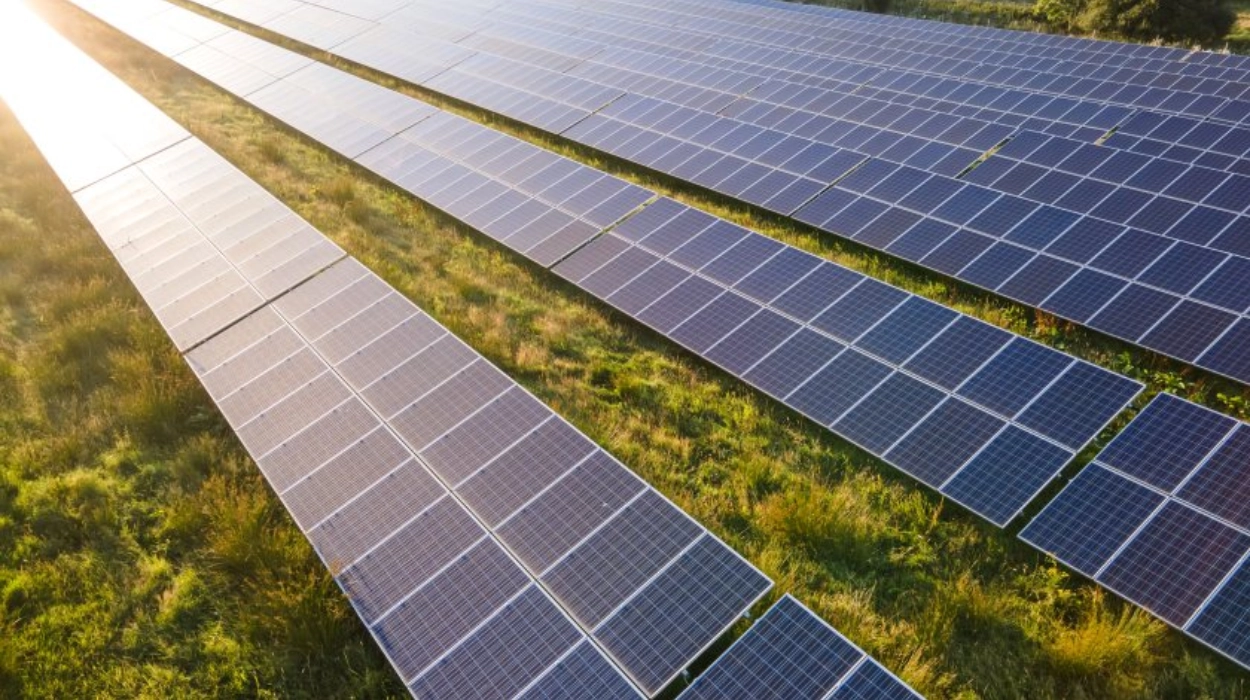
- The UK Government granted development consent on 27 October 2026 for the Great North Road Solar and Biodiversity Park, an 800MW solar energy project planned north-west of Newark in Nottinghamshire.
- Developed by Elements Green Trent Limited, the scheme covers approximately 1,765 hectares, equivalent to around 4,360 acres of countryside.
- Approximately 1,025 hectares, or 2,530 acres, are allocated for solar development, while the remaining land is designated for environmental improvements, cabling, access and associated infrastructure.
- The developer estimates that the project could generate enough electricity to meet the annual needs of approximately 400,000 homes.
- Newark and Sherwood District Council raised concerns about the loss of high-quality agricultural land, adverse visual effects and changes to the character of rural communities.
- A consultation in early 2024 found that 54% of respondents opposed the proposals, while 16% supported them.
- Newark MP Robert Jenrick criticised the approval, saying he was “appalled and devastated” and describing the impact on farmland as “Good farmland ruined”.
- The development includes proposals to plant approximately 64,500 trees, establish more than 50 kilometres of species-rich hedgerows, create over 800 acres of dedicated biodiversity areas and provide 28 recreational routes.
- Elements Green has proposed a community benefit fund worth approximately £1 million annually, although questions have been raised over whether the payments can be enforced through the planning process.
- The project is expected to operate for around 40 years, after which the developer says the equipment will be removed and the land restored.
- The Planning Inspectorate completed a six-month examination and submitted its recommendation to ministers on 28 July 2026. Construction has not yet begun, with earlier plans indicating a potential start in 2027.
Why Has the Government Approved the 800MW Solar Farm Despite Farmland Concerns?
The UK Government has granted development consent for the Great North Road Solar and Biodiversity Park in Nottinghamshire, clearing the way for an 800-megawatt (MW) renewable energy project despite sustained concerns about agricultural land, rural landscapes and the effects on nearby communities. The development, proposed by Elements Green Trent Limited, will cover approximately 1,765 hectares of countryside north-west of Newark and combine solar panels with battery storage and electricity grid infrastructure. As reported by the FarmingUK Team in its 28 October 2026 article, the approval follows a lengthy planning examination and comes amid wider debate over how Britain can expand renewable electricity generation while protecting productive farmland and domestic food production. The Department for Energy Security and Net Zero confirmed the decision on 27 October 2026, with the Planning Inspectorate publishing its announcement on the same date.
The decision marks a significant stage in the development of one of Britain’s largest approved solar schemes by generating capacity. However, consent does not mean that construction has started or that the project is already supplying electricity. Its delivery will depend on the implementation of the approved development and the relevant requirements.
Reporting by West Bridgford Wire on 27 October 2026 also confirmed that the project had attracted opposition over its scale, the potential loss of agricultural land and changes to the countryside around Newark. The publication has covered objections to the scheme since 2023, when parish councils and local representatives raised concerns about the extent of the proposed development.
How Large Is the Great North Road Solar and Biodiversity Park?
According to FarmingUK, the development will extend across approximately 1,765 hectares, equivalent to about 4,360 acres. Of this area, around 1,025 hectares, or 2,530 acres, are allocated for solar development. The remaining land is intended for environmental mitigation, biodiversity improvements, underground cabling, landscaping and construction access.
The development will extend through countryside surrounding villages including Caunton and Ossington, covering an area approximately six miles from north to south. Its size has been a central feature of the controversy, particularly because of the relationship between the proposed energy infrastructure and the existing rural landscape.
The project will include a solar photovoltaic array, a battery energy storage system and infrastructure connecting the development to the National Grid. According to the Planning Inspectorate’s official announcement, the maximum generating capacity is 800MW, and the application permits the associated infrastructure to export and import electricity.
The distinction between the overall site and the area allocated to solar development is important. Although the project boundary encompasses more than 4,300 acres, the entire area will not be covered by solar panels. Nevertheless, the development will change how a substantial amount of countryside is managed and used throughout its operational life.
Why Have Farmers and Local Communities Opposed the Solar Farm?
The principal concerns relate to the potential loss of high-quality agricultural land, changes to rural views and the cumulative impact of large renewable energy schemes on the countryside.
FarmingUK reported that Newark and Sherwood District Council had previously warned that the development would result in the loss of high-quality farmland and cause significant changes to the surrounding rural landscape. Although the council acknowledged the need for renewable energy, it identified adverse visual effects and potential changes to the character of nearby communities.
The level of public opposition was also evident in consultation findings from early 2024. According to FarmingUK, 54% of respondents opposed the proposals, while 16% supported them. Other respondents sought changes to the scheme.
The concerns recorded during the consultation included the visual impact of extensive solar installations, their effect on the countryside and the implications for agricultural land. These objections reflect a wider question facing UK planning authorities: how should the country balance the demand for low-carbon electricity with the need to maintain land for food production?
West Bridgford Wire reported that county councillor Bruce Laughton had previously compared the scale of the proposals to building a town in the countryside. Newark MP Robert Jenrick also criticised the potential transformation of the rural landscape during the earlier stages of the development. These comments predated the final consent decision.
The debate is particularly relevant to Environmental and Agriculture, where land management, biodiversity protection and sustainable resource use intersect with the expansion of renewable energy infrastructure.
What Did Robert Jenrick Say About the Approval?
Newark MP Robert Jenrick strongly criticised the government’s decision. As reported by the FarmingUK Team, he said he was “appalled and devastated” by the approval and expressed concern about the scale of the scheme and its long-term effects on the local landscape.
Responding to the announcement, Jenrick said: “Good farmland ruined.”
His criticism reflects concerns among opponents that the long-term conversion of agricultural land to energy infrastructure could affect local farming, rural views and the character of the area. Supporters of renewable energy development, meanwhile, argue that large-scale solar generation can contribute to energy security and the transition towards lower-carbon electricity.
The planning decision places these competing considerations within the context of the government’s energy and infrastructure objectives. However, the granting of consent does not remove the concerns raised by local representatives, farmers and residents.
What Environmental Improvements Are Planned for the Solar Farm?
Elements Green has proposed a range of environmental measures intended to accompany the development. These include planting approximately 64,500 trees, establishing more than 50 kilometres of species-rich hedgerows and creating over 800 acres of dedicated biodiversity areas.
The scheme also includes 28 recreational routes, which are intended to provide opportunities for walking and access through parts of the development. These measures form part of the proposal to combine renewable electricity generation with landscape management and habitat improvements.
Their effectiveness will depend on how the measures are implemented, maintained and monitored throughout the project’s operational life. Tree planting and hedgerow creation can provide habitats and contribute to landscape screening, but the outcomes will depend on factors including species selection, establishment, maintenance and the quality of the existing environment.
The proposed biodiversity areas are also relevant to the debate over agricultural land. Although some land may be managed to improve habitats, this does not necessarily eliminate concerns about the loss of productive farmland or the visual effects of solar infrastructure.
The project therefore raises questions about how environmental benefits should be assessed alongside agricultural, landscape and community impacts. The relevant considerations extend beyond the amount of electricity generated to include land-use planning, ecological outcomes and long-term site management.
How Much Electricity Could the Solar Farm Generate?
The proposed solar farm has a maximum generating capacity of 800MW. Elements Green estimates that it could generate enough electricity to meet the annual needs of approximately 400,000 homes.
That figure is an estimate of the number of homes whose annual electricity demand could be matched by the project’s expected output. Actual generation would depend on factors such as sunlight, weather conditions, equipment performance, maintenance and operational constraints.
The scheme’s battery storage component is intended to support the management of electricity generated by the solar panels. Energy storage can help shift some electricity supply to periods when generation and demand do not coincide, although the extent of that contribution will depend on the installed storage capacity, charging and discharging arrangements and grid conditions.
Connecting a project of this scale to the electricity network also requires associated infrastructure and coordination with the relevant network operators. The final contribution to the UK’s electricity supply will therefore depend on the development being built, commissioned and connected successfully.
What Community Benefits Has Elements Green Proposed?
Elements Green has proposed a community benefit fund worth approximately £1 million annually. The proposed fund is intended to provide financial benefits for communities affected by the development.
However, questions have been raised about whether community payments can be enforced through the planning process. The distinction matters because a proposed community fund is not necessarily equivalent to a binding planning obligation. The legal arrangements and any associated conditions determine what can be required and enforced.
For residents and local organisations, the fund may offer potential support for community initiatives and local projects. Its practical value will depend on the final arrangements, eligibility criteria, governance and the process for allocating money.
The proposed fund does not, by itself, resolve concerns about agricultural land, landscape changes or the effects of construction. Those issues must be considered separately when assessing the overall impact of the project.
How Long Will the Solar Farm Operate, and What Happens Afterwards?
The Great North Road Solar and Biodiversity Park is expected to operate for approximately 40 years. At the end of its operational life, the developer says the equipment will be removed and the land restored.
The decommissioning commitment is relevant to concerns about the long-term use of agricultural land. However, the practical outcome will depend on the approved restoration arrangements, the condition of the land at the end of the operational period and compliance with the relevant requirements.
Solar projects typically involve foundations or mounting systems, cabling, access routes, electrical equipment and other infrastructure. Removing these components and restoring the site will require planning and implementation appropriate to the development’s design and operating conditions.
The prospect of restoration may provide a degree of reassurance to those concerned about permanent land-use change, but it does not eliminate the temporary loss of agricultural use or the effects experienced during the operational period.
What Was the Planning Inspectorate’s Role in the Decision?
The Planning Inspectorate conducted a six-month examination of the application and submitted its recommendation to ministers on 28 July 2026. The government subsequently granted development consent on 27 October 2026.
The examination process provided a formal mechanism for considering the application, including its environmental effects, land-use implications and representations from interested parties. The final decision rested with the relevant government decision-makers rather than the developer.
The granting of development consent establishes the planning basis for the project to proceed, subject to the terms of the decision and the applicable requirements. It should not be interpreted as confirmation that every concern raised during consultation has disappeared or that all construction and operational steps have been completed.
The case also illustrates the role of national infrastructure planning in decisions involving large renewable energy developments. Projects of this scale can have implications that extend beyond individual landowners or communities, while still creating concentrated effects in the locations where infrastructure is built.
When Could Construction Begin?
Construction has not yet begun. Earlier plans indicated a potential start in 2027, although the timing will depend on the developer’s implementation programme and the requirements that must be satisfied before relevant works can proceed.
Further preparation may include detailed design, procurement, construction planning, grid coordination and compliance with conditions attached to the consent. The exact sequence and timetable will depend on the approved arrangements and the developer’s decisions.
The project must also move from planning approval to physical delivery. That transition involves building the solar array and associated infrastructure, installing storage equipment where applicable, and completing the necessary connection and commissioning work before electricity can be exported to the grid.
Until those stages are completed, the proposed 800MW capacity remains a development target rather than operational generating capacity.
What Does the Decision Mean for Renewable Energy and Agricultural Land in Britain?
The approval highlights a continuing challenge for UK energy policy: increasing renewable electricity generation while protecting agricultural resources, rural landscapes and biodiversity.
Large solar developments can contribute to lower-carbon electricity supplies and reduce reliance on fossil-fuel generation. At the same time, projects that occupy extensive areas of countryside can generate concerns about food production, land ownership, landscape character and the distribution of benefits and disadvantages between national energy consumers and local communities.
The Great North Road Solar and Biodiversity Park brings these issues into focus because of its size, proposed generation capacity and location in Nottinghamshire. The projected electricity supply for around 400,000 homes provides an indication of its potential contribution, while the objections raised by Newark and Sherwood District Council and local representatives demonstrate the importance of assessing impacts beyond energy output alone.
The proposed environmental improvements and community fund form part of the developer’s response to these challenges. Their ultimate significance will depend on delivery, monitoring and the effectiveness of the arrangements established for the project.
For professionals working in Environmental and Agriculture, the development also illustrates the practical importance of assessing competing land-use demands, environmental mitigation, biodiversity outcomes and agricultural sustainability when major infrastructure proposals are evaluated.
The government has now approved the project, but its longer-term significance will depend on how it is implemented, how its environmental and community commitments are delivered, and how effectively the development balances electricity generation with the concerns of the communities and land users most directly affected.