
Key Points
- Aberdeen-based shipping company North Star increased its turnover to £152.9 million in 2025, compared with £137.5 million in 2024.
- Despite higher revenue, the company recorded a pre-tax loss of £19.3 million, up from £7.1 million in the previous year.
- North Star expanded its fleet by adding three newbuild service operation vessels (SOVs) during 2025.
- The company subsequently acquired another four SOVs from Edda Wind in 2026, bringing its service operation vessel fleet to 14.
- North Star’s commitment to the offshore wind sector has exceeded £750 million.
- The company secured a major agreement with RWE in 2025, involving four long-term vessel charters totalling 44 years of vessel commitment.
- Two of the RWE charter agreements involve newbuild vessels scheduled for delivery in 2028 and 2029.
- The expansion is expected to support up to 200 workers across the fleet, including up to 100 new employment opportunities.
- North Star generated £7.7 million in revenue from outside the UK for the first time, with the income coming from other European markets.
- Earnings before interest, taxes, depreciation and amortisation (EBITDA) increased to £32.4 million from £29.3 million.
- Finance costs rose to £25.6 million in 2025, compared with £15.6 million in 2024, reflecting the company’s significant borrowing to finance expansion.
- North Star continues to regard Aberdeen as its long-term operating base, employing approximately 1,700 people.
Why Has North Star’s Turnover Increased to £153 Million?
Aberdeen-based shipping company North Star has reported a substantial increase in annual turnover, reaching £152.9 million in 2025 as it expands its offshore wind operations, strengthens its vessel fleet and secures significant long-term contracts. The company’s latest financial performance reflects the growing scale of its maritime activities, particularly in the offshore wind support market, although the expansion has also contributed to higher borrowing costs and an increased pre-tax loss. Turnover rose from £137.5 million in 2024, while the company’s pre-tax loss widened from £7.1 million to £19.3 million. The results highlight the financial considerations involved in expanding a capital-intensive shipping operation, where investment in specialist vessels and long-term commercial commitments can increase revenue potential while placing additional pressure on short-term profitability.
As reported by Jacob Kvasnicka of The Press and Journal, North Star’s financial performance was supported by the addition of three newbuild service operation vessels (SOVs) during 2025 and the company’s continued expansion into offshore wind operations. The Aberdeen-based business has been increasing its presence in a sector that requires specialised vessels to support the construction, maintenance and operation of offshore wind farms.
The company, which has a history spanning approximately 140 years, has also maintained its position as the UK’s largest emergency response and rescue vessel (ERRV) operator.
The latest figures demonstrate how North Star is developing beyond its established emergency response operations while building a larger presence in the offshore wind industry. Its growing fleet and expanding commercial relationships are central to its longer-term strategy.
How Is North Star Expanding Its Offshore Wind Fleet?
North Star’s expansion strategy has focused significantly on service operation vessels, commonly known as SOVs. These specialist vessels provide offshore wind farms with floating operational bases, supporting the transportation and accommodation of personnel involved in wind farm maintenance and other operational activities.
Unlike conventional commercial vessels, SOVs are designed to support offshore operations over extended periods. They allow technicians and other personnel to access offshore installations while providing accommodation and facilities during maintenance activities.
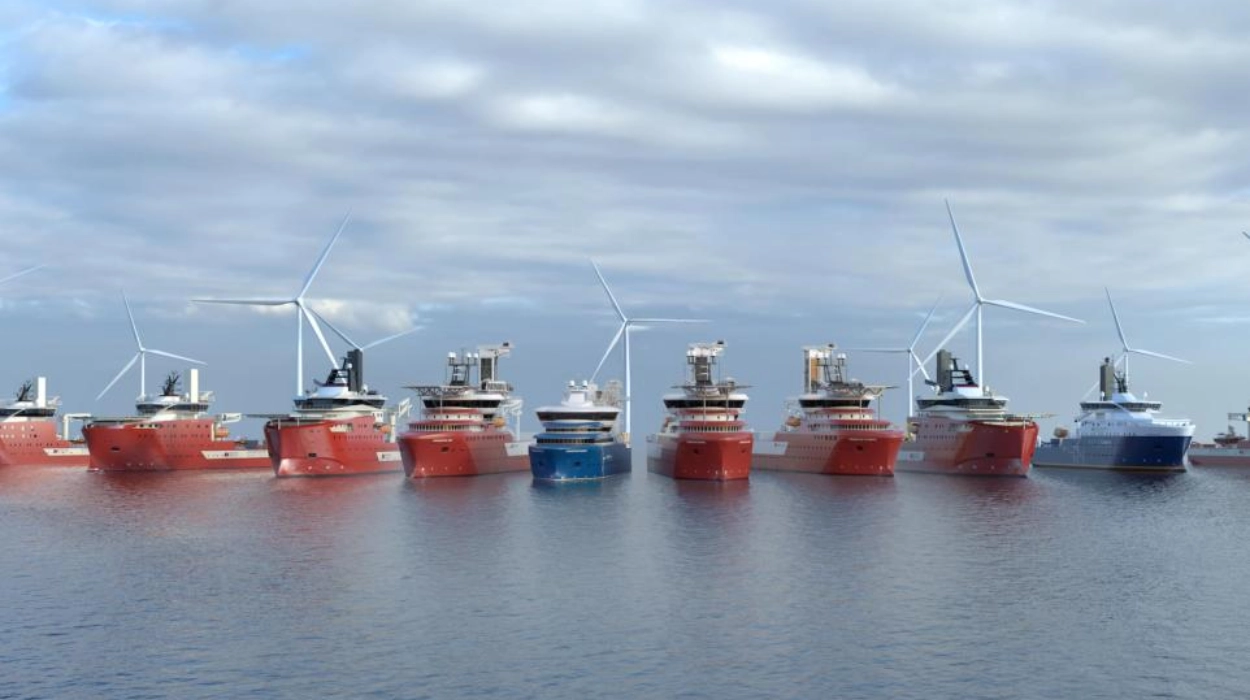
According to Jacob Kvasnicka’s reporting in The Press and Journal, North Star added three newbuild SOVs to its fleet in 2025. The company subsequently acquired another four vessels from Edda Wind in 2026, taking its total SOV fleet to 14.
This expansion represents a significant development in the company’s maritime operations. Its commitment to the offshore wind sector has now exceeded £750 million, reflecting the scale of investment required to develop and operate a specialist fleet.
The company’s strategy also demonstrates the importance of matching vessel capacity with the changing requirements of the offshore energy industry.
The offshore wind market requires vessels capable of supporting increasingly complex projects, particularly as operators seek reliable transportation and accommodation arrangements for technicians working at sea.
For North Star, increasing its fleet capacity provides an opportunity to compete for larger contracts and establish relationships with major offshore wind developers.
The expansion also places additional demands on vessel management, maritime operations, workforce planning and maintenance. These considerations are particularly important for shipping businesses managing specialist assets that require substantial capital investment.
What Did North Star’s CFO Say About the Company’s Growth?
North Star’s chief financial officer, Fraser Dobbie, discussed the company’s commercial development and its growing success in securing long-term contracts.
As reported by Jacob Kvasnicka of The Press and Journal, Dobbie described the company as becoming a tender-winning business, supported by a growing pipeline of long-term work.
He said: “We’re becoming a bit of a tender-winning machine, with lots of long-term work.”
Dobbie also highlighted a major commercial achievement secured during 2025 involving RWE.
He said: “In 2025, we secured the largest chartering deal in history with RWE.”
The agreement comprises four long-term vessel charters, representing a combined 44 years of vessel commitment. Two of these arrangements involve newbuild vessels that were ordered following the agreement and are expected to be delivered in 2028 and 2029.
The contract is significant because it provides North Star with long-term commercial commitments while supporting further investment in its offshore wind fleet.
Dobbie described the agreement as a major achievement for the business, explaining that it had helped North Star establish itself as a market leader in the SOV sector, despite entering the market only in 2021.
He also highlighted the company’s ambitions beyond its established UK emergency response and rescue operations.
According to Dobbie, the business is using its investment strategy to strengthen its position in the international offshore wind market, which he described as a rapidly growing sector.
His comments indicate that North Star’s development is not limited to increasing the number of vessels it operates. The company is also seeking to broaden its commercial reach and secure a greater share of international offshore wind activity.
How Is North Star’s Expansion Affecting Its International Revenue?
North Star’s growing fleet and expanding commercial relationships have started to influence its geographical revenue distribution.
The company generated revenue outside the UK for the first time, reporting £7.7 million from other European markets.
This development represents an important step in its international expansion strategy.
Historically, North Star has maintained a strong presence in the UK emergency response and rescue vessel market. However, its increased investment in offshore wind support vessels is creating opportunities to work with international customers and participate in offshore energy projects beyond its domestic market.
The European revenue contribution demonstrates that the company is beginning to diversify its sources of income.
International expansion can provide shipping businesses with access to additional commercial opportunities, although it also requires them to manage different operational requirements, customer relationships and market conditions.
For North Star, developing an international presence alongside its established UK operations could help strengthen its long-term commercial position.
The company’s focus on offshore wind also connects its growth strategy with the wider development of renewable energy infrastructure across Europe.
Why Has North Star Reported a Larger Pre-Tax Loss Despite Higher Turnover?
Although North Star increased its turnover in 2025, its financial accounts also revealed a larger pre-tax loss.
The company recorded a pre-tax loss of £19.3 million, compared with £7.1 million in 2024.
The difference highlights the financial pressure associated with its expansion programme, particularly the borrowing required to finance new vessels and other capital expenditure.
According to the reporting by Jacob Kvasnicka, North Star has funded significant elements of its growth through debt.
The company’s rising interest costs have therefore become an important factor in its financial performance.
Interest payments increased to £25.6 million in 2025, compared with £15.6 million in the previous year.
These costs reflect the financing requirements of a business investing heavily in specialist maritime assets. Newbuild vessels and fleet acquisitions require considerable upfront expenditure, while the commercial returns are generally generated over longer operating periods.
Fraser Dobbie said the losses were in line with the company’s expectations and should be considered in the context of its expansion strategy.
He explained that North Star was not simply seeking to operate its existing fleet but intended to continue growing the business.
He also indicated that pre-tax losses could continue while the company maintains substantial capital expenditure.
Dobbie said the returns being secured from the investments were strong and that the company had been able to attract considerable investment into the business.
His comments underline the distinction between short-term accounting losses and the longer-term financial objectives of a company pursuing an asset-intensive growth strategy.
For North Star, the priority is to develop a larger operational fleet capable of generating returns through long-term charter agreements and increased commercial activity.
How Has North Star’s EBITDA Improved?
Alongside the increase in turnover, North Star reported an improvement in its EBITDA performance.
The company’s earnings before interest, taxes, depreciation and amortisation increased to £32.4 million in 2025, compared with £29.3 million in 2024.
EBITDA is commonly used to assess a company’s operating performance before financing costs, taxation and certain non-cash accounting expenses are taken into consideration.
The improvement provides another perspective on North Star’s financial performance, particularly when considered alongside the increase in its pre-tax loss.
While the company’s borrowing costs have increased, its EBITDA growth indicates that underlying earnings have also improved.
Fraser Dobbie expressed confidence that the company’s trading performance could improve further during 2026.
He expects EBITDA margins to increase as larger vessels enter the fleet and begin contributing to the company’s operations.
Dobbie also indicated that the business hopes to continue building on these improvements in the coming years.
The expected improvement in margins is important because larger vessels may provide opportunities to increase operational capacity and generate additional earnings from existing commercial relationships.
However, the eventual financial impact will depend on vessel delivery schedules, utilisation, operating expenses and the company’s ability to secure profitable contracts.
The development of the SOV fleet is therefore central not only to North Star’s expansion ambitions but also to its expectations for improving financial performance.
How Many People Does North Star Employ in Aberdeen?
North Star continues to maintain a strong operational presence in Aberdeen, where it employs approximately 1,700 people.
The company considers the city an important base for its maritime activities and has emphasised its commitment to retaining its operations in the area.
In 2025, North Star relocated to a new headquarters at Prime Four Business Park in Kingswells.
The new premises replaced its previous long-standing headquarters on Queen’s Road in Aberdeen.
However, the company’s continuing expansion has already created additional space requirements, and it is considering extending its premises to accommodate future operational needs.
The relocation and potential extension reflect the organisational requirements associated with managing a growing shipping business.
As the fleet expands and the company takes on additional contracts, it needs sufficient office space and operational facilities to support its workforce and business activities.
The company has also highlighted Aberdeen’s access to experienced maritime and offshore personnel as an important factor in its continued presence in the city.
Fraser Dobbie said the business had access to a strong talent pool in Aberdeen and had successfully recruited people with offshore and marine experience.
He emphasised that North Star remained committed to the city, stating that it was where the company was based and that there were no plans to relocate.
His comments reinforce the importance of Aberdeen to North Star’s operational identity and its long-term workforce strategy.
Could North Star’s Expansion Create More Employment Opportunities?
North Star’s fleet expansion and growing offshore wind operations could also have implications for employment.
The company’s RWE agreement involves four long-term vessel charters, with two newbuild vessels ordered as part of the arrangements.
These vessels are expected to support up to 200 workers across the fleet, including as many as 100 new jobs.
The potential employment opportunities reflect the workforce requirements associated with operating specialist offshore vessels.
Service operation vessels require appropriately qualified maritime personnel and technical specialists, alongside workers involved in vessel maintenance, logistics, administration and operational management.
The growth of offshore wind operations also creates demand for personnel capable of supporting offshore energy infrastructure.
For North Star, the anticipated workforce requirements represent another aspect of its expansion strategy.
The company’s access to Aberdeen’s established offshore and marine talent pool could support its recruitment plans as additional vessels enter service.
Nevertheless, the projected employment figures are linked to the expansion programme and should be understood as expected workforce support rather than confirmation that all positions have already been filled.
What Does North Star’s Growth Mean for the UK Shipping and Offshore Wind Industries?
North Star’s financial results provide an example of how established shipping businesses are adapting their operations to opportunities in the offshore renewable energy market.
The company’s development from a major emergency response and rescue vessel operator into a growing provider of offshore wind support vessels demonstrates the changing commercial requirements of the maritime sector.
Its investment in SOVs reflects the need for specialist maritime infrastructure to support offshore wind farms and their ongoing maintenance requirements.
The company’s major RWE agreement also demonstrates the importance of securing long-term contracts when investing in expensive maritime assets.
However, the increased pre-tax loss illustrates the financial challenges that can accompany such expansion.
Shipping companies must balance investment in vessels and operational capacity against borrowing costs, maintenance expenditure and the timing of future revenue.
North Star’s experience highlights the importance of strategic planning, fleet management, financial oversight and contract management in the development of a growing maritime business.
These considerations are particularly relevant to professionals working across Shipping, Maritime and Ports, where commercial performance increasingly depends on managing complex vessel operations and responding to changing energy-sector requirements.
For North Star, the next stage of development will depend on the successful introduction of its additional vessels, the delivery of existing charter commitments and its ability to convert fleet investment into sustainable operating returns.
The company’s increased turnover, improved EBITDA and first reported revenue from outside the UK indicate progress towards its expansion objectives, while its higher financing costs demonstrate the challenges that remain.
As the business continues to develop its offshore wind operations, Aberdeen is expected to remain central to its workforce, management and operational activities.