
Key Points
- Marea Scale Models has launched in the UK, bringing its proprietary AI-assisted design process, Ai Refloat™, to the European maritime market.
- The company says Ai Refloat™ is designed to improve the accuracy and efficiency of maritime scale-model production while retaining traditional hand-finishing and craftsmanship.
- Marea has already used the process for commercial commissions involving container ships, bulk carriers and crude oil tankers for an international maritime client, with the models completed within two months.
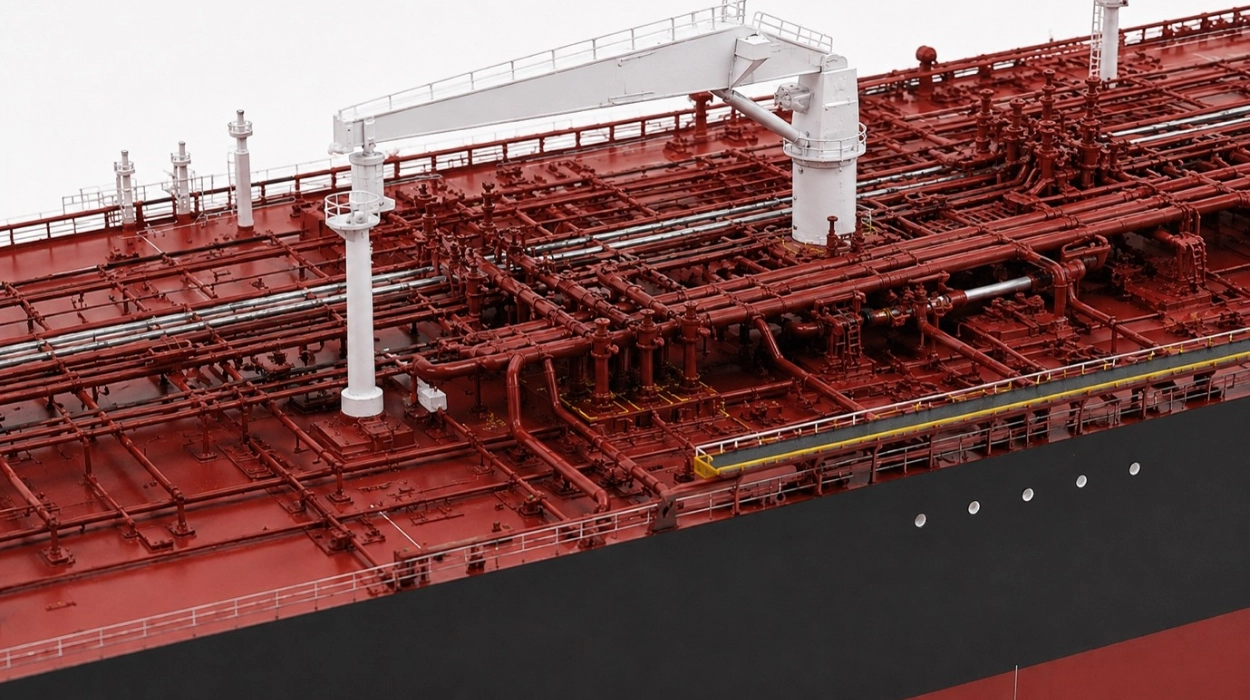
- The technology addresses a technical problem in scale modelling: vessel features such as railings, deck equipment and structural components can become too small, fragile or indistinct when reduced in size.
- Marea says Ai Refloat™ can support details as fine as 30 microns (0.03mm), helping retain vessel-specific characteristics that could otherwise be simplified or lost.
- Rezz Ghanty, Creative Director of Marea Scale Models, said the technology is intended to remove unnecessary delays from the design process rather than reduce the role of skilled model makers.
- Ai Refloat™ operates at the design stage and does not autonomously manufacture, assemble or finish the physical models. Marea’s team continues to undertake assembly, painting, detailing, finishing and weathering by hand.
- Marea’s initial focus is merchant shipping, including container ships, cargo vessels, bulk carriers, crude and product tankers and very large crude carriers (VLCCs).
- The company also produces smaller-format presentation models using recycled marine waste material in limited runs of 10 units.
- The launch represents an application of artificial intelligence to the design and preparation stage of a traditional maritime craft rather than an attempt to automate the complete model-making process.
Marea Scale Models has launched in the UK with a proprietary AI-assisted design process intended to make detailed ship-model production more efficient while retaining the hand-finished craftsmanship associated with traditional maritime model making. The company’s AI Refloat™ process is being introduced to the European maritime market and has already been used for commercial models of container ships, bulk carriers and crude oil tankers. Marea says the technology helps address the difficulty of retaining vessel-specific details when full-sized ships are reduced to miniature scale, while physical assembly, painting, detailing and finishing remain the responsibility of skilled model makers.
What has Marea Scale Models launched in the UK?
Marea Scale Models has launched its UK operation with Ai Refloat™, an in-house AI-assisted design process developed for maritime scale modelling. India Shipping News reported on 26 September 2026 that the company is bringing the process to the European maritime market with the stated aim of producing detailed and accurate models more efficiently without removing the hand-finished element of production.
MarineLink separately reported on 25 September 2026 that Marea had launched in the UK and described Ai Refloat as an AI-assisted design process intended to improve the efficiency of producing detailed maritime scale models while maintaining the finish expected by clients. MarineLink attributed the report to Maritime Activity Reports, Inc., rather than naming an individual journalist.
The launch therefore centres on the combination of digital design and traditional model-making rather than the replacement of the latter. Marea’s own materials describe the company as a UK-headquartered maker of bespoke scale ship models, while its production process combines digitalised workflows with craftsmanship.
How does Ai Refloat address the challenges of ship model production?
A major challenge in maritime scale modelling is that a ship cannot simply be reduced proportionally and still necessarily look correct at a smaller size.
Features that are prominent on a full-sized vessel can become extremely small when reproduced as a model. Railings, deck equipment and structural elements may become too fine to manufacture reliably, too fragile to handle or too indistinct to remain visually recognisable.
According to India Shipping News, traditional model makers have often dealt with this issue through extensive manual design work, adapting individual components before manufacturing. That process can involve decisions about which details need to be modified, strengthened or simplified to survive at a smaller scale.
Marea says Ai Refloat changes the process by addressing these scaling decisions during the digital design stage. The objective is to preserve vessel-specific characteristics while reducing the amount of manual reworking required before production begins.
The company’s approach is also reflected in its own explanation of Ai Refloat. Marea says the system is intended to determine how much a feature can be simplified at a particular scale while still retaining the visual characteristics of the original vessel.
How precise can Marea’s AI-assisted design process be?
Marea says its process can reproduce details as fine as 30 microns, or 0.03mm. According to India Shipping News and MarineLink, this level of precision can help retain features that might otherwise disappear or require simplification when a vessel is reproduced at a smaller scale.
The significance of this capability is particularly relevant to models commissioned to represent a specific vessel rather than simply a general ship type.
A model of a container ship, tanker or bulk carrier needs to retain characteristics that distinguish the individual vessel. Those characteristics can include structural arrangements and equipment that are not necessarily obvious if the model is reduced to a generic representation of its vessel class.
Marea’s approach is therefore based on preserving identifiable features within the physical limitations of miniature production. Its own published material describes Ai Refloat as a tool for determining which details carry the visual identity of a vessel and where detail can be simplified without losing that identity.
What commercial ship models has Marea already produced?
Marea has already applied Ai Refloat™ to commercial commissions. India Shipping News reported that the company delivered several commercial ship models to an international maritime client within two months. The projects included container ships, a bulk carrier and crude oil tankers.
MarineLink also reported the completion of commercial models for an international maritime client within the two months. It noted that each model was individually assembled, detailed, painted and finished by hand.
News By Wire reported the same launch and described Marea as a UK-based maritime model maker using proprietary AI-assisted design. The report, published on 25 September 2026, was attributed to Sue Terpilowski. Muck Rack also lists the Marea launch article under Sue Terpilowski and News by Wire.
The available reports therefore indicate that Ai Refloat is not only a development-stage concept. Marea says it has already been incorporated into actual commercial model production.
Does AI manufacture Marea’s ship models?
No. The available reporting makes a clear distinction between AI-assisted design and physical manufacturing.
India Shipping News reported that Ai Refloat™ is used during the design stage and does not manufacture, assemble, or finish models autonomously. Once a digital design has been approved, Marea’s team carries out the physical work.
MarineLink similarly reported that the technology operates at the design stage, after which Marea’s team assembles, paints, details, finishes and applies weathering to the model by hand.
This distinction is central to the company’s stated approach. Rezz Ghanty, Creative Director of Marea Scale Models, said the purpose of the technology was not simply to increase speed. According to India Shipping News, Ghanty said the system is intended to remove delays where they do not add value while leaving the finishing process to people and their judgement.
Ghanty also said that the company did not intend technology to replace skilled people. Instead, he described its purpose as allowing model makers to spend more time on activities where experience and judgement are important, such as refining finishes, correcting details and representing the character of an individual vessel.
What role does craftsmanship continue to play?
Marea’s model-making process continues to rely on manual craftsmanship after the digital design stage.
The company says its Master Model Maker has more than 30 years of bench experience and oversees the surface treatment and final finish of commissions.
This means that the introduction of Ai Refloat does not eliminate the traditional stages of physical model production. Instead, the technology is positioned as a preparation and design tool.
The distinction was also emphasised in Marea’s own published discussion of the process. The company says Ai Refloat informs the model-making process rather than physically making the models, with the technology intended to help determine how much detail can be retained at a particular scale.
For Marea, the stated objective is therefore to combine digital precision with human finishing rather than substitute one for the other.
Which parts of the maritime sector is Marea targeting?
Marea’s initial focus is on merchant shipping. The company’s work includes container ships, cargo vessels, bulk carriers, crude oil tankers, product tankers and VLCCs.
Technical accuracy can be particularly important when modelling commercial vessels because certain components may be immediately recognisable to people who work on or operate those vessels.
For tankers and gas carriers, for example, Marea identifies manifold arrangements, deck equipment, pipework and containment systems as details that can affect whether a model accurately represents the original vessel.
The emphasis on vessel-specific details also reflects the difference between producing a generic model of a particular class of ship and producing a commissioned model intended to represent an individual vessel.
Does Marea produce smaller presentation models?
Marea’s offering extends beyond large display models.
According to India Shipping News and MarineLink, the company also produces smaller-format presentation models made from recycled marine waste material. These are produced in limited runs of 10 units.
The smaller models are intended for occasions including newbuild deliveries, naming ceremonies, fleet milestones and other significant events in the life of a shipping company or vessel.
The limited-run approach allows companies to commission a smaller number of models rather than committing to a large production quantity.
News By Wire also reported that the launch of Ai Refloat is part of a wider set of announcements planned by Marea, including Amaré, a proposed range of scale models made using plastic recovered from the marine environment.
What did Rezz Ghanty say about the purpose of the technology?
Rezz Ghanty, Marea Scale Models’ Creative Director, has positioned Ai Refloat as a tool for dealing with the technical difficulties of reducing vessels to miniature scale.
As reported by India Shipping News, Ghanty said the technology was developed around a longstanding problem in model making: reducing the size of a vessel can result in the loss of the features that make the vessel distinctive.
Ghanty also described examples of the problem, including railings becoming too fragile, fittings losing definition and structural features beginning to disappear at smaller scales. He said Ai Refloat enables these issues to be addressed before physical production rather than being corrected later at the model-making bench.
In another statement reported by India Shipping News, Ghanty said the company’s objective was not to make craftsmanship less important but to give model makers more time to apply their skills.
Later in the report, Ghanty said Marea believed maritime model making had reached a point where technology could support craftsmanship without diminishing it. He added that the company aimed to provide clients with a more responsive production process while keeping each model recognisable as the vessel it was commissioned to represent.
What could the UK launch mean for maritime model making?
The Marea launch illustrates one specific application of artificial intelligence within a traditional maritime craft: using digital tools to resolve design and scaling problems before physical production begins.
The company is not presenting AI Refloat as a fully automated manufacturing system. Instead, its reported workflow separates digital design from physical craftsmanship. AI-assisted processing is used to help determine how vessel details can be represented at miniature scale, while human model makers remain responsible for assembling, painting, detailing and finishing the finished products.
The development also demonstrates how Shipping, Maritime and Ports and Artificial Intelligence (AI) can intersect in specialised applications beyond vessel operation itself. For professionals following the use of digital technologies across maritime industries, the Marea launch provides an example of AI being incorporated into a design workflow while retaining skilled manual production.
The UK launch comes as Marea positions itself in the European maritime market and expands its work across commercial vessel types. Its stated focus remains on producing models that retain the characteristics of the original ships while reducing unnecessary design and production delays