
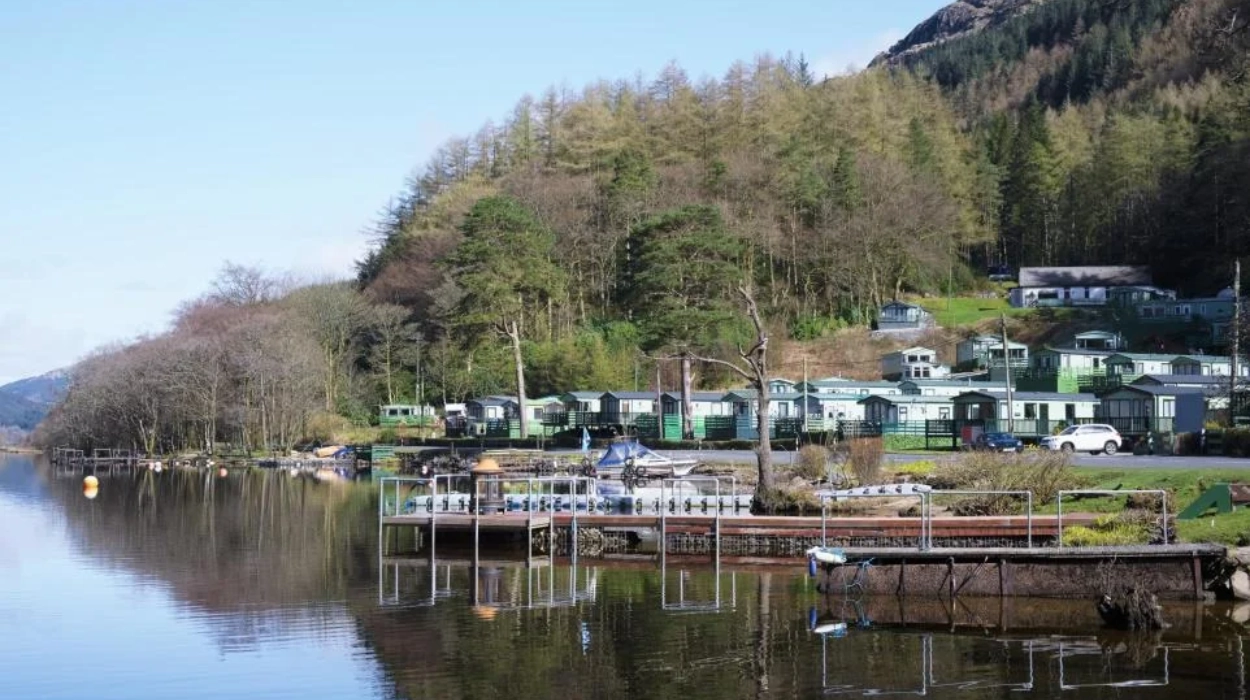
Key Points
- Cove Communities Holiday Park UK HoldCo Limited entered administration in November 2025 with reported liabilities of approximately £244 million.
- The company is the holding company behind a portfolio of holiday parks operating across Scotland and England.
- Joint administrators Adam Paxton and Robert Croxen of Alvarez & Marsal were appointed to oversee the administration process.
- The reported debt includes approximately £70 million owed to a secured lender and around £174 million owed to unsecured creditors, much of it associated with inter-company debt and loan notes.
- The administrators have been exploring options to sell the remaining holiday park portfolio, with property adviser Colliers involved in marketing the sites.
- The portfolio being marketed includes 11 holiday parks, with locations in Scotland, England and Cornwall.
- Scottish sites include Drimsynie, Hunters Quay, Loch Awe, Loch Eck, Loch Lomond, St Catherine’s, Stratheck and Springwood.
- Other parks in the portfolio include Solway Holiday Village in Cumbria and Gwel an Mor Resort in Cornwall.
- Several operating businesses have continued trading while the administrators seek buyers and assess the available options.
- The group’s financial difficulties have been associated with higher interest rates, reduced consumer spending, rising operating costs and the impact of severe flooding at Medmerry Holiday Park.
- Medmerry Holiday Park in West Sussex closed following flooding in 2024 and is not expected to reopen.
- The administration period was extended following a creditors’ decision, with the latest extension taking the process into October 2027.
- The case highlights the financial pressures facing highly leveraged businesses in the UK holiday park, leisure and hospitality sectors.
Why Has UK Holiday Park Company Cove Communities Entered Administration?
Cove Communities Holiday Park UK HoldCo Limited entered administration in November 2025 after facing substantial financial pressure, with reported liabilities of approximately £244 million. The company sits at the centre of a group operating holiday parks across Scotland and England, including locations associated with the former Argyll Holidays portfolio. Joint administrators Adam Paxton and Robert Croxen of Alvarez & Marsal were appointed to oversee the process and consider options for the group’s assets. According to reporting by The Scottish Sun, the liabilities include around £70 million owed to a secured lender and approximately £174 million owed to unsecured creditors, much of it linked to inter-company debt and loan notes. While several holiday park businesses have continued trading during the administration, the administrators have been seeking buyers for the remaining portfolio. The case has drawn attention to the financial challenges facing holiday park operators dealing with significant borrowing, higher interest costs, rising operating expenses and pressure on consumer spending.
The development represents a major restructuring process for a business group with a presence in several UK holiday destinations. It also raises questions about the future ownership of the parks, the position of creditors and the operational arrangements for businesses that continue to receive holidaymakers while the administration progresses.
The £244 million figure relates to the reported liabilities of the holding company and should not be understood as an amount owed separately by every individual holiday park.
The administration process is being managed by Alvarez & Marsal, while the administrators consider how best to realise value from the group’s assets and address the interests of creditors.
How Much Debt Does Cove Communities Owe?
According to The Scottish Sun’s report by Elysia Taylor-Hearn, Cove Communities entered administration with liabilities of approximately £244 million.
The reported creditor position includes two principal categories:
- Secured debt: Approximately £70 million owed to a secured lender.
- Unsecured debt: Approximately £174 million owed to unsecured creditors, largely through inter-company debt and loan notes.
The distinction between secured and unsecured creditors is important because the two groups do not necessarily have the same position when assets are realised during an insolvency process.
A secured lender generally has rights over specific assets or security provided under its lending arrangements. The amount it ultimately recovers depends on the value realised from the relevant security and the costs and circumstances of the administration.
Unsecured creditors do not have the same level of security over company assets. Their recovery depends on the funds available after the costs of the administration and claims with higher priority have been addressed.
The reported £174 million unsecured creditor figure includes substantial inter-company debt and loan notes. These liabilities reflect the financial arrangements within the wider corporate structure rather than necessarily representing unpaid invoices from individual suppliers.
The administrators’ work includes reviewing the company’s financial position, identifying available assets, assessing creditor claims and considering the options for realising value.
The figures illustrate the scale of the financial challenge facing the holding company. However, the final amount recovered by creditors cannot be established simply by looking at the total liabilities. It will depend on the assets available, the outcome of any sales and the priority of claims.
Who Is Managing the Cove Communities Administration?
Joint administrators Adam Paxton and Robert Croxen of Alvarez & Marsal Europe LLP were appointed to manage the administration of Cove Communities Holiday Park UK HoldCo Limited.
The appointment began on 17 November 2025, according to the company’s insolvency record at Companies House.
Alvarez & Marsal is responsible for overseeing the insolvency process and assessing the options available for the business and its assets.
The administrators’ responsibilities include protecting and realising company assets, reviewing financial information, communicating with creditors and considering whether a sale or other restructuring option can provide a better outcome for interested parties.
The administration does not automatically mean that every holiday park associated with the wider group must close immediately. The position of each operating company and site depends on its own circumstances, trading arrangements and the decisions taken during the process.
This distinction is particularly important for holiday-home owners, employees, customers, suppliers and local businesses that depend on the parks.
The administrators have continued exploring sale opportunities for the remaining portfolio while several operating businesses have remained open.
Which UK Holiday Parks Are Included in the Cove Communities Portfolio?
Cove Communities has been associated with holiday parks in Scotland and other parts of the UK. The portfolio includes locations that were previously operated under the Argyll Holidays name, alongside sites in England and Cornwall.
According to reporting on the administration and the portfolio sale, Colliers has been involved in marketing 11 holiday parks.
The sites identified in reporting include:
| Holiday park | Location |
| Drimsynie Holiday Park | Scotland |
| Hunters Quay Holiday Village | Scotland |
| Loch Awe Holiday Park | Scotland |
| Loch Eck Caravan Park | Scotland |
| Loch Eck Country Lodges | Scotland |
| Loch Lomond Holiday Park | Scotland |
| St Catherine’s Caravan Park | Scotland |
| Stratheck Holiday Park | Scotland |
| Springwood Holiday Park | Kelso, Scottish Borders |
| Solway Holiday Village | Silloth, Cumbria |
| Gwel an Mor Resort | Cornwall |
The portfolio includes different types of holiday accommodation and leisure facilities, with sites serving visitors seeking breaks in coastal, rural and countryside destinations.
The Scottish properties form a significant part of the group’s historic presence in the UK holiday park market. Several were previously associated with Argyll Holidays, which Cove acquired in 2022.
The portfolio’s geographical spread is relevant to the sale process because prospective buyers may assess the sites individually or consider acquiring a larger group of properties.
The outcome could depend on the commercial performance of individual parks, their facilities, property arrangements, existing holiday-home ownership agreements and the investment required to operate them.
Why Are Administrators Seeking Buyers for the Holiday Parks?
The administrators are seeking to realise value from the group’s assets while managing the interests of creditors.
The appointment of administrators creates a formal process through which the company’s financial position and available assets can be assessed. Where a business owns or controls valuable operating assets, a sale may provide a route to generating funds.
In Cove Communities’ case, the holiday park portfolio represents a substantial part of the group’s business interests.
Property adviser Colliers has been involved in marketing the remaining parks, according to reporting on the sale process.
Potential buyers may include existing holiday park operators, leisure and hospitality businesses, investment groups or other organisations seeking to expand their presence in the UK tourism market.
A buyer considering the portfolio would need to assess more than the headline value of the properties. The commercial position of each site, its operating costs, maintenance requirements, facilities, customer base and existing agreements could all influence the value and attractiveness of an acquisition.
The parks may also appeal to different types of purchasers depending on their location and operating model. A buyer with an existing presence in Scotland, for example, may view the Scottish sites differently from an operator seeking to expand into Cornwall or Cumbria.
The administrators’ objective is to assess the available options and pursue a process that provides an appropriate outcome under the circumstances of the administration.
What Factors Contributed to Cove Communities’ Financial Difficulties?
Reporting on the company’s financial problems has highlighted several pressures affecting the holiday park operator.
These include higher interest rates, weaker consumer spending, rising operating costs and the impact of flooding at Medmerry Holiday Park.
How Did Higher Interest Rates Affect the Business?
Holiday park operators can require significant investment in land, accommodation, infrastructure, facilities and ongoing maintenance.
Where a business relies heavily on borrowing, higher interest rates can increase the cost of servicing debt. This can place additional pressure on cash flow, particularly when a company has substantial liabilities and needs to continue investing in its properties.
For a highly leveraged group, increased financing costs can reduce the funds available for maintenance, improvements and day-to-day operations.
The reported £244 million liability position makes the cost of borrowing an important part of the wider financial context surrounding Cove Communities.
How Did Consumer Spending Pressures Affect Holiday Parks?
Holiday parks depend on consumer demand for accommodation, leisure activities and holiday experiences.
When household budgets are under pressure, customers may reduce discretionary spending, choose shorter breaks or look for lower-cost alternatives.
This can affect revenue for operators that rely on holiday bookings, accommodation sales, food and beverage services and additional leisure spending.
Reduced consumer spending does not necessarily mean that demand disappears. However, it can make it harder for businesses to maintain revenue growth while facing higher staffing, energy, maintenance and financing costs.
How Did Rising Operating Costs Add to the Pressure?
Holiday parks require ongoing expenditure to maintain accommodation, grounds, utilities, leisure facilities and customer services.
The costs of employing staff, maintaining buildings, managing utilities and meeting safety and regulatory requirements can be significant.
Operators also need to maintain facilities to meet customer expectations and protect the long-term condition of their properties.
When operating costs rise faster than income, profit margins can come under pressure. For a business already carrying substantial debt, this can make financial recovery more difficult.
These issues are relevant to Hospitality and Tourism, where accommodation operators must balance customer demand, service quality, operating expenditure and long-term investment.
What Happened to Medmerry Holiday Park After the Flooding?
Medmerry Holiday Park in West Sussex has been one of the most significant individual site developments connected with the wider Cove Communities situation.
The park closed in 2024 following severe flooding and is not expected to reopen.
The closure meant that the site was no longer operating as a normal holiday destination before the latest developments in the wider group’s administration.
The park’s closure also illustrates how physical damage to a tourism property can affect its operating position and future prospects.
Holiday parks depend on the condition of their land, buildings, accommodation and supporting infrastructure. Severe flooding can disrupt trading, damage facilities and create uncertainty over the cost and practicality of reopening.
The consequences can extend beyond the immediate loss of bookings. Operators may also face costs associated with repairs, insurance, site assessments and decisions about whether a property remains commercially viable.
In September 2026, the companies associated with Medmerry’s operation and property structure entered administration separately. Companies House records show that Cove Communities Venture 2 Medmerry OpCo Limited entered administration on 8 September 2026, with Robert Croxen and Adam Paxton appointed as practitioners.
The Medmerry development should therefore be distinguished from the original November 2025 administration of the wider holding company. The later administration involved the companies specifically associated with the Medmerry site.
The park’s closure and the subsequent insolvency developments underline the risks that environmental events can create for businesses operating tourism and leisure properties.
What Happened to Argyll Holidays After Its Acquisition by Cove Communities?
The Cove Communities group expanded its UK holiday park presence through its acquisition of Argyll Holidays in 2022.
The acquisition brought a group of established Scottish holiday parks into the wider Cove portfolio.
The sites included destinations in Argyll and the west of Scotland, with holiday accommodation and leisure facilities serving domestic and international visitors.
However, the wider financial difficulties later affected companies connected with the Argyll Holidays operations.
The Argyll-related operating company entered administration in November 2025, according to its Companies House filing history. The administration process has continued alongside the wider restructuring of the Cove group.
The Scottish portfolio has remained an important part of the administrators’ sale process, with several parks identified for potential acquisition.
The position of each park must be considered separately because the administration of a company does not necessarily mean that all its sites stop trading.
For customers and holiday-home owners, the practical questions include whether bookings remain valid, whether facilities continue operating, who manages the sites and whether a new owner will take over the business.
These matters depend on the arrangements applying to each individual park and any decisions made by the administrators or a future purchaser.
Why Has the Administration Period Been Extended Until October 2027?
The administration process has been extended while work continues on the company’s assets and potential sale options.
Companies House filing history for Cove Communities Holiday Park UK HoldCo Limited records a notice of extension of the administration period dated 16 October 2026.
The Scottish Sun reported that creditors approved an extension taking the administration into October 2027.
An extension provides additional time for administrators to continue their work, including the marketing of assets, discussions with prospective buyers and the consideration of the best available options for creditors.
The process can take time where a company has a complex corporate structure, a substantial portfolio of properties and a large number of creditors.
The administrators may need to assess individual properties, review legal and financial arrangements, consider bids and negotiate the terms of any sale.
The extension does not itself confirm that a buyer has been found or that a transaction will be completed by a particular date. It allows the administration process to continue while the available options are explored.
The latest Companies House filing provides an official record of the extension and the continuing administration status of the holding company.
What Could the Cove Communities Administration Mean for Holiday Home Owners and Employees?
The administration has implications for several groups connected with the holiday parks, including holiday-home owners, employees, customers, suppliers and local businesses.
For holiday-home owners, the position may depend on the contractual arrangements applying to their individual park, the company responsible for operating the site and any changes resulting from a sale.
A change of ownership does not necessarily mean that an individual holiday park will close. A buyer may acquire a site as a going concern and continue operating it, potentially retaining staff and existing facilities.
However, the terms of any sale and the plans of a future operator will determine how each site develops.
Employees may also be affected by changes in ownership, management structures or operating arrangements. Where a park continues trading, staffing requirements may remain, although future decisions will depend on the purchaser and the site’s financial performance.
Suppliers and local businesses may be concerned about outstanding payments, future contracts and the continuity of commercial relationships.
The administrators’ work includes dealing with creditor claims and assessing the available funds and assets. Individual creditors should rely on formal communications from the administrators for information about their own position.
The administration also demonstrates why businesses operating across multiple sites need clear arrangements for financial management, operational continuity and risk control.
What Does the Cove Communities Case Reveal About the UK Holiday Park Sector?
The Cove Communities administration highlights the financial and operational challenges facing businesses in the UK holiday park and leisure markets.
Holiday park operators must manage property assets, accommodation, infrastructure, staffing, customer services and seasonal demand. These responsibilities can require substantial capital investment and ongoing expenditure.
A business that expands through acquisitions may also take on additional borrowing and integration responsibilities. While acquisitions can increase market presence and create opportunities for growth, they can also increase financial exposure if trading conditions weaken or financing costs rise.
The Cove case brings together several issues that can affect large leisure operators:
- Debt management: Significant borrowing can leave businesses exposed when interest rates rise or cash flow weakens.
- Operating expenditure: Utilities, staffing, repairs and maintenance can place pressure on margins.
- Consumer demand: Changes in household spending can affect bookings and additional customer expenditure.
- Environmental risk: Flooding and other physical events can disrupt operations and damage property assets.
- Portfolio management: Operating multiple sites across different regions creates additional management and investment requirements.
- Corporate restructuring: Complex group structures can make insolvency and asset sales more demanding.
The case also demonstrates the importance of financial oversight and long-term planning in Management, Accounting Finance and Budgeting and Project Management. These areas are relevant to businesses responsible for managing substantial property portfolios, investment programmes and operational risks.
The administration does not establish that all UK holiday park operators face the same financial difficulties. Each business has its own financing arrangements, operating model, property portfolio and customer base.
However, the developments at Cove provide a significant example of how high debt levels and operational pressures can combine to create difficulties for a multi-site leisure business.
What Happens Next for Cove Communities and Its Holiday Park Portfolio?
The future of the Cove Communities portfolio will depend on the administrators’ continuing work and the outcome of the sale process.
The involvement of Colliers in marketing the parks provides a route for potential buyers to assess the properties and consider acquisition opportunities.
The administrators will need to evaluate the available offers, the value of the assets and the potential outcomes for creditors.
The process could result in the sale of the portfolio as a group, the sale of individual parks or another arrangement considered appropriate by the administrators.
Any purchaser will need to consider the operational requirements of the sites, including accommodation, facilities, employees, customer arrangements and ongoing investment.
For the parks that continue trading, maintaining operational stability during the sale process will remain important for customers, holiday-home owners and staff.
The administration extension into October 2027 gives the administrators further time to progress the process, but it does not guarantee a particular sale outcome.
For creditors, the key issue will be how much value can be realised from the assets and how that value is distributed under the relevant insolvency rules.
For the UK holiday park sector, the case provides a reminder that large property portfolios can face significant challenges when financing costs, operating expenditure and trading conditions move against them.
Cove Communities’ reported £244 million debt position makes the administration a substantial restructuring case. The eventual outcome will depend on the sale process, the value of the remaining portfolio and the decisions taken by the administrators over the coming months.