
Offshore safety training is the set of accredited courses that prepares you to work, survive and respond to emergencies on rigs, wind farms and vessels. Employers commonly require schemes such as OPITO, GWO, STCW and IADC RigPass, with courses like BOSIET and FOET the usual entry tickets. Check with your employer or dutyholder for the exact certificate, then verify the provider’s approval before you book.
TL;DR:
- Oil and gas operatives typically need BOSIET or FOET, while wind workers usually need GWO Basic Safety Training; drilling roles may add IADC RigPass.
- Requirements vary by role: helideck crew need extra OPITO training, medics need approved qualifications, divers follow IMCA schemes, and vessel crew need STCW certification.
- Sea survival, helicopter escape, and firefighting require in person drills, while online theory is acceptable only where the relevant scheme permits it.
- In the UK, HSE approval certificates run for five years after a satisfactory site visit, but employers should verify provider approval before booking.
Table of Contents
- What does offshore safety training cover?
- Which recognised courses and certification schemes should you look for?
- Who needs which course?
- How are courses delivered: on-site, blended, online or VR?
- How do you verify approvals and refresher requirements?
- What should you check before choosing a provider?
- What does a typical training pathway look like?
- Why does accredited training matter?
- Offshore safety training with Oxford Centre
- FAQ
- Sources
What does offshore safety training cover?
Most offshore safety courses are built from the same core modules, and the exact mix depends on the scheme and the site you are heading to:
- Sea survival and abandon ship: donning a survival suit, using lifejackets and life rafts, and escaping a flooded space.
- Helicopter and helideck safety: transit procedures, emergency exits and underwater escape practice.
- Fire awareness and firefighting: recognising hazards, raising the alarm and using extinguishers and breathing apparatus.
- First aid: immediate care until specialist help arrives.
- Working at heights: harness use, rescue and fall prevention.
- Hazard awareness: spotting dropped objects, confined spaces, permit systems and unsafe behaviour before they cause harm.
Training is competency-based. You do not earn a certificate by sitting in a classroom; you prove skills in practical drills and scenario assessments, such as escaping from a simulated capsized helicopter or fighting a live fire. Some roles add modules beyond this core, for example rescue craft handling, gas testing or specialist medical care, so treat the core list as a floor rather than a ceiling.
Which recognised courses and certification schemes should you look for?
Several schemes serve different parts of the industry:
- OPITO: widely used in oil and gas, covering BOSIET and FOET plus further helideck and lifeboat courses.
- GWO BST: the wind industry’s Basic Safety Training, with modules for first aid, manual handling, fire, working at heights and sea survival.
- STCW: the international seafarer convention, which sets minimum standards for training, certification and watchkeeping, including competence-based provisions for emergency, occupational safety, medical care and survival functions.
- IADC RigPass: an industry-standard safety orientation that prepares new employees for onshore and offshore drilling operations, independently audited and ISO 9001:2015-certified.
Related programmes exist too. The American Petroleum Institute runs the WorkSafe Offshore Safety Orientation, which has five core sections. Norway publishes its own national safety and preparedness curriculum, a useful example of how a sector structures basic and refresher courses.
Who needs which course?
Role decides the minimum. As a rule of thumb, which you should always confirm with your employer:
- Offshore operative or roustabout: a BOSIET or FOET for oil and gas, or GWO BST for wind, plus a drilling orientation such as RigPass where relevant.
- Helideck crew: the core offshore survival certificate plus helideck-specific courses within the OPITO range.
- Offshore medics and first aiders: an approved offshore first aid or medic qualification, which carries its own approval rules.
- Divers, diving supervisors and life support technicians: specialist certification through IMCA’s progression schemes, which differ from basic safety training.
- Vessel crew: STCW certification at the level their rank and duties demand.
Requirements vary by company, field and flag state. Ask the dutyholder or your HR contact which scheme and certificate they will accept before paying for anything.
How are courses delivered: on-site, blended, online or VR?
Practical skills need practical venues. Sea survival, helicopter escape and firefighting are taught on-site, in pools, simulators and fire grounds, because you cannot certify muscle memory through a screen. Theory often sits in the classroom or online.
- On-site: all drills and assessments in person, typically over several days.
- Blended: online theory first, then a shorter practical block at the training centre.
- Online self-paced: suited to orientations and refresher theory where the scheme allows it.
- VR and simulation: the API orientation offers VR-enhanced scenarios alongside instructor-led and online delivery, which helps you rehearse emergencies before the real course.
Before booking a blended or online option, check which elements the scheme requires in person. A certificate with a skipped practical component may not be accepted offshore.
How do you verify approvals and refresher requirements?
Approval is where many people get caught out. In the UK, HSE guidance on offshore work explains that training organisations must gain and maintain approval to run offshore first aid and medic courses, and that employers should check the provider’s certificate of approval, including its approval number and expiry. HSE’s guidance on qualifications also sets out the application process and a full certificate period of five years following a satisfactory site visit.
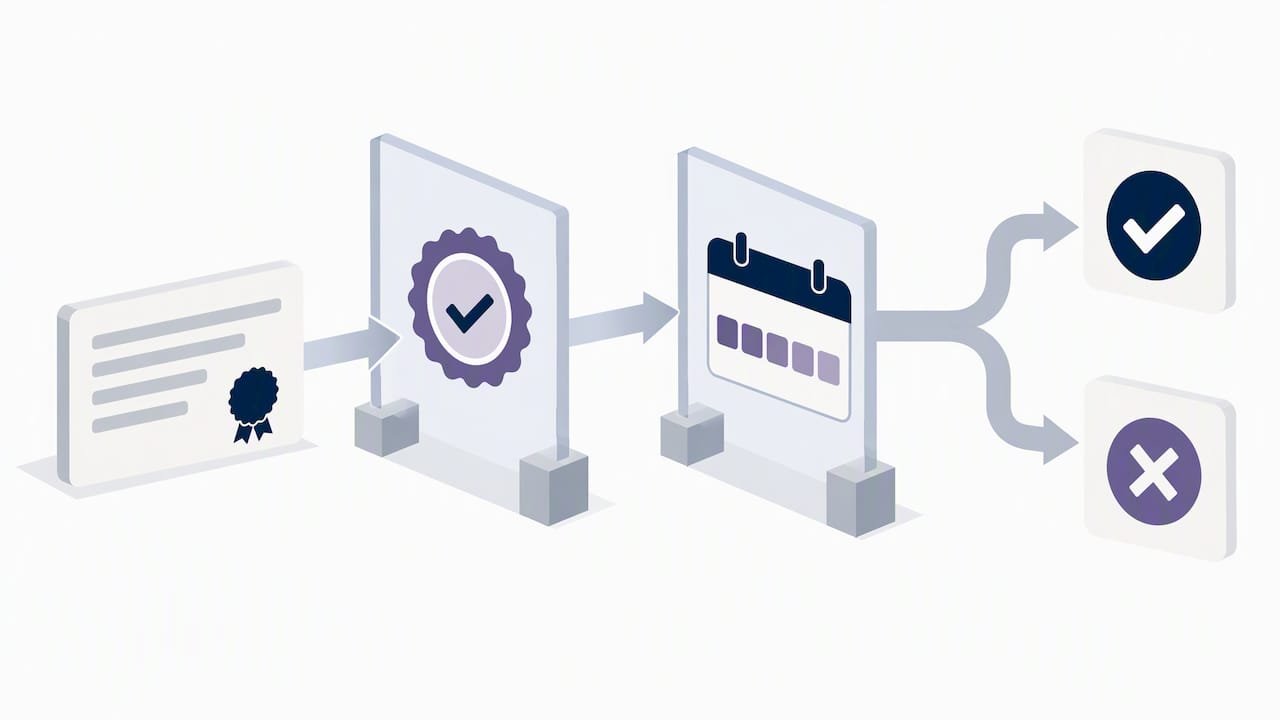
For diving and other specialist roles, IMCA’s certification programmes list approved training courses and provide an online verification tool employers can use.
Refreshers depend on the issuing body. For example, HM Coastguard’s OSARM-R course, a two-day offshore search and rescue management course, suggests a refresher every five years.
- Note the issue and expiry date of every certificate.
- Book refreshers before expiry, not after.
- Keep copies of approval details alongside your certificates.
Pro Tip: Ask the issuing body, not just the provider, what the validity and refresher interval are, and write the answer next to the certificate.
What should you check before choosing a provider?
Work through this list before you pay a deposit:
- Verify the provider’s accreditation or approval with the scheme owner or regulator.
- Request trainer CVs showing offshore or industry experience.
- Confirm the syllabus matches the modules your employer requires.
- Check practical facilities: pools, fire grounds, simulators and equipment condition.
- Ask how competence is assessed and what happens if you need a resit.
- Confirm the certificate’s validity period and requalification rules.
- Check the language of instruction and the available dates.
Then ask your employer or dutyholder two questions: which scheme and certificate will you accept, and do you require OPITO, GWO, STCW or IADC specifically?
Pro Tip: Ask to see the provider’s approval certificate, HSE, IMCA or scheme-specific, and confirm in writing that you will receive a certificate on successful completion.
What does a typical training pathway look like?
Most careers follow a similar ladder:
- Basic safety induction: introductory awareness and, for drilling, an orientation such as RigPass.
- Core courses: the OPITO, GWO or STCW certificates your sector requires.
- Role-specific or specialist accreditation: IMCA schemes for divers and supervisors, or approved medic qualifications.
- CPD and revalidation: ongoing development and renewal before certificates lapse.
Specialist roles may require examinations and CPD logging to keep certification current, as emergency response planning in Massachusetts describe. Keep your own record of every course, date and certificate, and ask your employer for a copy of their training log so gaps show up early. If you work on the East Anglian coast, our note on offshore maintenance demand in Norfolk and Suffolk shows why this matters locally.
Why does accredited training matter?
Accredited, competency-based training is the one part of offshore life you cannot improvise. A certificate that employers recognise opens doors, but the real value is the drill you remember when an alarm sounds. We deliver flexible, accredited courses, and the lesson from that work is simple: check what your employer needs, then book the practical elements early, because pool and fire-ground slots fill first.
— Sam
Offshore safety training with Oxford Centre
If you need accredited training that fits your shift pattern or your company’s rota, we can build it around you. Our courses carry global accreditation, and we deliver them on-site, online or blended, led by expert trainers.
- Flexible delivery: choose the format that suits your team and location.
- Customisable content: we shape corporate programmes around your sites and risks.
- Clear paperwork: ask us for approval details, the syllabus and practical dates before you commit.
Tell us your role or your team’s requirements, and we will confirm what is available. Start at our course pages or contact us through our main site to enquire or book.
FAQ
Which course is best in safety?
It depends on your sector and role, not on a single best course. For offshore oil and gas, a BOSIET or FOET is the usual starting point, while wind roles typically need GWO BST. Your employer’s stated requirement always decides.
What courses do I need to work offshore?
Most offshore workers need a recognised survival and emergency certificate such as BOSIET or FOET, or GWO BST in wind. Drilling roles often add IADC RigPass, and seafarers need STCW certification. Confirm the exact list with your dutyholder.
What is the difference between BOSIET and FOET?
BOSIET is the full basic offshore safety induction and emergency training, while FOET is the shorter further offshore emergency training, commonly used to refresh an existing certificate. Both sit within the OPITO range. Ask your employer which one they will accept for your situation.
Where can I find water safety training in the UK?
Look for providers offering sea survival and water safety modules within recognised schemes such as OPITO or GWO. For offshore first aid, check the provider’s HSE approval number and expiry before booking.
Sources
- Iadc
- Special requirements for offshore work – HSE
- Gov
- API WorkSafe Offshore Safety Orientation Program – WorkSafe Offshore | American Petroleum Institute | API