
Key Points
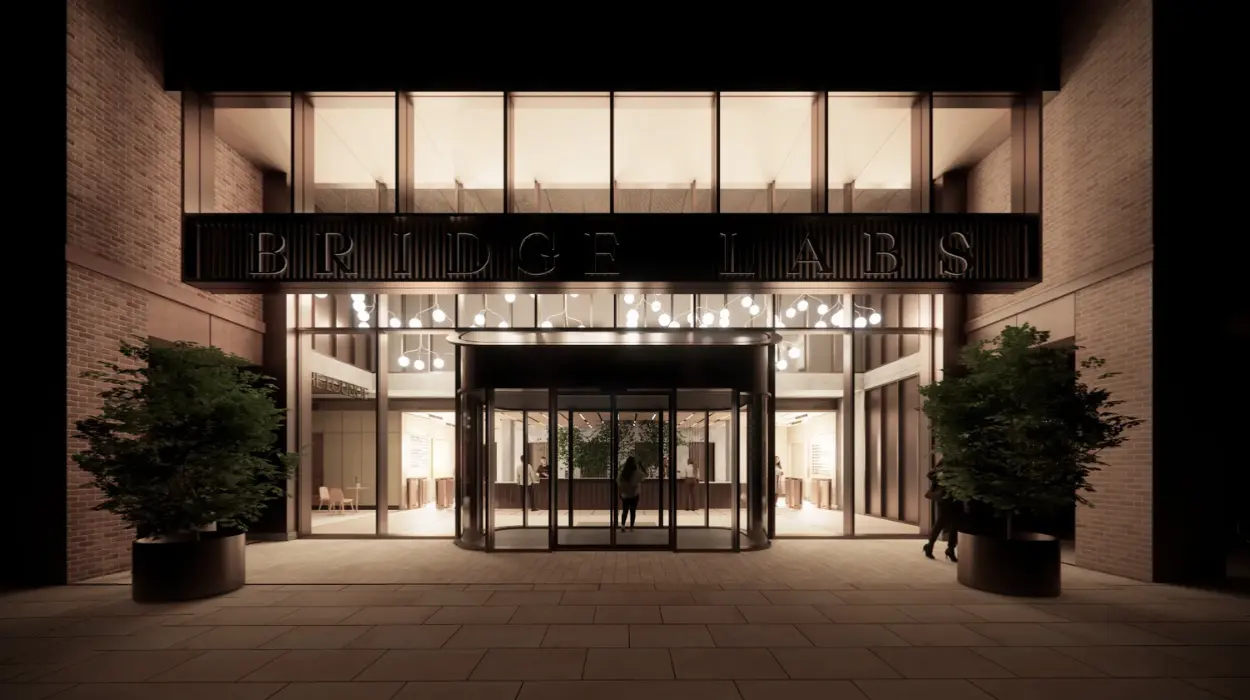
- Construction and civil engineering contractor McLaughlin & Harvey has started work on Bridge Labs, a life sciences development on Hythe Bridge Street in Oxford.
- The project involves redeveloping the former Beaver House site and neighbouring properties into approximately 140,000 sq ft of laboratory and office accommodation.
- The development is being delivered by Reef Origin in partnership with UBS through the Forge_Kn joint venture.
- The construction programme is expected to take three years.
- The redevelopment covers Beaver House at 23–38 Hythe Bridge Street and neighbouring properties at 39–42 Hythe Bridge Street.
- Bridge Labs will provide flexible laboratory and office facilities intended to accommodate businesses operating in the life sciences sector.
- The scheme includes a new café, a community garden and improved connections to the riverside.
- The historic Boatman’s Chapel will be restored as part of the development.
- The project aims to achieve biodiversity net gain of more than 500%.
- McLaughlin & Harvey was appointed as main contractor through a negotiated pre-construction procurement process.
- McLaughlin & Harvey Project Director Colin McCullough said the contractor was working with Reef Origin, project partners and the local community to deliver the development.
- Reef Origin Construction Director Chris Goulding praised McLaughlin & Harvey’s collaborative approach and its early mobilisation of a multidisciplinary team.
- The project combines scientific research accommodation with public-realm improvements and heritage restoration.
- The development adds to Oxford’s life sciences infrastructure and its position within the wider Oxford–Cambridge–London life sciences corridor.
What Is Happening at Oxford’s Bridge Labs Development?
McLaughlin & Harvey has started construction work on Bridge Labs, a new life sciences development on Hythe Bridge Street in Oxford. The project will transform the former Beaver House site and neighbouring properties into approximately 140,000 sq ft of flexible laboratory and office accommodation, with a construction programme expected to last three years. The development is being delivered by Reef Origin in partnership with UBS through the Forge_Kn joint venture. Alongside specialist facilities for scientific research and development, the scheme will include a café, a community garden, improved riverside connections, the restoration of the historic Boatman’s Chapel and a target biodiversity net gain of more than 500%.
The project marks the transition from the earlier development and preparation stages to on-site construction. McLaughlin & Harvey is acting as the main contractor, responsible for delivering the construction programme in collaboration with the development partners and other project stakeholders.
According to Construction Management, which reported the start of work, the development will occupy the former Beaver House site and neighbouring properties on Hythe Bridge Street.
The scheme is intended to provide specialist accommodation for businesses and organisations operating in the life sciences sector. Its combination of laboratory and office space is designed to support scientific research, development and related commercial activities.
The project also incorporates improvements beyond the building itself, with public spaces, heritage restoration and environmental measures forming part of the overall development.
Where Is Bridge Labs Being Built in Oxford?
Bridge Labs is being developed on Hythe Bridge Street, close to Oxford city centre. The project covers the former Beaver House property, located at 23–38 Hythe Bridge Street, together with neighbouring properties numbered 39–42 on the same road.
The redevelopment will bring these properties together as a specialist life sciences facility rather than retaining their previous configuration.
The site is significant because of its location within Oxford, a city with an established research and higher education environment. The development is intended to provide additional commercial space for organisations that require specialist facilities for scientific work.
According to McLaughlin & Harvey’s official project announcement, the development will deliver approximately 140,000 sq ft of flexible laboratory and office accommodation.
The facilities are intended to accommodate different operational requirements within the life sciences sector. Flexible laboratory and office arrangements can be relevant to businesses at different stages of research, development and commercial activity.
The development also reflects the demand for buildings that can accommodate specialist technical requirements while providing appropriate working environments for employees and research teams.
Who Is Funding and Delivering the Bridge Labs Project?
Bridge Labs is being delivered by Reef Origin in partnership with UBS through the Forge_Kn joint venture.
Reef Origin is responsible for the development, while UBS is identified as its capital partner. The Forge_Kn platform provides the joint-venture structure through which the project is being delivered.
McLaughlin & Harvey has been appointed as the main contractor following a negotiated pre-construction process.
The appointment followed early engagement with the project requirements and the mobilisation of a multidisciplinary team. According to the companies’ announcements, this approach brought together expertise in programme management, logistics, commercial operations and construction delivery.
Chris Goulding, Construction Director at Reef Origin, commented on the contractor’s appointment and preparation work.
As reported by Construction Management, Goulding said:
“McLaughlin & Harvey demonstrated a highly proactive and collaborative approach from the outset”.
He also explained that the contractor had rapidly mobilised a multidisciplinary team.
According to Goulding, this brought together programme, logistics, commercial and operational expertise to develop an understanding of the project’s requirements and delivery challenges.
His comments highlight the importance of early contractor involvement in complex construction schemes, particularly those involving specialist buildings and multiple stakeholders.
The procurement process also demonstrates how negotiated pre-construction arrangements can allow contractors and developers to address programme, commercial and operational considerations before the main construction work progresses.
How Long Will Construction of Bridge Labs Take?
The construction programme for Bridge Labs is expected to last three years.
McLaughlin & Harvey has confirmed that its team is now on site and working with Reef Origin, project partners and the local community.
The three-year programme will involve transforming the existing site into a specialist facility with laboratory and office accommodation, alongside public-realm and heritage improvements.
The delivery process will require coordination between construction activities, logistics, commercial management and the requirements associated with specialist life sciences buildings.
McLaughlin & Harvey’s appointment through a negotiated pre-construction route provided an opportunity for the contractor to understand the project’s requirements before taking on the main construction role.
Colin McCullough, Project Director at McLaughlin & Harvey, said the company was working closely with Reef Origin and other project partners.
As reported by Construction Management, McCullough stated:
“Our team is now on site and working closely with Reef Origin, project partners and the local community to deliver a high-quality development that will support scientific innovation while creating lasting benefits for the city and its residents”.
His statement identifies two central aspects of the project: the provision of facilities for scientific innovation and the delivery of improvements intended to benefit the surrounding community.
The construction programme will therefore involve more than the creation of laboratory and office accommodation. It will also include work on the site’s public spaces, heritage features and environmental objectives.
What Facilities Will Bridge Labs Provide for Life Sciences Businesses?
Bridge Labs will provide approximately 140,000 sq ft of flexible laboratory and office accommodation.
The facilities are intended to support organisations operating in the life sciences sector, where businesses can require specialist environments for research, development and related activities.
Laboratory accommodation differs from conventional office space because it can involve technical building requirements, specialist services and operational considerations. The design and construction of such facilities must account for the needs of future occupiers.
The inclusion of flexible laboratory and office space is intended to provide different types of working environments within the same development.
This arrangement can support interaction between research teams, office-based staff and businesses involved in scientific and commercial activities.
Oxford’s established research environment provides a wider context for the development. The city has universities, research organisations and businesses operating across scientific and technology-related fields.
Bridge Labs will add to the available specialist property infrastructure by creating additional accommodation for the life sciences sector.
The development’s delivery also highlights the role of Project Management in coordinating complex construction programmes, including contractor mobilisation, logistics, commercial arrangements and the integration of specialist building requirements.
What Public-Realm Improvements Are Included in the Development?
The Bridge Labs scheme includes several improvements intended to benefit the surrounding area.
These include:
- A new café.
- A community garden.
- Improved connections to the riverside.
- The restoration of the historic Boatman’s Chapel.
These elements form part of the wider development rather than being limited to the laboratory and office buildings.
The new café will provide an additional facility within the development, while the community garden will introduce landscaped space.
Improved riverside connections are intended to strengthen the relationship between the site and its surrounding public environment.
The restoration of Boatman’s Chapel is another important part of the project. Rather than focusing exclusively on new construction, the scheme includes the preservation and restoration of an existing historic building.
These improvements reflect the combination of commercial development, public-realm planning and heritage considerations within the overall project.
The inclusion of community-facing facilities also corresponds with McCullough’s statement that the contractor is working with the local community during delivery.
The project therefore has implications for the site’s future use beyond its role as a specialist workplace.
How Will Bridge Labs Address Biodiversity and Environmental Considerations?
The development aims to deliver biodiversity net gain of more than 500%.
Biodiversity net gain is an approach to development that seeks to ensure that the natural environment is left in a measurably better condition following construction than it was before the development began.
The stated target of more than 500% is a significant environmental objective within the project brief.
It sits alongside the proposed community garden and improvements to the riverside environment.
However, the biodiversity target should be distinguished from a completed environmental outcome. The project is now under construction, and the stated figure represents an objective for the development rather than evidence that the gain has already been achieved.
Environmental considerations are increasingly relevant to major construction projects, particularly where development takes place in established urban areas.
The Bridge Labs scheme combines the redevelopment of existing properties with public-realm improvements and environmental objectives.
The environmental component also highlights the relevance of Environmental and Agriculture expertise, particularly in areas such as biodiversity assessment, ecological planning and environmental management.
What Did McLaughlin & Harvey and Reef Origin Say About the Project?
Both companies have highlighted collaboration and the importance of the development to Oxford’s life sciences sector.
Colin McCullough, Project Director at McLaughlin & Harvey, said the contractor’s team was working with Reef Origin, project partners and the local community.
His comments focused on delivering a development that would support scientific innovation while creating lasting benefits for Oxford and its residents.
Chris Goulding, Construction Director at Reef Origin, focused on McLaughlin & Harvey’s approach during the early stages of the project.
He said the contractor had demonstrated a proactive and collaborative approach and had rapidly assembled a multidisciplinary team.
Goulding specifically referred to the involvement of programme, logistics, commercial and operational specialists.
His comments indicate that the contractor’s appointment involved consideration of the project’s delivery challenges before construction commenced.
The two statements provide perspectives from the main contractor and the developer. McCullough emphasised the intended contribution of the development, while Goulding discussed the contractor’s preparation and project-delivery approach.
Neither statement provides a revised construction cost or a detailed breakdown of the individual construction phases.
Why Is Bridge Labs Significant for Oxford’s Life Sciences Sector?
Bridge Labs will add specialist laboratory and office accommodation to Oxford’s commercial property infrastructure.
The development is intended to serve organisations operating in life sciences, a sector that requires facilities capable of accommodating research and development activities.
Oxford forms part of the wider life sciences corridor commonly associated with Oxford, Cambridge and London. The region contains universities, research institutions, technology businesses and organisations involved in scientific innovation.
The availability of appropriate laboratory space is an important consideration for companies seeking to establish or expand research operations.
Specialist developments can provide accommodation that differs from traditional commercial offices, particularly where occupiers need laboratory environments and associated technical facilities.
Bridge Labs will contribute approximately 140,000 sq ft of such accommodation when completed.
Its location on Hythe Bridge Street also places the development within Oxford’s existing urban environment, rather than in an isolated research park.
The scheme’s combination of laboratory space, offices, public facilities, riverside improvements and heritage restoration gives it several distinct elements.
For the construction industry, the project also demonstrates the requirements involved in delivering specialist commercial buildings in established urban locations.
These requirements include contractor coordination, logistics, construction planning, environmental considerations and engagement with surrounding communities.
What Happens Next for the Bridge Labs Development?
With McLaughlin & Harvey now on site, the project has entered its main construction phase.
The programme is expected to continue for three years, during which the former Beaver House site and neighbouring properties will be transformed into the planned life sciences facility.
The main delivery objectives include approximately 140,000 sq ft of laboratory and office accommodation, a new café, a community garden, improved riverside connections and the restoration of Boatman’s Chapel.
The development also aims to achieve biodiversity net gain of more than 500%.
Reef Origin and UBS are delivering the project through the Forge_Kn joint venture, with McLaughlin & Harvey responsible for the main contracting role.
The companies have emphasised collaboration between the development partners, contractor and local community.
As construction progresses, the delivery of the specialist accommodation and associated public-realm improvements will determine how the development contributes to Oxford’s commercial and research environment.