
Key Points
- Culina Group is bringing several of its established logistics businesses together under a single brand identity, Culina, in a move designed to simplify its market presence and present its services as one integrated offering.
- The businesses included in the rebranding are Culina Logistics, Stobart, Great Bear, Fowler Welch, Integrated Packing Services (IPS), Warrens, CML, Stobart Europe, International Road Ferry (IRF) and iForce.
- The Pallet Network, Stobart EU Automotive and Eventor will retain their existing identities, according to Motor Transport’s report.
- Culina will organise its services into five specialist divisions: Chilled & Fresh Logistics, Contract Logistics, Transport Logistics, Integrated Packing Services and International Logistics.
- Chief executive Liam McElroy described the change as a landmark moment for the group and a defining milestone in its development.
- The company said the unified identity would better reflect its scale, expertise and service capabilities while making it easier for customers to understand and access its wider offering.
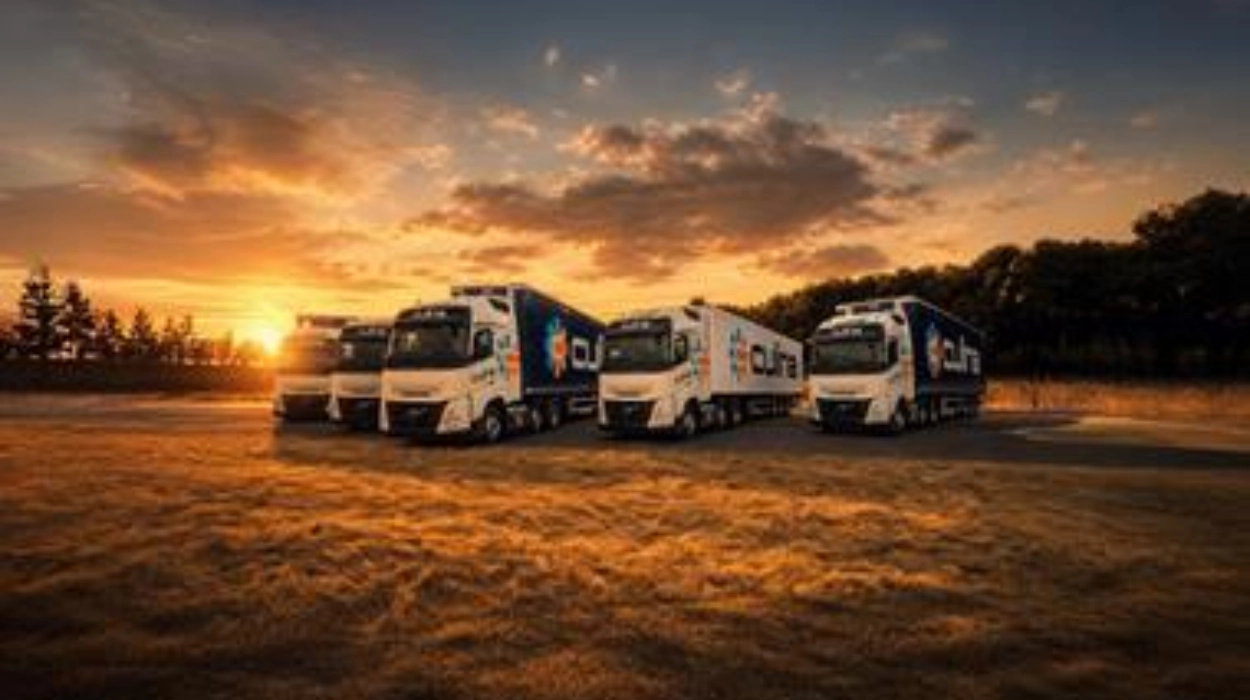
- The transition will take place progressively across operational sites, vehicles, digital platforms and corporate communications.
- Retail Times, in a report by Fiona Briggs, also presented the rebranding as the next stage in Culina’s growth strategy, highlighting its capabilities across warehousing, transport, e-fulfilment, contract packing and international logistics.
- The development is relevant to the UK Logistics and Supply Chain sector, particularly the management of integrated transport, warehousing, distribution and fulfilment operations.
What Has Culina Group Announced About Its New Brand Identity?
As reported by Chris Tindall of Motor Transport on 14 October 2026, Culina Group is bringing a number of its established logistics businesses together under the single brand name Culina, creating a more integrated organisation intended to make its services easier for customers to understand and access. The announcement represents a significant step in the group’s effort to present its combined capabilities through one recognisable identity rather than multiple established subsidiary brands.
The businesses covered by the change include Culina Logistics, Stobart, Great Bear, Fowler Welch, Integrated Packing Services (IPS), Warrens, CML, Stobart Europe, International Road Ferry (IRF) and iForce. These operations have developed expertise across different parts of the logistics industry, including transport, warehousing, fulfilment, packing and international freight services.
According to Motor Transport, Culina said the unified identity would better reflect the group’s scale and expertise and make it easier for customers to access the services available throughout the business.
The change is primarily a brand and organisational presentation initiative. The announcement does not state that all the businesses will cease operating immediately or that their underlying legal structures will change. Instead, the company plans to make the Culina identity increasingly visible as the transition progresses.
A separate report by Fiona Briggs in Retail Times on 14 October 2026 also described the announcement as the next phase of Culina’s growth strategy. That report highlighted the group’s development through organic growth and acquisitions, which have brought together capabilities across several areas of logistics and supply chain management.
The rebranding therefore places the emphasis on presenting the group’s existing breadth of services more clearly, with the aim of giving customers a more straightforward way to identify the capabilities available across its operations.
Why Is Culina Group Bringing Its Subsidiaries Under One Name?
The principal reason for the change is to establish a clearer identity for a group whose capabilities are spread across numerous specialist businesses.
Over time, Culina has developed a broad portfolio of operations serving different logistics requirements. While individual businesses have their own established identities and areas of expertise, presenting them separately can make it more difficult for customers to understand the full range of services available from the wider group.
Culina’s stated objective is to address this challenge by bringing its businesses under one identity. The company believes a unified brand will communicate its combined scale and expertise more effectively and make it easier for customers to navigate its offering.
In practical terms, a customer seeking transport, warehousing, fulfilment or international logistics services should be able to understand how these capabilities fit within the wider Culina operation without having to begin by navigating a collection of separate corporate brands.
This approach also gives the company a consistent identity across different customer-facing channels. As the transition progresses, the Culina name will become more prominent across operational locations, vehicles, digital platforms and communications.
However, the announcement does not quantify the expected financial benefits of the rebranding or set out a specific revenue target attributable to the change. It also does not provide a detailed timetable for every subsidiary’s transition.
The stated rationale is therefore clear: simplify the group’s market identity, make its combined capabilities easier to understand and present the business as a more integrated logistics partner.
Which Businesses Will Adopt the Culina Brand?
The rebranding covers a broad range of businesses within the group, including established names associated with transport, distribution and specialist logistics.
Which Subsidiaries Are Included in the Rebranding?
According to Chris Tindall’s report in Motor Transport, the businesses included in the unified identity are:
- Culina Logistics, which is associated with logistics and distribution services.
- Stobart, an established transport and logistics business.
- Great Bear, which provides distribution and warehousing services.
- Fowler Welch, known for logistics services in the fresh produce sector.
- Integrated Packing Services (IPS), which operates in integrated packing services.
- Warrens, a business associated with warehousing and transport services.
- CML, another established operation within the group.
- Stobart Europe, which provides international and European logistics services.
- International Road Ferry (IRF), which specialises in international road freight arrangements.
- iForce, which is associated with fulfilment and related logistics services.
The significance of the list lies in the range of activities represented. Rather than focusing on a single service line, the unified brand brings together operations serving different stages of the movement, storage, preparation and distribution of goods.
The individual businesses have developed their own market recognition over time. Moving them under a shared identity gives Culina an opportunity to present those capabilities as parts of a wider service network.
The announcement, however, does not provide a separate transition date for each business or explain whether every existing customer-facing name will disappear from all operational materials at the same time. The company has instead indicated that the process will be progressive.
Which Brands Will Retain Their Existing Identities?
Not every business or service name will be absorbed into the new identity.
Motor Transport reported that The Pallet Network, Stobart EU Automotive and Eventor will retain their existing identities.
This distinction is important because the announcement is not a blanket renaming of every business associated with Culina. Certain identities will remain in place, allowing the group to pursue a unified overall presentation while preserving selected names.
The decision also means the transition should be understood as a coordinated brand strategy rather than the immediate elimination of all existing brands.
The company has not provided further detail in the reported announcement explaining the specific reasons for retaining these identities. It would therefore be premature to attribute the decision to particular customer requirements, contractual arrangements or operational considerations.
What Are Culina Group’s Five Specialist Divisions?
Alongside the introduction of a unified identity, Culina will present its services through five specialist divisions. This structure is intended to organise its broad range of capabilities into clearer service areas.
What Does Chilled & Fresh Logistics Cover?
Chilled & Fresh Logistics represents the group’s temperature-sensitive logistics activities. Such operations require appropriate transport and storage arrangements to protect the condition and quality of perishable products as they move through the supply chain.
The division brings together the relevant capabilities within the group’s wider logistics offering. It provides a recognisable service area for customers whose requirements differ from those associated with ordinary ambient distribution.
What Is the Role of Contract Logistics?
Contract Logistics represents a further specialist division within the new structure. Contract logistics can involve services such as warehousing, fulfilment, distribution and related activities delivered in support of customers’ wider operations.
Bringing these services into a clearly identified division should help communicate the group’s capabilities to businesses seeking logistics support across more than one operational function.
How Will Transport Logistics Be Presented?
Transport Logistics will provide a distinct identity for the group’s transport and distribution services.
Transport is a central component of logistics operations, connecting warehouses, production facilities, distribution points and customers. Presenting it as a specialist division allows Culina to identify this capability clearly within its broader offering.
What Does Integrated Packing Services Include?
Integrated Packing Services is another of the five divisions named in the announcement. The structure reflects the group’s packing-related activities as a distinct part of its overall proposition.
Packing services can complement transport, warehousing and distribution by helping businesses prepare products for movement through the supply chain. Culina’s announcement places this capability alongside its other specialist operations.
What Is the Purpose of International Logistics?
International Logistics completes the five-division structure. It represents the group’s international logistics capabilities within the unified service offering.
International movements can involve coordination between transport providers, facilities and supply chain partners across different markets. Presenting this work as a separate division gives customers a clearer way to identify the group’s international services.
Together, the five divisions provide the framework through which Culina intends to present its capabilities under one brand. The announcement does not provide separate revenue figures, investment commitments or performance targets for the divisions.
What Did Culina Chief Executive Liam McElroy Say About the Change?
Culina chief executive Liam McElroy described the rebranding as a major milestone in the group’s development.
As quoted by Chris Tindall in Motor Transport, McElroy said: “This is a landmark moment for Culina and a defining milestone in our journey as a business.”
He also referred to the group’s development over several years, during which it had brought together a broad range of logistics businesses, expertise and capabilities.
McElroy said: “Over many years we have built one of the most comprehensive logistics and supply chain networks in Europe, bringing together exceptional businesses, expertise, and capabilities.”
He added: “Today, we unite those strengths under a single identity that better reflects who we are and what we can deliver.”
The comments set out the company’s rationale for the change. Culina is seeking to make the breadth of its existing operations more visible through a shared identity, rather than presenting its capabilities primarily through a collection of subsidiary names.
The statements also place the announcement within the group’s longer-term development. The new identity brings together businesses and expertise accumulated over time, with the stated aim of communicating the resulting capabilities more clearly.
McElroy’s comments do not, however, establish that the rebranding alone will produce a particular financial outcome. The company has not announced a quantified cost-saving target, a projected increase in revenue or a specific return on investment connected to the new brand.
The measurable impact will therefore depend on how the transition is implemented and how customers respond to the consolidated presentation of the group’s services.
How Will the Rebranding Be Implemented Across Culina’s Operations?
Culina has indicated that the transition will take place progressively rather than through a single immediate change across the entire group.
According to Motor Transport, the Culina identity will become increasingly visible across sites, vehicles, digital platforms and communications.
These are important customer-facing and operational touchpoints. Vehicles and facilities are visible elements of a transport and logistics network, while digital platforms and communications help customers identify services, contact the business and understand its capabilities.
A phased transition allows the new identity to be introduced across these different areas over time. However, the report does not specify a complete schedule, a final completion date or the cost of changing branding across the group’s operations.
It also does not confirm whether the transition will involve changes to management structures, staffing levels, service agreements, depot arrangements or the legal ownership of individual subsidiaries.
For that reason, the announcement should not be interpreted as evidence of a merger of all operating entities into one legal company. The confirmed development is the adoption of a shared brand identity and the presentation of the group’s services through five specialist divisions.
As implementation continues, the key point to watch will be how consistently the unified identity is reflected across the group’s customer-facing operations and how clearly the new division structure communicates its service capabilities.
What Does Retail Times Report About Culina’s Growth Strategy?
In a report published on 14 October 2026, Fiona Briggs of Retail Times also covered Culina’s move to bring its established businesses under one brand.
The Retail Times report described the change as the next phase of the group’s growth strategy and highlighted the range of capabilities assembled through organic development and acquisitions.
It identified activities spanning warehousing, transport, e-fulfilment, contract packing and international logistics. These services illustrate the breadth of the group’s operations and explain why a single identity could provide a more straightforward way to present the business to customers.
Retail Times also characterised the unified brand as a means of combining end-to-end supply chain expertise with the simplicity of dealing with one recognised partner.
This broadly aligns with the rationale reported by Motor Transport: the company wants to make its capabilities easier to understand by reducing the prominence of separate subsidiary identities in its overall market presentation.
The two reports offer complementary perspectives. Motor Transport provides the details of the businesses included in the change, the exceptions to the rebranding, the five specialist divisions and McElroy’s comments. Retail Times emphasises the group’s breadth of services and the role of the new identity in its wider growth strategy.
Neither report establishes a quantified financial impact from the rebranding. The development is best understood as a strategic effort to simplify how the group presents and coordinates its existing capabilities, rather than as a newly announced acquisition or a confirmed financial restructuring.
What Could the Unified Brand Mean for Customers and the Logistics Sector?
For customers, a single brand identity could make it easier to understand the full range of services available through Culina. Businesses requiring several forms of logistics support may benefit from a clearer overview of the group’s transport, warehousing, packing, fulfilment and international capabilities.
A consistent identity could also make the group’s overall proposition easier to communicate across its website, customer communications and operational network. These are potential benefits of the strategy, rather than outcomes that have already been demonstrated by the announcement.
For the wider logistics sector, the move highlights the importance of presenting complex service portfolios in a way that customers can readily understand. Logistics providers frequently operate across interconnected activities, and clear communication of those capabilities can form part of how they position themselves in a competitive market.
Nevertheless, a unified brand does not automatically demonstrate that operational processes have been fully integrated. The announcement confirms the intended branding structure but does not detail changes to information systems, distribution planning, procurement, fleet management or internal reporting.
The practical impact will depend on how the company implements the new identity and whether the five divisions provide a clearer route for customers to access the services they need.
The development is also relevant to professional learning in Logistics and Supply Chain, particularly in areas such as supply chain coordination, transport operations, warehousing, distribution and the management of interconnected service networks. Understanding how businesses communicate and organise complex logistics capabilities can help professionals assess the operational and commercial considerations involved in integrated supply chain management.
What Happens Next for Culina Group?
Culina’s next step is to implement the new identity progressively across its businesses and customer-facing channels.
The group has confirmed the ten businesses included in the rebranding, identified three names that will retain their existing identities and outlined the five specialist divisions through which its services will be presented.
The transition will make the Culina name more prominent across operational sites, vehicles, digital platforms and communications. The company has not yet specified a final completion date or published a detailed timetable for individual businesses.
Further developments will help establish how the structure is reflected in everyday customer interactions and whether the unified presentation makes the group’s service offering easier to navigate.
For now, the announcement represents a significant corporate development for a UK logistics business seeking to present its accumulated expertise through one recognisable identity. The immediate focus is on brand consolidation and clearer communication of services, while the longer-term commercial effects remain to be established.