
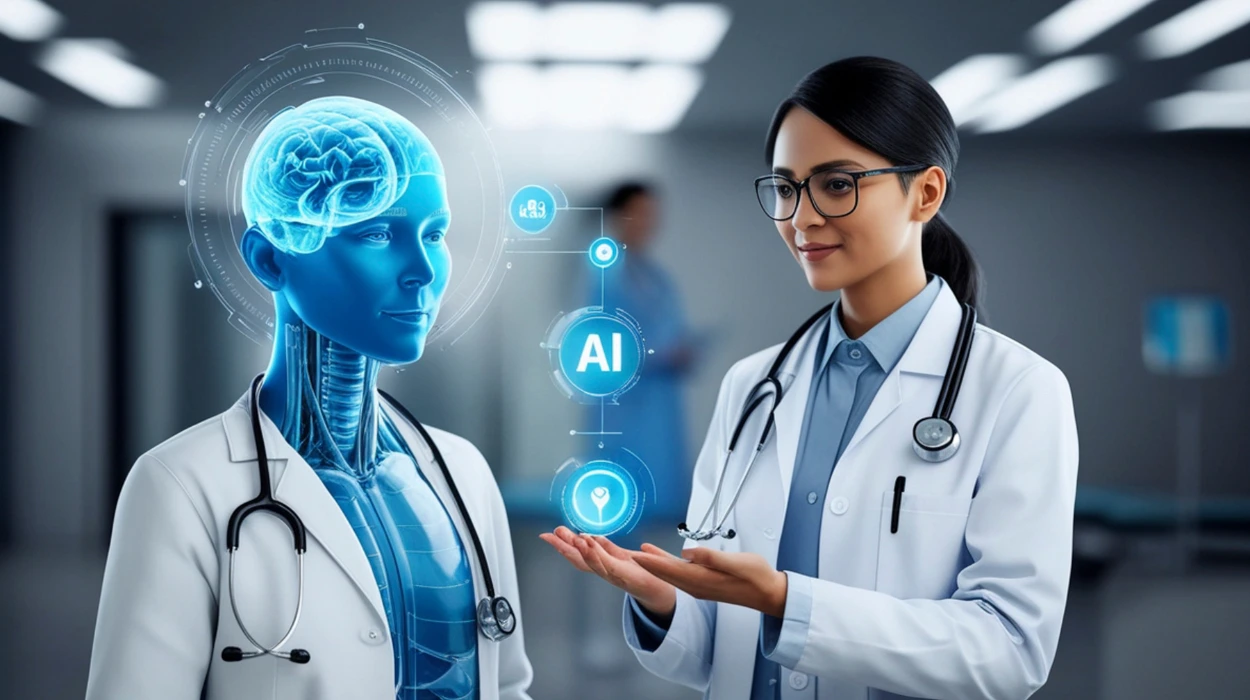
The healthcare sector is undergoing a technological revolution, and AI in healthcare is at the forefront of this transformation. Artificial intelligence in medicine is not just a futuristic concept; it is actively reshaping clinical operations, patient care, research, and hospital management. By automating complex processes, enhancing diagnostic accuracy, and providing actionable insights, AI is improving both the efficiency and quality of healthcare services.
This blog explores the key applications of AI in healthcare, the tangible benefits for medical institutions and patients, and strategies for implementing AI-driven solutions effectively.
Understanding AI in Healthcare
Artificial intelligence involves machines that can analyze data, recognize patterns, learn from experiences, and make decisions—tasks traditionally performed by humans. In healthcare, AI helps clinicians, researchers, and hospital administrators manage the growing complexity of medical services.
Key advantages include:
- Enhanced patient care through predictive analytics and personalized treatment
- Improved operational efficiency by automating routine healthcare tasks
- Accelerated medical research with AI-driven data analysis
- Better decision-making using insights from vast datasets
Understanding how artificial intelligence is revolutionizing healthcare and medicine allows healthcare organizations to adopt AI solutions strategically.
Practical AI Applications in Healthcare
AI is transforming healthcare in multiple domains, from patient care to hospital operations and medical research.
1. AI in Diagnostics
AI algorithms can analyze medical images—such as X-rays, CT scans, and MRIs—with exceptional accuracy. This aids radiologists in detecting abnormalities faster and more reliably.
Applications include:
- Automated detection of tumors, fractures, or infections
- Predictive analytics to identify disease progression
- Reducing diagnostic errors and enhancing early intervention
These medical AI applications improve patient outcomes and reduce the burden on healthcare professionals.
2. AI in Patient Care and Monitoring
AI technologies enable continuous patient monitoring, ensuring timely interventions and personalized treatment plans.
Examples include:
- Wearable devices that track vital signs and alert healthcare providers to anomalies
- AI-assisted virtual health assistants for chronic disease management
- Predictive models for patient deterioration and readmission risk
By leveraging AI in patient care, hospitals can enhance patient safety and improve treatment effectiveness.
3. Healthcare Automation with AI
Routine administrative and operational tasks can be automated using AI, increasing efficiency and reducing costs.
Key areas include:
- Automating patient scheduling and appointment management
- Streamlining billing and claims processing
- Managing electronic health records (EHR) with intelligent data extraction
Healthcare automation with AI allows staff to focus on higher-value clinical work, reducing errors and improving service quality.
4. AI in Medical Research
AI accelerates research by analyzing vast datasets faster than traditional methods.
Applications include:
- Drug discovery and development using AI algorithms
- Identifying patterns in clinical trial data
- Predicting patient responses to therapies based on genetic and environmental data
Benefits of AI in medical research and diagnosis are revolutionizing how new treatments are developed and evaluated.
5. Predictive Analytics in Hospitals
Hospitals use AI-driven predictive analytics to forecast patient admissions, manage resource allocation, and reduce wait times.
Practical benefits include:
- Optimizing staff schedules based on predicted patient volumes
- Allocating ICU beds and critical care resources efficiently
- Anticipating supply needs to prevent shortages of medical equipment
By integrating AI transforming clinical operations and patient outcomes, hospitals can improve operational efficiency and patient satisfaction simultaneously.
6. Telemedicine and AI
AI-powered telemedicine platforms allow healthcare providers to deliver care remotely while analyzing patient data in real-time.
Applications include:
- AI triage systems that guide patients to appropriate care
- Automated symptom checkers using natural language processing
- Remote monitoring combined with AI-driven alerts for healthcare teams
Telemedicine with AI improves accessibility and reduces the strain on physical healthcare facilities.
Benefits of AI in Healthcare
The adoption of AI in healthcare and medicine offers numerous advantages:
1. Improved Patient Outcomes
AI supports personalized care, predictive treatment planning, and early disease detection. Patients benefit from faster, more accurate diagnoses and tailored therapies.
2. Operational Efficiency
By automating administrative and clinical tasks, healthcare institutions save time, reduce errors, and optimize resource use. AI-driven solutions improving healthcare efficiency allow clinicians to focus on patient care.
3. Cost Reduction
AI helps hospitals and clinics reduce unnecessary procedures, streamline operations, and optimize staffing. Predictive analytics also minimize costly readmissions and preventable complications.
4. Accelerated Research and Innovation
Medical research is expedited with AI, leading to faster drug development, innovative therapies, and improved clinical trial designs.
5. Enhanced Decision-Making
AI analyzes large volumes of complex data, helping healthcare professionals make evidence-based decisions and predict patient outcomes more accurately.
Implementing AI in Healthcare: Best Practices
For successful AI adoption, healthcare organizations should follow a structured approach:
1. Identify High-Impact Use Cases
Evaluate areas where AI can provide the most value—diagnostics, patient care, research, or hospital operations. Prioritize applications that deliver measurable results.
2. Ensure Data Quality
AI relies on high-quality, accurate, and comprehensive data. Hospitals should standardize data collection processes and integrate electronic health records effectively.
3. Choose the Right AI Tools
Select AI solutions tailored to organizational needs. Cloud-based AI platforms and specialized healthcare AI software often provide cost-effective and scalable options.
4. Train Healthcare Professionals
Staff must understand how to interpret AI outputs and integrate them into clinical workflows. Training programs ensure proper usage and increase adoption rates.
5. Monitor Performance and Adjust
Continuously assess AI effectiveness using key metrics such as diagnostic accuracy, patient outcomes, operational efficiency, and cost savings. Adjust AI models as needed to maintain optimal performance.
Challenges of AI in Healthcare
While the benefits are significant, AI implementation faces certain challenges:
- Data privacy and security: Protecting patient information is paramount. Compliance with HIPAA and other regulations is essential.
- Integration with existing systems: AI tools must seamlessly integrate with electronic health records and hospital IT infrastructure.
- Technical expertise: Many healthcare organizations lack in-house AI specialists.
- Change management: Clinicians and staff must adapt to AI-driven processes and trust the technology.
Addressing these challenges ensures that AI adoption in healthcare is effective and sustainable.
Real-World Examples
- Radiology departments using AI algorithms to detect early-stage cancers with high accuracy.
- Telemedicine startups leveraging AI chatbots and predictive analytics to improve remote care.
- Hospitals applying AI to optimize ICU bed allocation and reduce wait times.
These examples demonstrate how AI applications in hospitals and healthcare facilities can transform both clinical and operational processes.
Conclusion
Artificial intelligence in medicine is no longer optional; it’s an essential tool for improving healthcare efficiency, patient outcomes, and operational performance. By adopting AI in healthcare, hospitals and clinics can streamline processes, enhance diagnostics, personalize patient care, and accelerate medical research.
For healthcare professionals and administrators seeking practical skills and insights, the Oxford Training Centre offers specialized Artificial Intelligence Training Courses. These programs provide in-depth knowledge of AI-driven solutions improving healthcare efficiency, strategies for implementing AI in clinical and operational workflows, and guidance on how artificial intelligence is revolutionizing healthcare and medicine.