
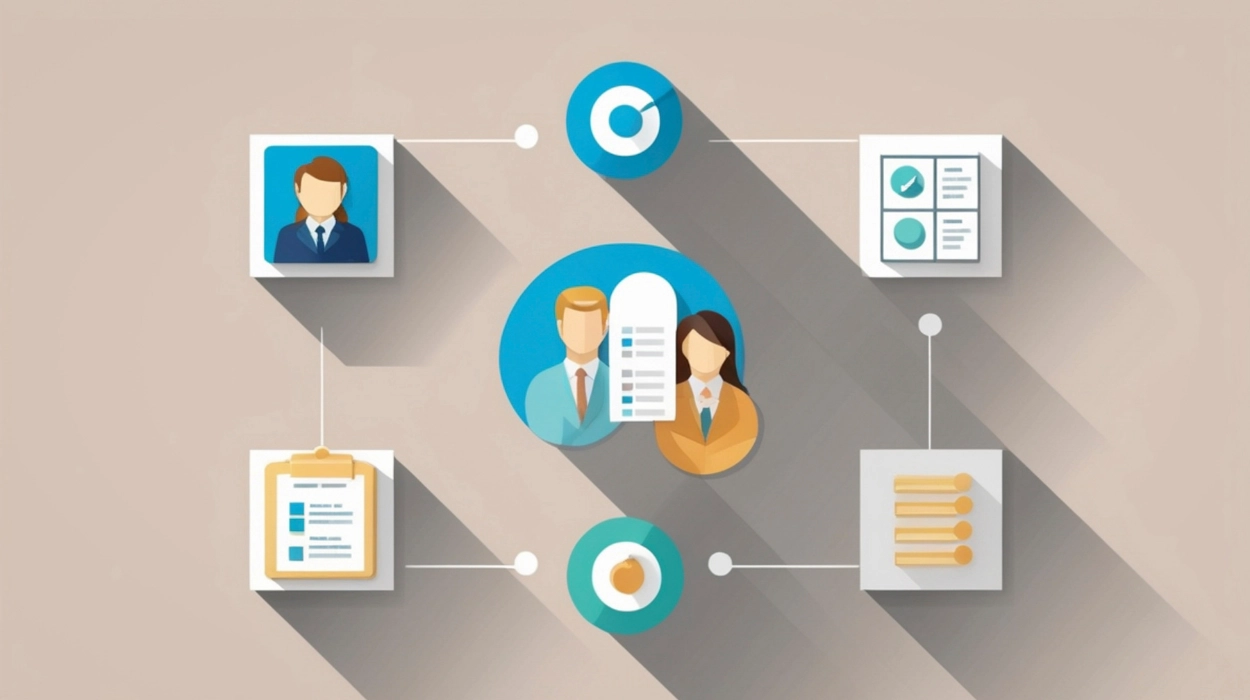
In today’s fast-paced and highly competitive business environment, delivering successful products requires more than creativity and technical expertise. Organizations must follow a structured, strategic, and customer-focused approach to transform ideas into valuable market offerings. This is where the product management process becomes essential.
From initial concept development to post-launch optimization, product management provides a clear framework for planning, execution, and continuous improvement. Understanding the step by step product management process helps professionals and businesses reduce risk, improve efficiency, and maximize return on investment.
This article provides a detailed introduction to the complete product management workflow, explaining each stage in depth for beginners and experienced professionals alike.
Understanding the Product Management Process
The product management process refers to the systematic approach used to research, design, develop, launch, and manage products throughout their lifespan. It integrates business strategy, customer insights, technical feasibility, and market dynamics into a unified workflow.
Unlike traditional development models that focus only on production, modern product management emphasizes continuous learning and adaptation. Product managers evaluate customer needs, validate assumptions, and refine solutions based on real-world feedback.
This structured approach ensures that products remain relevant, competitive, and profitable over time.
The Importance of Structured Product Development
Without a defined framework, product initiatives often suffer from misalignment, delays, and resource wastage. Clear product development process steps help organizations maintain focus and accountability.
A structured system enables teams to prioritize initiatives, manage risks, and coordinate cross-functional efforts. It also improves transparency, allowing stakeholders to monitor progress and performance.
By following consistent processes, businesses strengthen their ability to scale and innovate effectively.
Stage One: Ideation and Market Research
The first phase of the product planning process begins with idea generation and market validation. Product managers collaborate with stakeholders, customers, and technical teams to identify problems worth solving.
Market research involves analyzing industry trends, competitor offerings, and customer behavior. Surveys, interviews, and data analytics help validate assumptions and refine concepts.
This early validation reduces the risk of developing products that lack market demand.
Stage Two: Defining Product Vision and Strategy
Once ideas are validated, product managers define the product vision and strategic objectives. This phase connects business goals with customer value.
The product vision outlines the long-term purpose of the offering, while the strategy defines target markets, pricing models, and competitive positioning. These elements guide decision-making throughout development.
A well-articulated strategy ensures consistency and alignment across all departments.
Stage Three: Product Roadmap Planning
Effective product roadmap planning translates strategy into actionable initiatives. The roadmap outlines key milestones, feature releases, and development priorities.
It serves as a communication tool that aligns stakeholders around shared expectations. Roadmaps also allow flexibility, enabling teams to adapt to market changes and customer feedback.
By maintaining a dynamic roadmap, organizations balance long-term vision with short-term execution.
Stage Four: Feature Prioritization and Scope Management
Not all features deliver equal value. A structured feature prioritization framework helps product managers evaluate initiatives based on impact, feasibility, and strategic alignment.
Common evaluation criteria include customer demand, revenue potential, technical complexity, and competitive advantage. Prioritization prevents scope creep and ensures efficient resource utilization.
This disciplined approach enhances product quality and accelerates delivery.
Stage Five: Designing the Product Experience
Design plays a critical role in shaping customer perceptions and satisfaction. During this phase, teams create prototypes, wireframes, and usability models.
User experience testing provides insights into functionality, accessibility, and aesthetics. Product managers collaborate with designers and developers to refine solutions.
Well-designed products improve adoption rates and strengthen brand reputation.
Stage Six: Development and Product Delivery Workflow
The product delivery workflow represents the transition from design to implementation. Development teams build, test, and integrate features according to defined specifications.
Modern organizations often use iterative development models to improve flexibility. Continuous testing and quality assurance ensure reliability and performance.
Close collaboration between product managers and technical teams reduces rework and enhances efficiency.
Stage Seven: Managing the Agile Product Lifecycle
Many organizations adopt an agile product lifecycle to respond rapidly to changing market conditions. Agile methodologies emphasize incremental releases, frequent feedback, and continuous improvement.
Product managers work closely with development teams to plan sprints, review progress, and adjust priorities. Regular retrospectives support learning and optimization.
This adaptive approach improves responsiveness and reduces time-to-market.
Stage Eight: Product Launch and Market Entry
Launching a product involves coordinated efforts across marketing, sales, and customer support. Messaging, pricing, distribution, and training must be aligned.
Product managers oversee go-to-market strategies, ensuring that value propositions resonate with target audiences. Performance metrics such as adoption rates and customer feedback guide post-launch adjustments.
A well-executed launch maximizes visibility and revenue potential.
Stage Nine: Managing Product Lifecycle Stages
Every product progresses through distinct product lifecycle stages, including introduction, growth, maturity, and decline. Product managers monitor performance and adapt strategies accordingly.
During growth, focus shifts toward scalability and market expansion. In maturity, optimization and differentiation become priorities. Decline may require repositioning or discontinuation.
Effective lifecycle management preserves profitability and strategic relevance.
Stage Ten: Continuous Improvement and Optimization
Product management does not end after launch. Continuous improvement is essential for maintaining competitiveness.
Data analytics, customer insights, and market trends guide enhancements and updates. Product managers evaluate feature performance and user satisfaction regularly.
This ongoing optimization strengthens long-term customer relationships and brand loyalty.
Product Development Life Cycle Explained
The product development life cycle explained within this framework illustrates how ideas evolve into sustainable offerings. Each phase builds upon previous insights, reducing uncertainty and increasing value creation.
By integrating planning, execution, and evaluation, organizations establish resilient development systems.
This holistic approach supports consistent innovation and growth.
Product Management Workflow for Beginners
For newcomers, understanding the product management workflow for beginners can seem overwhelming. However, mastering fundamentals such as research, prioritization, and stakeholder communication provides a strong foundation.
Structured learning, mentorship, and practical experience accelerate skill development. Over time, professionals gain confidence in managing complexity and uncertainty.
A disciplined workflow enables beginners to contribute meaningfully from early stages.
How to Manage Products from Start to Finish
Knowing how to manage products from start to finish requires both technical knowledge and strategic thinking. Product managers must balance customer needs, business goals, and operational constraints.
Effective communication, analytical skills, and leadership capabilities are essential. Continuous learning and adaptability enhance long-term performance.
This comprehensive approach distinguishes successful product leaders.
Product Planning and Execution Guide for Organizations
A reliable product planning and execution guide helps organizations standardize best practices and maintain consistency. Clear governance structures, performance metrics, and review processes support accountability.
Leadership commitment and cultural alignment further strengthen implementation. When planning and execution are integrated, organizations achieve superior outcomes.
The Strategic Value of Product Management Processes
Well-defined processes create transparency, efficiency, and resilience. They enable organizations to scale operations while maintaining quality and innovation.
By institutionalizing best practices, companies reduce dependency on individual expertise and enhance organizational learning.
Strategic process management becomes a source of competitive advantage.
Final Thoughts
Mastering the product management process is essential for organizations seeking sustainable growth and innovation. From ideation and planning to delivery and optimization, each stage contributes to long-term success.
Professionals aiming to strengthen their capabilities can benefit from structured development programs. Institutions such as Oxford Training Centre offer specialized Product Management Training Courses that equip participants with strategic insights, practical tools, and leadership competencies.
By investing in continuous learning and adopting proven frameworks, businesses and individuals can confidently manage products from conception to maturity in competitive markets