
Key Points
- The UK Government, through the Foreign, Commonwealth and Development Office (FCDO), has launched the Siun Community Self-Built Connectivity Hub in Obafemi Owode Local Government Area of Ogun State, Nigeria.
- The facility is part of a wider UK Digital Access Programme initiative supporting 10 community-centred connectivity hubs across Nigeria.
- The project is being implemented by the Initiative for Digital Inclusion (IDI), which says the programme is designed to address connectivity gaps in underserved communities.
- The Siun hub is intended to provide reliable internet access, digital learning, skills development, entrepreneurship opportunities and access to information and services.
- UK FCDO First Secretary for Economic Partnership Grace Bell said the project demonstrates the importance of community ownership in making digital transformation sustainable and inclusive.
- HRM Oba Lawrence Odeyinka, the Olu of Siun, said the facility would be particularly important for young people and market women seeking 21st-century skills.
- Prof. Ajao Adenekan, representing HRM Oba Dr Michael Adedotun Aremu Gbadebo, the Alake and Paramount Ruler of Egbaland, described the hub as an opening of opportunities rather than simply the opening of a building.
- The facility was built using locally sourced materials and incorporates sustainable energy solutions, according to The Guardian Nigeria.
- The project places ownership, management and long-term sustainability of the facility within the community rather than relying solely on external management.
- IDI says the wider Community Self-Built Sustainable Connectivity Hub project is designed for unserved and underserved Nigerian communities and is intended to translate digital-inclusion policy into community-level infrastructure.
- The Siun facility joins connectivity hubs operating or being developed across states including Kaduna, Kwara, Abia and Ogun.
- The programme forms part of the UK Government’s broader partnership with Nigeria on digital access, digital skills, connectivity innovation and economic participation.
Inverted Pyramid: The most immediate development is the launch of the Siun Community Self-Built Connectivity Hub in Ogun State, followed by details of its UK Government backing, its community ownership model, the statements of officials and traditional leaders, and the wider significance of the initiative for Nigeria’s digital-inclusion efforts.
What has the UK Government launched in Ogun State?
The UK Government, through the Foreign, Commonwealth and Development Office (FCDO), has officially launched the Siun Community Self-Built Connectivity Hub in Obafemi Owode Local Government Area of Ogun State, marking a new step in efforts to extend digital access to communities that remain underserved by conventional connectivity infrastructure.
According to Adeyemi Adepetun of The Guardian Nigeria, who reported the development on 8 September 2026, the facility is being delivered under the UK Government’s Digital Access Programme (DAP) and is intended to improve digital inclusion while strengthening connectivity in rural and underserved parts of Nigeria.
The Siun facility is one of 10 community-centred connectivity hubs supported by the UK Government through the programme. Rather than treating connectivity simply as the installation of internet infrastructure, the initiative is based on a community-led model in which residents have a role in identifying needs, supporting implementation and maintaining the facility over the longer term.
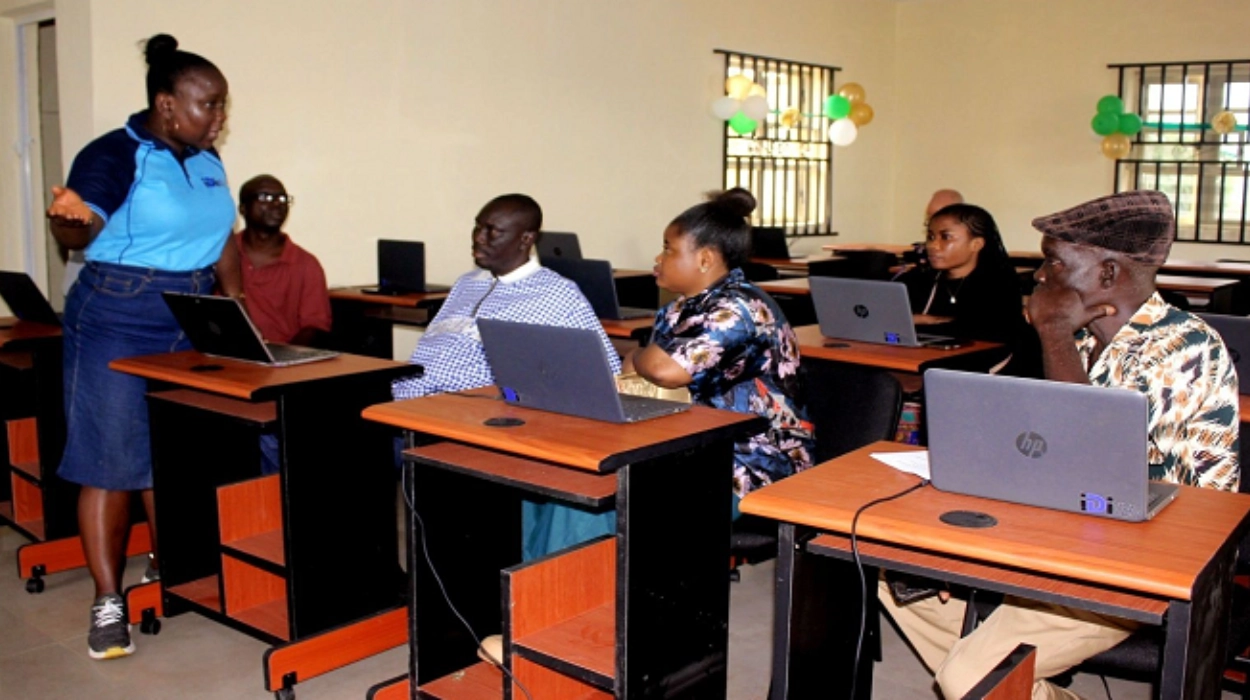
The approach is significant because access to a physical connectivity facility can provide more than an internet connection. The hub is expected to function as a shared location for digital learning, education, entrepreneurship, skills development, and access to information and services.
Why is the Siun connectivity hub significant?
The significance of the Siun project lies in its emphasis on local ownership and long-term sustainability.
As reported by Adeyemi Adepetun of The Guardian Nigeria, the project is designed to put ownership, management, and sustainability in the hands of the local community. The report says the inauguration brought together traditional rulers, community leaders, government officials, development partners, youth and women’s groups, as well as representatives of the FCDO and IDI.
The model reflects a broader shift towards community-led approaches to digital inclusion. IDI, the programme’s implementing organisation, says the wider Community Self-Built Sustainable Connectivity Hub project is intended to establish 10 hubs in underserved Nigerian communities. The organisation describes the model as an effort to translate national digital-development ambitions into practical, community-driven implementation.
This means the Siun hub is not an isolated infrastructure project. It forms part of a wider attempt to connect communities that may not benefit equally from the expansion of digital services in Nigeria’s larger urban centres.
What did Grace Bell say about the UK-backed project?
At the inauguration, Grace Bell, First Secretary for Economic Partnership at the FCDO, represented the UK Government and highlighted community participation as a central feature of the initiative.
As reported by Adeyemi Adepetun of The Guardian Nigeria, Bell described the hub as evidence of what can be achieved when communities are empowered to identify their challenges and participate in developing solutions. She said the initiative represented more than the inauguration of a building providing connectivity and characterised it as a community-led vision for the future.
Bell’s comments place particular emphasis on sustainability and inclusion. The underlying argument is that digital infrastructure is more likely to have lasting effects when communities are involved not only as users but also in the process of developing and maintaining the infrastructure.
That principle is consistent with IDI’s description of the wider project. The organisation says the hubs are intended to support communities that have historically lacked adequate access to connectivity and digital opportunities.
What services will the Siun hub provide?
The new facility is expected to provide residents with reliable internet access, digital learning opportunities and a shared environment for skills development.
According to The Guardian Nigeria, the hub will also support entrepreneurship, education and access to information and services.
These functions give the facility a broader role than that of a conventional internet access point. For students, connectivity can provide access to educational resources. For entrepreneurs, it can facilitate online business activity and access to markets. For residents seeking information or digital services, the facility can provide a physical location from which they can participate in the digital economy.
IDI’s wider work reinforces this interpretation. The organisation has described community connectivity hubs as platforms capable of supporting digital literacy and participation in economic activity, particularly in locations where reliable connectivity remains limited.
How was the Siun hub built?
The facility was developed with an emphasis on local participation and sustainability.
According to Adeyemi Adepetun of The Guardian Nigeria, the hub was built using locally sourced materials and is powered by sustainable energy solutions. The newspaper reported that these elements are intended to support environmental sustainability, resilience and long-term community ownership.
Community involvement was also central to the development process.
The project benefited from the support of HRM Oba Lawrence Odeyinka, the Olu of Siun, whose leadership was described as instrumental in mobilising local participation during the design, construction and operational planning of the facility.
The emphasis on locally sourced materials and community participation also reflects the project’s wider philosophy: infrastructure is intended to become a community asset rather than remain an externally controlled installation.
What did Oba Lawrence Odeyinka say about the hub?
At the inauguration, HRM Oba Lawrence Odeyinka, the Olu of Siun, stressed the potential importance of the facility for younger residents and market women.
As reported by Adeyemi Adepetun of The Guardian Nigeria, Oba Odeyinka said the Siun Digital Hub would be important for youths and market women seeking the skills required in the 21st century. He also presented the project as an example of what could be achieved through collective community action.
The monarch further expressed a commitment to ensuring that the facility remains operational in the long term and described it as having significance for Siun and the wider Egbaland area.
His comments underline the project’s intended focus on practical community benefits, particularly for groups that could use digital skills to improve education, trade and economic participation.
What did the Alake of Egbaland’s representative say?
The inauguration also received representation from the traditional leadership of Egbaland.
Prof. Ajao Adenekan, representing HRM Oba Dr Michael Adedotun Aremu Gbadebo, the Alake and Paramount Ruler of Egbaland, described the significance of the facility in broader terms.
According to The Guardian Nigeria, Prof. Adenekan characterised the event as more than the opening of a physical structure, describing it instead as the opening of a door of opportunities for members of the community.
The statement reflects the expectation that the facility’s value will ultimately be measured not only by its physical infrastructure but by how effectively residents use it for learning, enterprise, communication and access to services.
How does the project fit into Nigeria’s wider digital-inclusion effort?
The Siun hub forms part of a wider network of community connectivity initiatives being supported through the UK Government’s Digital Access Programme.
According to The Guardian Nigeria, similar community connectivity hubs are operating across Kaduna, Kwara, Abia and Ogun States, with the centres providing internet access, digital literacy training and community learning opportunities.
IDI has separately confirmed that it has been mandated by the UK Government’s FCDO to facilitate the construction of 10 community-led connectivity hubs across Nigeria.
In June 2026, IDI said the programme was being implemented in unserved and underserved communities and described the community self-built model as a practical way of supporting Nigeria’s national digital transformation objectives.
The organisation has also argued that Nigeria’s digital progress remains uneven, with substantial differences between urban and rural access. IDI has cited figures indicating that rural internet usage remains considerably lower than urban usage, highlighting the need for interventions outside major population centres.
Why does community ownership matter for digital connectivity?
Community ownership is one of the defining features of the Siun project.
Traditional infrastructure programmes can provide equipment or connectivity without necessarily guaranteeing that a facility remains useful after the initial investment. The model adopted in Siun seeks to address that issue by involving residents and local leadership in the development and future operation of the hub.
For Siun, this approach means that local stakeholders are expected to have a continuing role in protecting and sustaining the facility.
The importance of this model is also reflected in IDI’s description of other community hubs. The organisation says its approach is intended to give communities ownership of facilities and strengthen their capacity to benefit from digital infrastructure over time.
That emphasis could become particularly important as communities use the facilities for education, digital commerce, entrepreneurship and other activities that require dependable connectivity.
What could the hub mean for young people and women in Siun?
The project has been presented as particularly relevant to young people and women.
Oba Lawrence Odeyinka specifically referred to youths and market women when discussing the importance of digital skills at the Siun facility.
For young people, a community connectivity centre can provide access to online educational materials, digital skills development and other opportunities that may otherwise require travel to larger towns or cities.
For market women and other small-scale entrepreneurs, internet access can potentially support communication with customers, digital payments, online promotion, market information and other business activities. However, the actual economic impact will depend on sustained use of the facility, affordability, digital skills and the availability of reliable services.
The project therefore combines two related elements: physical connectivity and the human skills required to use that connectivity effectively.
What is the wider UK-Nigeria partnership behind the programme?
The Digital Access Programme is part of the UK’s broader engagement with Nigeria on digital development.
According to The Guardian Nigeria, the programme is intended to promote meaningful digital access, support digital skills development, strengthen digital inclusion and create opportunities for economic growth. The newspaper reported that the wider effort includes policy reform, connectivity innovation, digital literacy and community-centred solutions.
IDI’s published material similarly identifies the FCDO’s Digital Access Programme as the source of support for the community self-built connectivity initiative.
The Siun launch therefore represents one local implementation of a broader digital-development strategy rather than a standalone intervention.
What happens next for the Siun hub?
With operations beginning, responsibility will increasingly shift towards the community and its local leadership.
The Guardian Nigeria, through Adeyemi Adepetun’s report, said community leaders would continue working together to keep the facility functioning as a centre for learning, innovation and opportunity, particularly for young people, women and underserved groups.
The longer-term success of the project will consequently depend on how effectively the facility is maintained, how consistently residents use it, and whether digital skills and connectivity translate into measurable educational and economic opportunities.
The Siun hub also illustrates the broader challenge facing digital inclusion in Nigeria: expanding connectivity is only one part of closing the digital divide. Infrastructure must be accompanied by skills, affordability, local participation and sustainable management.
For organisations and professionals working in digital transformation, the development also demonstrates why practical knowledge spanning IT and Computer Science, digital skills, community management and sustainable infrastructure can be relevant when connectivity projects move from construction to everyday operation.
What does the Siun launch mean for Nigeria’s digital future?
The launch of the Siun Community Self-Built Connectivity Hub adds another community-level facility to Nigeria’s expanding digital-inclusion landscape.
The UK Government’s financial and institutional support, the FCDO’s involvement, IDI’s implementation role and the participation of traditional and community leaders have combined to create a model centred on local ownership.
For Siun, the immediate result is a dedicated facility providing internet access, digital learning and a shared space for skills and enterprise. For the wider programme, the project provides another example of how community-centred connectivity can be used to extend digital opportunities beyond major urban centres.
As reported by Adeyemi Adepetun of The Guardian Nigeria, the hub is expected to become a centre for learning, innovation and opportunity.
Whether it ultimately achieves that ambition will depend on continued community participation, effective management, reliable connectivity and the ability of residents to convert access into practical educational and economic benefits. The Siun project therefore represents not simply the commissioning of a new digital facility, but an ongoing test of whether community ownership can help make digital inclusion more sustainable in underserved parts of Nigeria.