
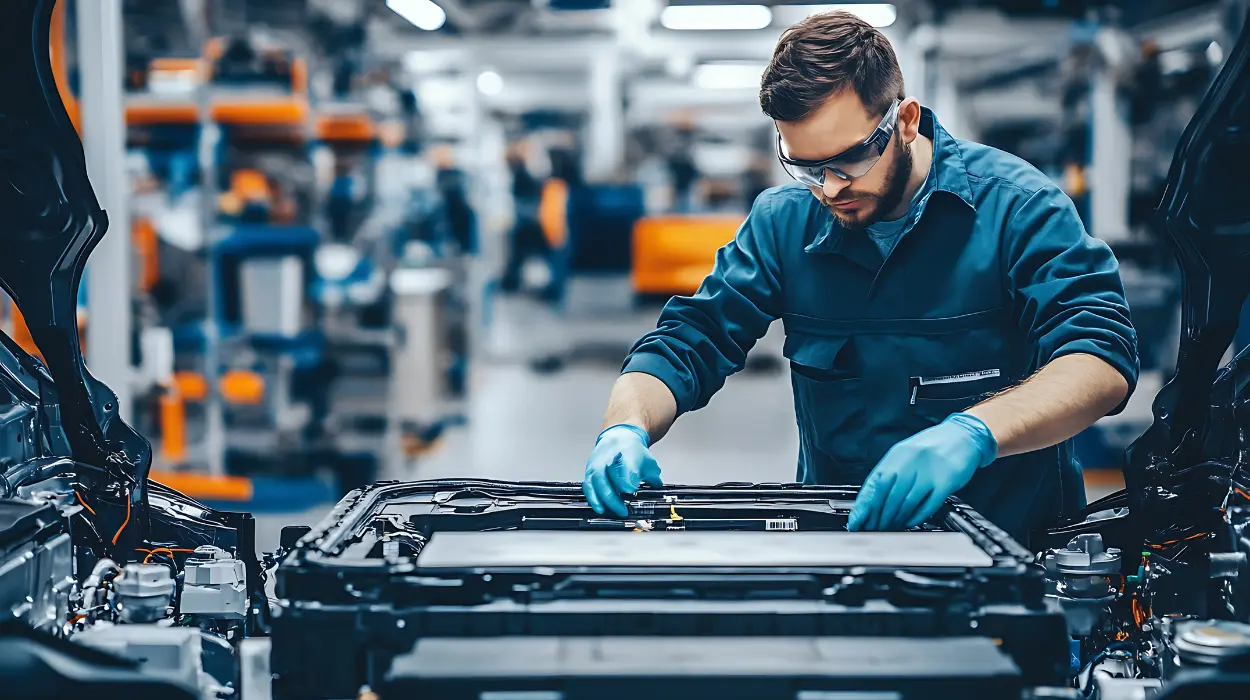
The transition to electric vehicles (EVs) is well underway in the UK—and as this change accelerates, so too does the demand for trained professionals who can safely service, maintain, diagnose and repair electric and hybrid vehicles. For technicians, garage owners, fleet managers, or anyone in the automotive service sector, gaining certified EV maintenance training is not just a smart career move—it’s increasingly vital. In this blog we’ll look at why EV maintenance training matters now in the UK, what qualifications and certifications are available, how to choose the right course, where you can get certified, and what the future career and business implications are. Also, we’ll point you to relevant training listings—As this blog will be part of our continuing series, you’ll find programme listings at the Oxford Training Centre.
Why EV maintenance training is urgent in the UK
1. Rapid growth of EV fleets
Electric vehicles have moved from niche to mainstream in the UK. The National Grid, multiple car-manufacturers and independent drive data all show that EVs and plug-in hybrids are gaining market share year on year. With this volume increase comes a corresponding surge in service and maintenance demand. For example, fewer technician-certifications currently cover EVs compared to ICE (internal combustion engine) vehicles—one provider reports that only around 20% of UK vehicle technicians are trained in EV technologies.
What this means: if you’re qualified, you’re stepping into a shortage area.
2. Safety, regulatory and liability motivations
Working on EVs is materially different from working on traditional combustion vehicles—especially when it comes to high-voltage battery packs, electric drive motors, power electronics, charging infrastructure, and the hazards that accompany them. Accredited training helps ensure that you understand safe work practices, isolation procedures, and legal/regulatory compliance. For instance, one course description emphasises safe recovery, transport and handling of EVs and hybrids, tackling high-voltage systems and roadside scenarios.
As EVs become ubiquitous, insurers, manufacturers and regulatory authorities may increasingly expect technicians to hold recognised qualifications—so getting trained is both protective and proactive.
3. Business and career opportunity
From a career viewpoint, technicians with EV-capability will increasingly be in demand. For workshops and service centres, offering EV maintenance services presents new revenue streams. One UK provider states: “As more consumers make the shift to hybrid and electric vehicles, demand for knowledgeable mechanics is increasing exponentially.”
For garages that adapt early, there’s a chance to future-proof the business, differentiate from competitors and attract EV-owning customers.
4. Technical evolution and the skills gap
EV and hybrid vehicle technology isn’t static—battery chemistry evolves, charging infrastructure expands (including ultra-fast chargers and vehicle-to-grid systems), software/firmware updates become more critical, and new vehicle architectures (e.g., skateboard chassis with integrated battery) are emerging. To keep pace, technicians need relevant training, not just general mechanical skills. As one provider puts it: “These things are radically different. Service, repair, diagnostics, operation, maintenance — all different.”
What qualifications and certifications are available in the UK
When evaluating training, it helps to understand the qualification landscape. The key awarding organisation is the Institute of the Motor Industry (IMI), which accredits and offers recognised EV/Hybrid vehicle qualifications.
Below is an overview of the typical levels of training.
1. Entry / Awareness Level
- IMI Level 1 Award in Electric/Hybrid Vehicle Awareness (EV1) – intended for non-technical staff (sales, parts, recovery, valeters) or as an introductory certification. It covers safe working awareness around EV/hybrid vehicles.
- As one training provider notes: “This qualification offers an introduction … for non-technical roles such as managers, valeters, parts advisors.”
This level is ideal if you’re new to the field or if your role involves occasional interaction with EVs rather than full service/repair.
2. Routine Maintenance / Intermediate Level
- IMI Level 2 Award in Electric/Hybrid Vehicle Routine Maintenance Activities – designed for technicians who will carry out routine maintenance (but not necessarily full high-voltage repair). For example, a course description outlines a one-day programme for working safely on hybrid/EV vehicles.
- Training covers understanding high/low voltage systems, safe isolation, and routine service tasks. This level is often a stepping stone into more specialised EV work.
3. Repair, Replacement / Advanced Level
- IMI Level 3 Award in Electric/Hybrid Vehicle System Repair and Replacement – for technicians who want to repair or replace high-voltage components (battery modules, power electronics, etc). The IMI description states: “remove and replace Electric/Hybrid vehicle high voltage components, work safely on vehicle high energy/electrical systems.” Institute of The Motor Industry
- Time and prerequisite: Often you’ll need prior experience or qualification in vehicle maintenance (level 3) before undertaking this. Crawley College
- This level gives practical competency to work deeper in EV systems.
4. Specialist / Master Level
- IMI Level 4 (and above) – Diagnosis, Testing and Repair of Electric/Hybrid Vehicles and Components – targeted at senior technicians, diagnostic specialists, master technicians dealing with complex EV systems. For example, one provider’s Level 4 course emphasises “live system working, inverter, resolver and motor test and measurement.”
- This level is ideal if you aim to lead EV service teams, diagnose sophisticated faults, or specialise in heavy EVs/large vehicles.
5. Other Specialisations
- There are also focused modules on EV charging infrastructure, heavy vehicle (bus/coach) EV training, recovery/reinstatement of EVs, etc. For example, one course covers “understand high-voltage battery systems and cabling … how to recover and transport EVs safely.”
- Workshops tailored to online + in-person hybrid formats are emerging.
How to evaluate and choose the right training programme
Choosing the correct course matters—both for your career and for safe, effective competence. Here are key criteria to consider:
Accreditation and recognition
- Ensure the course is accredited by IMI (or other recognised awarding body) and leads to a qualification that industry/employers accept. For example, the IMI “Electric Vehicle Qualifications” page lists vocationally-related qualifications. Institute of The Motor Industry
- Verify that the qualification covers the scope you need (maintenance vs repair vs diagnostics) and is aligned with your career goals.
Course content relevance and depth
- Does the course cover high-voltage systems, battery management, electric drive trains, charging systems, diagnostics and safe working practices? The most advanced courses highlight component-level work (e.g., inverter, resolver, motor test) and live system analysis.
- Does it include practical/ workshop work (very important with EV systems), not just theory? Hands-on work builds confidence and competence.
Progression path
- Does the provider outline a clear progression (Level 1 → Level 2 → Level 3 → Level 4)?
- Is there support for moving into specialisms (fleet EV, heavy vehicles, diagnostic roles)? For example IMI Level 3 leads to Level 4.
- For business/workshop owners, does the training support multiple staff members or group delivery?
Format, delivery and flexibility
- Some training providers offer training at your site, bespoke courses or flexible timings to minimise workshop disruption. For example, one provider offers EV/hybrid training at your workshop. Autotech Training
- Check duration, cost, prerequisites (experience/previous qualification). For instance, the Level 2 award course mentions “ideally have at least two years experience”.
- Online/blended formats may offer flexibility—especially for awareness modules—but for hands-on repair diagnostics you’ll want in-person workshop time.
Cost, funding, eligibility
- Some funding or subsidy may exist (especially for businesses or technicians retraining). One provider mentions “Fully & part funded Level 2, Level 3 and Level 4” on EV training.
- Consider the return on investment: how quickly training can lead to new work opportunities, higher value services and reduced outsourcing.
Employer and industry connectivity
- Providers aligned with major industry bodies, such as IMI, or those offering recognised credentials tend to be more credible. For example, EINTAC is IMI and TÜV Rheinland approved. EINTAC
- Training that connects you to real-world workshops, equipment and vehicle manufacturers will give stronger practical competence.
Where you can get trained in the UK
Here are some of the proven providers and course options available in the UK (note: this is illustrative, not exhaustive). Use these as templates when searching via the Oxford Training Centre listing.
- Autotech Training (UK) – IMI-accredited EV training courses, dates listed (Level 2 and Level 3) in Milton Keynes
- EINTAC – An IMI & TÜV Rheinland Approved