
An LMS (learning management system) is built to assign, deliver and record training, so it suits compliance, certification and onboarding. An LXP (learning experience platform) is built to help people find and choose learning for themselves, so it suits continuous development and skills growth. Most organisations do not have to pick one for good: the LMS usually stays as the record-keeper, and an LXP, if you need one, sits on top of it.
This guide explains the difference in plain terms, shows where each platform earns its place, and gives you a way to decide. It also covers the part vendors tend to skip: software only delivers what the learning itself is worth.
TL;DR
- An LMS is administrator-driven: it assigns courses, tracks completion and produces evidence for audits. An LXP is learner-driven: it recommends and curates content from many sources.
- Choose an LMS first if you carry compliance, safety or certification obligations. Add an LXP when people struggle to find useful learning or skills gaps persist.
- The two are complementary, and the market is blurring them: many LMS products now include experience features once found only in LXPs.
- Decide using your learning ecosystem, goals and success measures, not feature lists.
- Neither platform fixes weak content. Accredited, role-specific training is what fills either one.
Table of Contents
- What an LMS does
- What an LXP does
- LMS vs LXP: the differences that matter
- When an LMS is the right call
- When an LXP earns its place
- Using an LMS and an LXP together
- How to choose: a practical framework
- A worked example
- Where e-learning fits
- Our perspective: platforms do not train people
- Training that fits whichever platform you choose
- FAQ
- Sources
What an LMS does
An LMS is software for creating, delivering, managing and tracking training programmes, as Cornerstone’s guide to learning management systems describes it. TechTarget’s explainer adds the everyday detail: an LMS stores courses, assigns them and tracks them, and typically handles compliance and other formal training.
In practice, an administrator or L&D team does the following:
- Builds or uploads courses, often as full-length modules with assessments.
- Assigns them to people or groups, sometimes with deadlines.
- Sends automated reminders when someone falls behind.
- Reviews dashboards of completions and scores.
- Captures learner feedback.
The analyst firm ISG describes the LMS as a structured platform for administering, delivering, tracking and reporting formal learning, optimised for compliance, certification and curriculum-based programmes. That is the key point. An LMS answers the question “who has completed what, and can we prove it?”
It is also still the default. The Learning Guild’s 2025 research on workplace learning technology found LMS adoption at 90.8% among its respondents, with SCORM-based e-learning at 81.7%. Whatever you decide about an LXP, an LMS or something very like it is probably already in your stack.
What an LXP does
An LXP puts the learner at the centre. Ventana Research defines it as learner-driven software centred on a personalised experience, curating content from internal, external and user-generated sources.
Where an LMS pushes, an LXP pulls. Typical features include:
- Recommendations based on a person’s role, interests and learning history, often using AI and machine learning.
- Mixed content: videos, articles, podcasts and resources created by colleagues, not only formal courses. A New Spring’s comparison lists these formats as typical of LXP content.
- Social features: TechTarget notes that LXPs encourage employees to follow one another and share what they learn.
- Skills views: a map of what someone knows and what to learn next.
The question an LXP answers is different: “what should I learn next, and where can I find it?”
LMS vs LXP: the differences that matter
The feature lists overlap more each year, so it helps to compare on the dimensions that change how your team works.
| Dimension | LMS | LXP |
|---|---|---|
| Who drives learning | Administrator or L&D team | The learner |
| Typical content | Structured courses, modules, assessments | Curated mix: video, articles, podcasts, peer-made material |
| Delivery model | Assigned, often with deadlines | Discovered, recommended, self-paced |
| Core use case | Compliance, onboarding, certification | Continuous development, skills growth |
| What it measures | Completion, scores, compliance status | Engagement, content preferences, skill progress |
| Main risk | Feels like a chore; low voluntary use | Weak audit trail; relevance depends on content quality |
The split between admin-driven and learner-driven, and between compliance and continuous development, is how D2L’s 2026 comparison frames it, including the point that LMS analytics centre on completion and compliance while LXP analytics centre on engagement and skill growth.
Control and the audit trail
If a regulator, client or insurer may ask you to show that every site engineer completed a safety course, you need an LMS-grade record: who, which version, when, with what result. An LXP can surface that course, but recording and proving it is the LMS’s job. This is why TechTarget points to compliance and other essential training, especially in mid-size or large organisations and highly regulated industries, as the natural home of an LMS.
Discovery and motivation
The opposite failure is familiar to anyone in L&D. The LMS is full of good material, but people only log in when they are chased. An LXP tackles that by making learning something people look for. The Learning Guild suggests an LXP may be especially useful when an LMS is failing learner expectations, useful content is hard to find, or skills gaps persist and the organisation relies on employees sharing knowledge.
Analytics
Completion rates tell you that people finished a course. They do not tell you whether it changed anything. LXP engagement data shows what people choose to explore, which is useful for spotting emerging interests and gaps. Neither replaces measuring actual performance, such as fewer rework hours, fewer incidents or faster ramp-up for new starters.
When an LMS is the right call
Start with an LMS, or stay with one, if most of these are true:
- You must evidence mandatory training (health and safety, regulatory, professional certification).
- You run structured programmes with a fixed curriculum, such as a project management certification path or a graduate scheme.
- You train external audiences. ISG notes effective LMS selection should cover partners, contractors and customers as well as employees, and Forrester says platform vendors support change management and training for external audiences too.
- Your team is small and you need one dependable system rather than two.
TechTarget’s February 2026 round-up observes that most companies still use an LMS to administer employee training, with LXPs adding personalised discovery and content from several sources.
When an LXP earns its place
An LXP makes sense when the problem is not tracking but engagement and relevance:
- Employees say they cannot find what they need, or they search outside the company for it.
- You have a broad library (internal, licensed, user-generated) that nobody can navigate.
- You want self-directed, skills-based development alongside mandatory training.
- Peer knowledge matters: engineers, clinicians or consultants who learn a lot from each other.
Be realistic about cost and effort. TechTarget notes that running both platforms adds cost, and an LXP is only as good as the content and tagging behind it. A recommendation engine pointed at a thin library produces thin recommendations.
Using an LMS and an LXP together
This is the most common answer to the “LMS or LXP” question: both, with clear roles. TechTarget explains that an LXP is often used alongside an LMS and can link LMS courses and third-party content so formal and informal learning appear in one place. The LMS stores and assigns; the LXP curates and encourages social learning.
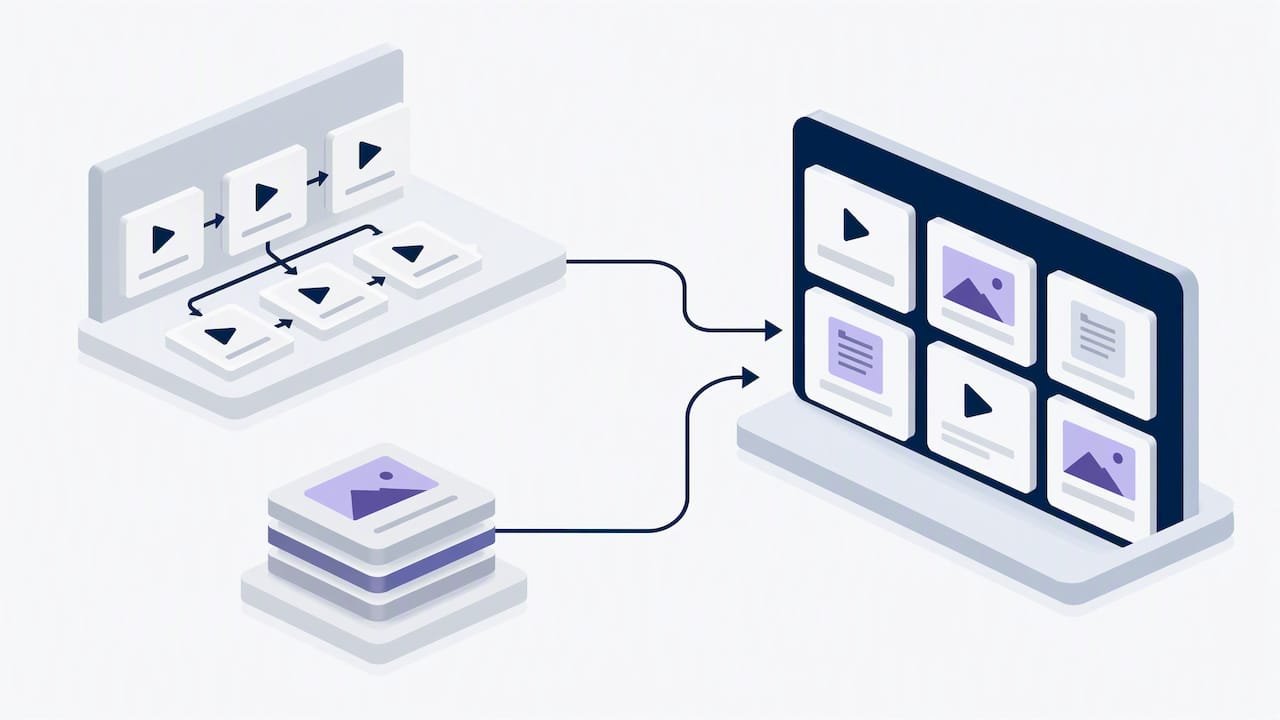
The Learning Guild’s view is that an LXP is generally an additional experience layer, not an automatic replacement, because the LMS keeps supporting learning administration. Be wary of any pitch that tells you to rip out your LMS. A 2025 ISG market view points the other way: platforms are combining core LMS functions with experience features, and an effective LMS should now deliver the user-friendly experience once associated with LXPs.
So your realistic options are:
- LMS only, with a modern interface and good catalogue search. Best for compliance-heavy or smaller organisations.
- LMS plus LXP, integrated so completions flow back to one record. Best for larger organisations with both mandatory and aspirational learning.
- A single platform that blends both. Best when you want fewer vendors, provided you test the experience layer, not just the admin side.
Whichever you choose, the work of joining formal and self-directed learning is design work, not just integration. Thinking about how to design learning paths for L&D teams helps you decide what is mandatory, what is recommended and what is left to discovery. For leadership programmes in particular, a leadership talent development guide for HR leaders is a useful companion when you plan how structured and self-directed development fit together.
How to choose: a practical framework
The Association for Talent Development (ATD) recommends that before selecting a platform you assess the existing learning ecosystem, stakeholder needs, risks and constraints, align with organisational goals and define success. That guidance is written from a US perspective, but the sequence travels well. Here is a version you can run in an afternoon.
Step 1: list what you must prove
Write down every training obligation that needs a record: safety, regulatory, professional accreditation, client-mandated courses. If the list is long, an LMS is non-negotiable.
Step 2: name the learning problem you want to solve
Be specific. “Engagement is low” is vague. “Only 30% of optional courses are started, and managers say people cannot find relevant material” points to discovery. “Our project managers need accredited certification and we cannot show progress” points to structure and tracking.
Step 3: audit what you already have
Many organisations have an LMS with features switched off. Before buying anything, check whether your current system already offers recommendations, skills tagging, mobile access and search that would close the gap.
Step 4: score vendors on the criteria that last
ISG’s 2026 executive summary suggests evaluating learning platforms for compliance administration, skills and job ontologies, recommendations, mobile accessibility, analytics and integration with HR, identity, collaboration and content systems. On AI, it advises requiring that it be explainable, controllable and aligned with your governance, while checking that it really reduces administrative effort and improves relevance.
Forrester adds that vendors differ by size, offering type, geography and use-case focus, so match the vendor’s market focus to your size and needs rather than chasing the longest feature list.
Step 5: define success before you sign
Pick two or three measures: time to competence for new hires, audit pass rates, voluntary learning hours, internal mobility. If you cannot say how you will know the platform worked, you are not ready to buy.
A worked example
Imagine a 600-person engineering services firm with sites in several countries. It must evidence safety and compliance training every year, and it runs a project management certification path for its team leads. Its people also complain that the technical library is impossible to browse.
The sensible sequence is:
- Keep the LMS as the system of record for safety, compliance and certification, and fix its search and mobile access.
- Run a three-month pilot of an LXP layer for technical and leadership content only, with the LMS courses linked in.
- Judge the pilot on voluntary use and manager feedback, not on a demo.
- Expand only if the pilot shows people finding and using content they did not before.
Nothing in that plan removes the LMS, and nothing assumes the LXP will pay for itself. It tests the idea first.
Where e-learning fits
People often mix up the terms, so it helps to separate them. E-learning is the content: online courses, video, quizzes, simulations or virtual sessions. As Litmos explains, an LMS assigns and tracks that content while an LXP helps learners find and choose it. Neither platform creates learning that works. They carry it.
Our perspective: platforms do not train people
We train professionals and teams across project management, healthcare, oil and gas, civil engineering, IT, leadership, compliance and safety, so we see this decision from the content side. Our view is simple: the LMS-or-LXP debate gets more attention than it deserves, because the thing that changes behaviour at work is the quality and relevance of the training that goes into the system.
When an organisation asks us for help, the platform is rarely the first problem. More often the course content is generic, nobody has tied it to the real tasks in the role, or the accreditation does not match what the job market or a regulator recognises. A beautifully recommended library of the wrong material is still the wrong material.
So we would put the order of decisions this way. First decide what people must be able to do, and which accredited qualifications prove it. Then shape the content around your own challenges, and choose delivery that suits the group: on-site for hands-on or sensitive work, online for dispersed teams, blended where both help. Only then ask which platform will assign, track and surface that learning. Whether it sits in an LMS, an LXP or both, the training should be able to travel with you.
— Sam
Training that fits whichever platform you choose
If your next step is to fill your LMS or LXP with training that is accredited and built around your own work, Oxfordcentre offers professional courses across project management, healthcare, oil and gas, civil engineering, IT, management, leadership, compliance and safety. Programmes can be customised for corporate teams and delivered on-site, online or blended. Project managers weighing certification routes can start with our project management courses, and you can browse everything else on the Oxfordcentre site.
FAQ
Is an LXP a replacement for an LMS?
Usually not. An LXP typically adds a discovery and recommendation layer on top of an LMS, which keeps handling assignment, tracking and compliance records. Some newer platforms combine both in one product, but the underlying need to administer and evidence formal training does not go away.
Which is better for compliance training?
An LMS. Compliance training depends on assignment, deadlines, reminders and a reliable record of completion, which are core LMS functions. An LXP can help people find supporting material, but it should not be your only evidence of mandatory training.
Can a small business get by with only an LMS?
Yes, in most cases. A small team gains little from a recommendation engine if the library is small, and running two systems adds cost. Choose an LMS with decent search and mobile access, then revisit an LXP if content grows and people struggle to find what they need.
How do I know whether our LMS is the problem?
Check usage before blaming the software. If people only open it when assigned something, ask whether the content is relevant and whether managers talk about learning. If useful material exists but cannot be found, a discovery layer helps. If the material itself is generic or outdated, a new platform will not fix it.
Sources
- What is a Learning Management System? Cornerstone guide
- LXP vs. LMS: What are the differences? TechTarget
- 10 top learning experience platforms to use in 2026, TechTarget
- 2025 Buyers Guides for Learning and Development, ISG Research
- Learning Experience Platforms Buyers Guide Executive Summary, ISG Research
- Learning Platforms 2026 Executive Summary, ISG Research
- Workplace Learning Technologies Adoption, The Learning Guild
- Who Needs an LXP? The Learning Guild
- Fill Out The eLearning Admin Stack: The LMS and the LXP, The Learning Guild
- How to Choose a Learning Experience Platform, ATD
- The Learning Management Systems And Experience Platforms Landscape, Forrester
- LMS vs LXP: Key Differences and How to Choose, D2L
- LMS vs LXP: What’s the best choice for training, A New Spring
- LMS vs. LXP vs. eLearning, Litmos