
Key Points
- Strategic partnership: Equinor and Aker BP have agreed to collaborate on developing tight oil and gas reservoirs across the Norwegian Continental Shelf.
- Estimated resource potential: The Norwegian Offshore Directorate estimates that mapped tight reservoirs contain approximately 2.8 billion barrels of oil equivalent in recoverable resources, comparable to the expected recoverable resources of the Johan Sverdrup field.
- Around 90 discoveries: Many of the approximately 90 discoveries awaiting development decisions are located in tight reservoirs.
- Technology and cost reduction: The partnership will focus on technology development, standardisation, knowledge-sharing and cooperation across multiple projects to improve recovery and commercial viability.
- Broader collaboration: The agreement covers prospects, discoveries and projects across the Norwegian Continental Shelf, including resource maturation and well-stimulation solutions.
- Industry supply chain: The companies aim to establish a predictable level of activity that supports specialist expertise, supplier capacity and a competitive offshore energy supply chain.
- Immediate start: Aker BP Chief Executive Officer Karl Johnny Hersvik said the companies were starting work immediately, with joint governance and multidisciplinary working groups overseeing the collaboration.
- Industry significance: The initiative could help unlock resources that have remained uneconomic to develop individually, although the announcement does not guarantee that every discovery will proceed to production.
What Have Equinor and Aker BP Announced?
As reported by Dominic Chopping of Dow Jones Newswires, published through MarketScreener, Equinor and Aker BP have entered a strategic collaboration to develop oil and gas resources in tight reservoirs on the Norwegian Continental Shelf. The announcement was published on 26 October 2026. The companies are seeking to improve the commercial prospects of discoveries that are difficult or expensive to develop using conventional extraction methods.
In their official announcements published on 26 October, Equinor and Aker BP said the partnership would combine technology development, standardisation and cooperation across multiple projects to enable the profitable development of more discoveries and increase oil and gas recovery. Rather than treating each opportunity as an isolated project, the companies intend to examine their respective portfolios collectively and identify where common technical solutions and shared experience can deliver the greatest value.
The report published by Seeking Alpha, accessible through TradingView under the headline “Equinor, Aker BP partner to develop hard-to-extract oil and gas offshore Norway”, also identifies the collaboration as an effort to increase production from tight and complex reservoirs. The report does not display a named individual author in the available listing, so no individual byline is attributed to it here.
The agreement reflects a practical challenge for Norway’s offshore energy industry: substantial quantities of hydrocarbons may exist in geological formations, but their presence alone does not make them commercially recoverable. Companies must also establish whether they can extract the resources efficiently, manage the associated costs and develop suitable production solutions.
For Equinor and Aker BP, the proposed approach is to pool relevant opportunities and expertise, accelerate the development and qualification of technology, and create conditions in which more discoveries can move towards potential development.
Why Are Tight Oil and Gas Reservoirs Important to Norway?
Tight reservoirs are geological formations with low permeability, meaning oil and gas cannot flow easily through the surrounding rock. This restricts the movement of hydrocarbons towards production wells and can make extraction more challenging than in reservoirs with more favourable flow characteristics.
According to Equinor and Aker BP’s joint announcement, conventional extraction methods can recover only a limited share of the resources in these formations. As a result, some discoveries are too expensive to develop as standalone projects using existing solutions.
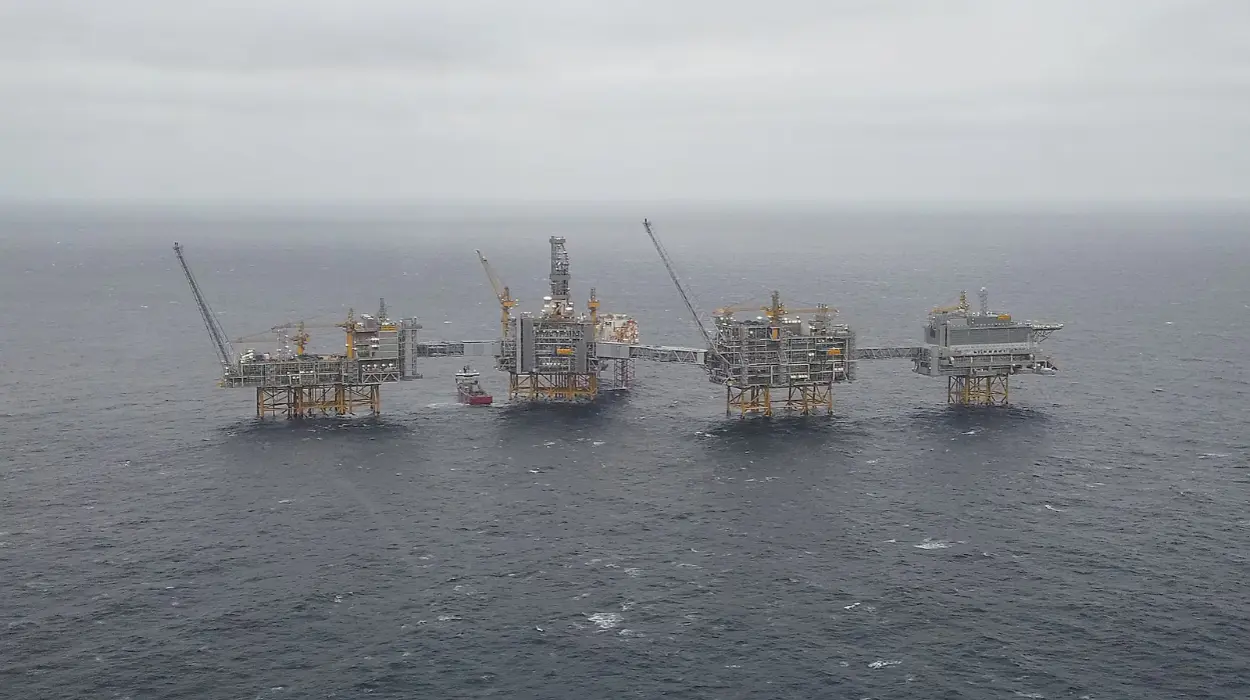
The Norwegian Offshore Directorate has estimated the recoverable resource potential of mapped tight reservoirs at approximately 2.8 billion barrels of oil equivalent. This is comparable to the expected recoverable resources of the Johan Sverdrup field, one of Norway’s major offshore oil developments. The comparison illustrates the potential scale of the resources under consideration, rather than suggesting that they are already developed or available for production.
The companies also reported that many of approximately 90 discoveries still awaiting a development decision are situated in tight reservoirs. These discoveries represent potential opportunities, but they should not be confused with approved projects, proven commercial production or reserves that can necessarily be extracted profitably under current conditions.
The Norwegian Offshore Directorate has encouraged greater industry cooperation to address the technical and economic challenges. The Equinor–Aker BP agreement responds to that challenge by seeking solutions that can be applied across several opportunities, rather than relying entirely on individual companies to develop separate approaches for each discovery.
This emphasis on improving extraction methods and project economics places Oil and Gas expertise at the centre of the partnership, particularly in reservoir development, production engineering and the technical evaluation of offshore resources.
How Will the Partnership Improve Oil and Gas Recovery?
The companies intend to identify opportunities where joint technology development, standardisation and the exchange of experience can improve project outcomes. Their approach covers exploration prospects, existing discoveries and projects across the Norwegian Continental Shelf.
A key element is the development and qualification of solutions that can be used across multiple opportunities. If a technology or operating method can be adapted for several reservoirs, the companies may be able to reduce duplicated development work, learn more quickly and spread the cost of developing new approaches across a larger portfolio.
Standardisation is also expected to play a role. Using common approaches where technically appropriate can help make project planning and execution more consistent. However, the geological characteristics of individual reservoirs will still matter, and the companies have not announced that a single solution will be suitable for every discovery.
The collaboration will also include resource maturation. This involves advancing the understanding of a resource and assessing the information and technical work required to determine whether a discovery can progress towards development. The companies will also examine well-stimulation solutions intended to improve the movement of hydrocarbons towards production wells.
The combination of these activities is intended to address the technical barriers that have limited the development of tight reservoirs. Equinor and Aker BP have not, in the announcements reviewed, provided a specific production target, a timetable for individual reservoir developments or a confirmed investment budget for the new collaboration. Its immediate focus is on developing common solutions and identifying the opportunities where cooperation can create the greatest value.
What Have the Executives Said About the Agreement?
Equinor and Aker BP have presented the collaboration as a way to accelerate technology development, reduce costs and improve the commercial prospects of challenging discoveries.
Kjetil Hove, Executive Vice President for Exploration & Production Norway at Equinor, said the companies could achieve more by assessing their portfolios together and developing common solutions.
As reported in Equinor’s official announcement, Hove said: “By viewing our portfolios in context and developing common solutions, we can reduce costs and develop and qualify technology faster.” He added that the approach could make challenging resources profitable and benefit partners and society.
His comments highlight the importance of collaboration in an environment where the cost of developing an individual discovery may prevent it from progressing. Sharing technical knowledge and applying suitable solutions across several opportunities could improve the economics of projects that might otherwise remain undeveloped.
Karl Johnny Hersvik, Chief Executive Officer of Aker BP, also emphasised the importance of scale. According to the companies’ announcement, Hersvik said: “Scale is key.” He explained that considering opportunities across both portfolios could create the conditions for greater activity, faster learning and lower costs. He also confirmed that work on the collaboration was starting immediately.
The two statements underline a shared objective: to improve the prospects of technically difficult resources by coordinating expertise and development work. Neither executive’s comments amount to a guarantee that all identified discoveries will become commercially viable, as their eventual development will depend on technical performance, costs and project-specific assessments.
How Will the Agreement Affect Norway’s Offshore Energy Supply Chain?
The collaboration extends beyond reservoir technology to the wider network of suppliers and specialists supporting offshore oil and gas development.
Equinor and Aker BP said they want to establish a sufficient and predictable level of activity to support a competitive value chain. This includes maintaining the expertise and supplier capacity needed to develop more tight-reservoir discoveries. The agreement also provides for a joint steering structure and multidisciplinary working groups with representatives from both companies.
A more consistent pipeline of technical work could give suppliers greater visibility of potential requirements and help specialist businesses plan their capabilities. Engineering, drilling, well-stimulation and other relevant service providers may find opportunities if the collaboration progresses towards concrete projects. However, the companies have not announced specific supplier contracts, job-creation figures or procurement commitments under this agreement.
The emphasis on a predictable workload is significant because the development of technically challenging offshore resources requires specialised knowledge and coordinated planning. If common solutions can be deployed across multiple discoveries, the partners may be able to establish a more repeatable development process.
The collaboration’s governance arrangements are intended to support that coordination. A joint steering structure and multidisciplinary working groups will bring representatives from both organisations together to assess opportunities and determine where shared work can be most effective.
For organisations involved in Logistics and Supply Chain, the announcement illustrates how coordinated project planning and supplier capacity can influence the delivery of complex offshore energy developments. The agreement does not, however, establish a new logistics contract or confirm additional orders for any particular supplier.
What Are the Commercial Prospects and Limitations of the Partnership?
The estimated 2.8 billion barrels of oil equivalent in recoverable resources provides a substantial basis for investigating tight reservoirs, but resource potential should be distinguished from commercially recoverable production under a specific development plan.
Each discovery must be assessed against its geological characteristics, the effectiveness of available extraction technology, expected development costs, and the practical requirements of bringing oil or gas to market. A resource may have considerable estimated potential while remaining uneconomic to develop using current methods.
The partnership aims to improve these conditions by spreading technology development across a broader portfolio. Common solutions may reduce duplicated effort and make technical improvements available to several projects. The companies are also seeking to improve the pace at which technologies are developed and qualified.
Nevertheless, the announcement does not provide a quantified estimate of future cost savings, a projected increase in production or a schedule for bringing the approximately 90 discoveries into development. It would therefore be premature to interpret the agreement as confirmation that these resources will be produced.
Its immediate commercial significance lies in the decision to coordinate efforts around opportunities that have proved difficult to advance independently. The outcome will depend on whether the companies can translate shared research, resource evaluation and well-stimulation solutions into workable development plans.
How Does the Partnership Fit into Norway’s Wider Offshore Development Strategy?
The agreement forms part of a broader industry effort to investigate remaining oil and gas opportunities on the Norwegian Continental Shelf.
In a separate announcement on 24 August 2026, Equinor, Aker BP and Vår Energi said they were establishing an exploration collaboration focused on selected high-impact opportunities. That earlier initiative aimed to assess approximately 20–25 exploration opportunities over four to five years, with an ambition to drill around five high-impact exploration wells annually.
The August agreement and the new tight-reservoir collaboration address different stages and types of opportunity. The earlier initiative focuses on pursuing potentially significant discoveries, whereas the 26 October agreement concentrates on improving the prospects of developing challenging resources within the partners’ portfolios. The two arrangements should not be treated as a single project or assumed to have identical objectives.
Equinor and Aker BP also announced a separate strategic collaboration in May 2026 involving portfolio alignment and transactions related to the Troll-Fram, Yggdrasil and Wisting areas, among other assets. That agreement included ownership changes and a cash payment of US$23 million from Aker BP to Equinor, subject to the conditions described in the original announcement. It was a distinct arrangement and should not be confused with the new tight-reservoir partnership.
Taken together, these announcements illustrate the companies’ continuing interest in coordinating offshore development, improving resource utilisation and pursuing opportunities across different stages of the exploration and production process. The latest collaboration adds a specific focus on technology and commercial viability in tight reservoirs.
What Happens Next for Equinor and Aker BP?
Equinor and Aker BP have said the work will begin immediately, with the partnership organised through joint governance arrangements and multidisciplinary working groups. The companies will contribute relevant opportunities from their respective portfolios and identify where technology development, standardisation and shared experience could create the greatest value.
The next practical steps will involve assessing the relevant prospects and discoveries, maturing resource opportunities and examining appropriate well-stimulation and extraction solutions. Progress will depend on the technical findings and whether the partners can develop methods that improve the economics of individual projects.
The companies’ stated ambition is to enable more discoveries to be developed profitably and increase oil and gas recovery from tight reservoirs. The estimated resource potential offers a significant reason to investigate these opportunities, but the actual results will only become clearer as the collaboration advances.
For Norway’s offshore industry, the agreement establishes a framework for addressing a persistent challenge: how to recover more value from resources that are difficult to extract using conventional methods. Whether that framework leads to additional production will depend on the effectiveness of the technology, the cost of development and the commercial case for each opportunity.