
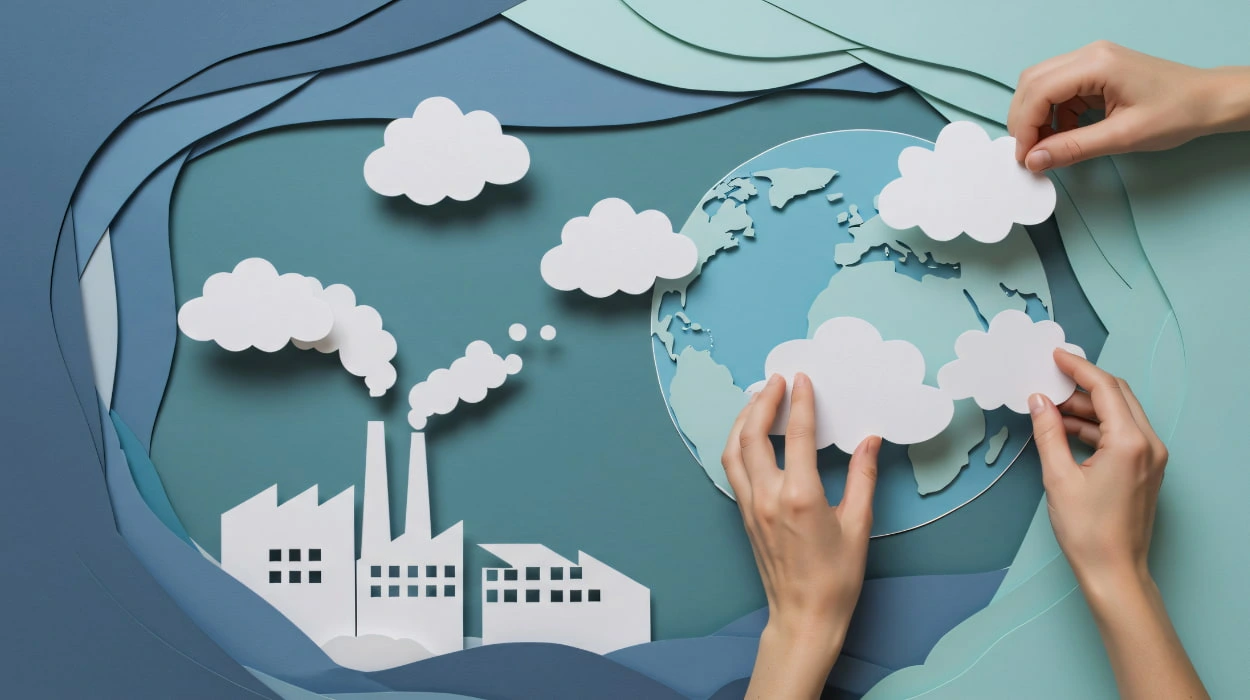
Climate change has rapidly moved from an abstract global concern to a direct professional responsibility across every sector. Leaders, managers, policymakers, and corporate teams are now expected to understand climate change basics not as optional knowledge but as essential operational literacy. The accelerating rise in global temperatures, shifting weather patterns, and climate-related economic risks have made environmental awareness a core competency in modern professional environments.
Every industry—from finance and construction to healthcare, agriculture, and supply chain management—is now influenced by climate-related considerations. Professionals who understand the fundamental science, the real-world impacts, and the required adaptation strategies are better equipped to make informed decisions, reduce risks, and contribute to sustainable progress. Understanding climate change is no longer limited to environmental specialists; it is becoming a minimum expectation for anyone responsible for organisational resilience in an increasingly unpredictable world.
Climate Change Explained: The Science Behind a Planet in Transition
To build effective climate literacy, professionals first need a clear understanding of what climate change actually is. At its core, climate change refers to long-term shifts in temperature and weather patterns, driven primarily by human activities such as industrial emissions, deforestation, and energy production. When we speak of climate change explained scientifically, we focus on how greenhouse gases trap heat in the atmosphere, intensifying global warming and altering ecosystems in ways that affect people, infrastructure, and economies.
A clear climate science overview reveals that carbon dioxide, methane, and nitrous oxide play the largest roles in trapping heat. Industrialisation has increased these gases to levels unprecedented in human history. This trapped heat disrupts weather stability, accelerates Arctic melting, increases sea levels, and contributes to more frequent heatwaves, floods, droughts, and storms. Climate science also shows that warming oceans lead to more intense hurricanes and the loss of biodiversity, further destabilising ecosystems that sustain human life.
When professionals gain a deeper grasp of these scientific fundamentals, they become more capable of understanding why climate decisions matter and how business operations must evolve in response.
Climate Change for Professionals: Why Every Industry Is Affected
Understanding climate change for professionals means recognising that climate dynamics influence risks, policies, supply chains, customer expectations, and investment decisions. For instance, finance professionals face rising exposure to climate-related asset devaluation. Construction and real estate developers must consider flood zones, heat-resistant materials, and environmental design standards. Agriculture experts must adapt to unpredictable rainfall patterns and soil degradation. Tech industries grapple with energy-intensive data centres and sustainability requirements.
Professionals across sectors must also navigate a landscape of increasing regulatory demands. Governments are introducing climate disclosure requirements, sustainability reporting mandates, and emissions-reduction policies that directly influence business operations. This makes climate resilience knowledge essential for strategic planning. Whether you manage operations, lead teams, oversee projects, or contribute to policy decisions, climate awareness allows you to anticipate challenges rather than react to them.
In essence, climate knowledge has become a business differentiator. Companies with climate-literate professionals are better equipped to innovate, comply with regulations, and build long-term resilience.
Global Warming Fundamentals: Understanding Temperature Trends and Their Implications
To appreciate the scale of climate risk, professionals must understand global warming fundamentals, a core component of climate literacy. Global warming refers specifically to the rise in Earth’s average temperature due to greenhouse gas accumulation. This warming trend has intensified rapidly since the mid-20th century, driven by industrial emissions, large-scale land use change, and unsustainable consumption patterns.
Rising temperatures have far-reaching implications. Warmer oceans lead to thermal expansion, contributing to sea-level rise that threatens coastal infrastructure. Heatwaves strain public health systems and reduce workforce productivity. Wildfires, exacerbated by prolonged heat and drought, destroy land, homes, and wildlife. Changes in precipitation patterns disrupt agriculture and threaten food security.
Understanding these fundamentals allows professionals to grasp why environmental considerations must be integrated into organisational decision-making. As temperature trends continue upward, businesses must adapt by upgrading infrastructure, assessing climate risks, and investing in sustainable technologies.
Climate Change Awareness: Building a Culture of Environmental Responsibility
For organisations to succeed in a climate-conscious future, employees at every level must develop strong climate change awareness. This awareness is not limited to understanding facts; it includes recognising how individual actions, company culture, and strategic decisions contribute to environmental outcomes. When teams understand the urgency of climate issues, they are more motivated to comply with environmental policies, participate in sustainability initiatives, and innovate solutions.
Climate-aware cultures are built through education, training, transparent communication, and clear leadership direction. When leaders prioritise climate literacy, they create environments where employees feel responsible for contributing to sustainable outcomes. This cultural shift improves resource efficiency, reduces waste, and enhances long-term organisational resilience.
Understanding Climate Change Through Real-World Impacts
Theory alone is not enough; meaningful climate literacy requires understanding the real-world effects of a warming planet. Understanding climate change means observing how climate disruptions affect communities, economies, and industries globally. Rising sea levels threaten ports, coastal cities, and supply chains. Droughts reduce crop yields and increase food prices. Heavy rainfall leads to infrastructure damage, service disruptions, and economic loss.
The global insurance industry faces unprecedented claims from climate-related disasters, pushing companies to reassess risk models. Public health systems face new pressures from heat stress, vector-borne diseases, and air quality deterioration. Transportation networks experience disruptions due to extreme weather events, increasing operational costs. These real-world changes demonstrate why climate change impacts must be taken seriously by professionals across sectors.
A professional who understands these impacts becomes more capable of anticipating risks, planning contingencies, and contributing to organisational preparedness.
Environmental Sustainability Skills: The New Professional Requirement
Modern professionals must now develop environmental sustainability skills as part of their core competency. These skills include understanding emission reduction strategies, resource optimisation, waste management, sustainability reporting, and implementing green policies within teams and departments. Employers are increasingly prioritising candidates who demonstrate familiarity with sustainability tools, frameworks, and global climate targets.
These skills are essential for navigating supply chain decisions, designing sustainable products, selecting responsible vendors, adopting energy-efficient technologies, and ensuring compliance with environmental regulations. In many industries, sustainability expertise also enhances career opportunities, as organisations actively seek professionals who can lead climate-aligned initiatives.
Climate Resilience Knowledge: Preparing Organisations for a Volatile Future
The concept of climate resilience knowledge goes beyond climate mitigation; it focuses on preparing organisations to withstand and recover from climate-related disruptions. This includes upgrading infrastructure, strengthening emergency response planning, diversifying energy sources, and building adaptive supply chain strategies.
Professionals with resilience knowledge are more likely to identify vulnerabilities before they become threats. They can evaluate climate risks, recommend adaptation measures, and support long-term business continuity planning. In an era where climate events are becoming more frequent and severe, resilience thinking is no longer optional—it is essential for safeguarding organisational stability.
Climate Change Training Topics Every Professional Should Learn
Developing climate literacy requires structured learning. Many organisations now incorporate climate change training topics into professional development programmes, covering areas such as greenhouse gases, climate risk assessment, sustainability frameworks, renewable energy, carbon accounting, and global climate policy. These topics help professionals connect scientific knowledge with practical workplace application.
Training also helps employees stay aligned with evolving regulations, international agreements, and corporate sustainability targets. When organisations actively train their teams, they enhance capacity, strengthen compliance, and support long-term strategic goals.
Final Thoughts
Climate change is no longer an issue reserved for environmental specialists; it is an essential professional competency that shapes decisions across industries. Understanding climate science, global warming, risk management, resilience planning, and sustainability action equips professionals to contribute meaningfully to their organisations during a time of unprecedented environmental change.
Institutions like Oxford Training Centre play a vital role in strengthening professional climate literacy, offering specialised programmes that support the development of environmental awareness and climate-aligned decision-making. For individuals and organisations seeking structured knowledge, the Centre’s Environmental & Agriculture Training Courses provide comprehensive, industry-relevant learning pathways that deepen understanding of climate change and enhance sustainability capability.
By investing in climate knowledge today, professionals and organisations alike build the foundation for a more resilient, responsible, and future-ready world.