
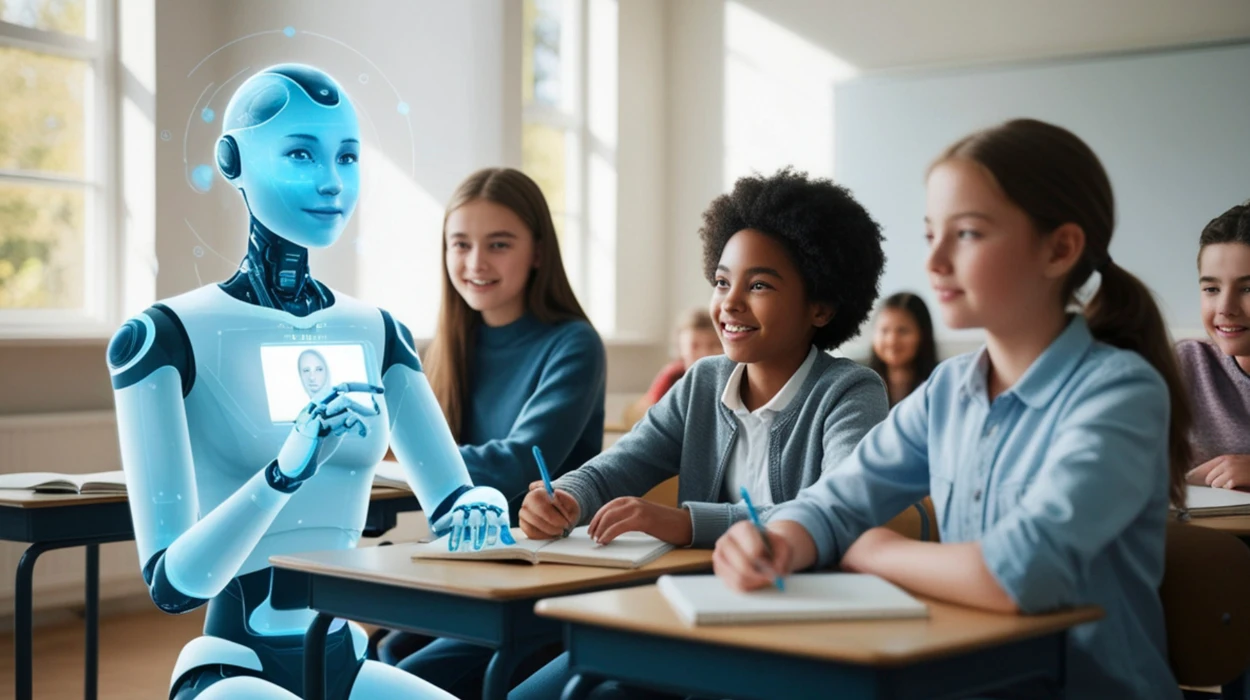
In the rapidly evolving landscape of education, technology is no longer a supplementary tool but a central component of modern learning. Among emerging innovations, AI in education stands out as a transformative force, reshaping how students learn, teachers teach, and institutions manage learning environments. From intelligent tutoring systems to AI-assisted learning platforms, artificial intelligence is increasingly supporting educators and learners by providing personalized, data-driven, and scalable solutions.
The integration of AI in classrooms is enabling more efficient teaching, adaptive learning experiences, and improved student outcomes. This article explores how AI supports modern learning, the benefits of AI educational tools, and the future potential of artificial intelligence in educational settings.
Understanding AI in Education
Artificial intelligence in education involves using machine learning algorithms, data analysis, and intelligent software to enhance the teaching and learning process. Unlike traditional teaching methods, AI in classrooms can provide personalized learning experiences, track student progress in real time, and automate administrative tasks, allowing educators to focus more on pedagogy and less on routine processes.
Artificial intelligence learning tools are designed to adapt to each student’s unique learning style, skill level, and pace. These tools analyze student interactions, identify knowledge gaps, and provide tailored content or recommendations. As a result, learners receive a customized experience that fosters engagement, retention, and academic success.
Key Applications of AI in Education
1. Personalized Learning Experiences
One of the most significant impacts of AI in education is its ability to deliver personalized learning. AI-assisted learning platforms can assess a student’s strengths, weaknesses, and learning preferences to create individualized learning paths.
For example, adaptive learning software can modify lesson difficulty based on real-time performance. A student struggling with algebraic concepts may receive additional exercises, hints, and explanations, while advanced learners are challenged with more complex problems. This level of personalization was previously impossible in traditional classroom settings.
2. Intelligent Tutoring Systems
Intelligent tutoring systems (ITS) use AI to replicate the guidance of a one-on-one tutor. These systems provide instant feedback, monitor progress, and offer explanations tailored to each learner. Unlike conventional tutoring, ITS can be scaled across hundreds or thousands of students, making high-quality support accessible to more learners.
In subjects like mathematics, science, or languages, ITS can detect misconceptions, suggest alternative approaches, and reinforce concepts until mastery is achieved. This not only enhances understanding but also builds learner confidence.
3. AI-Assisted Grading and Feedback
Grading assignments and providing feedback is a time-consuming task for educators. AI in classrooms can automate these processes by analyzing essays, quizzes, and problem sets. Advanced AI algorithms can evaluate the structure, logic, and content quality of student submissions, providing instant, constructive feedback.
Automated grading systems free educators to focus on mentoring, lesson planning, and interactive learning activities, while ensuring consistent and objective evaluation across the student body.
4. Predictive Analytics for Student Success
AI educational tools can analyze historical and real-time data to predict student performance. By identifying at-risk students early, institutions can implement interventions, such as targeted tutoring, additional resources, or counseling support.
Predictive analytics in education helps reduce dropout rates, improve academic achievement, and support data-driven decision-making at the institutional level. Teachers can anticipate learning challenges before they escalate, fostering a proactive approach to student success.
5. Enhanced Administrative Efficiency
Beyond the classroom, AI in education supports operational efficiency. AI-powered systems can automate tasks such as scheduling, attendance tracking, resource allocation, and administrative reporting.
By reducing administrative burdens, educators have more time to focus on teaching and mentoring, while institutions can optimize workflows and resource utilization. This leads to a more effective and responsive educational environment.
Benefits of AI in Modern Learning
Adaptive Learning
AI allows for adaptive learning experiences, ensuring that content is aligned with each student’s individual needs. This fosters deeper engagement and accelerates learning outcomes.
Increased Accessibility
AI-assisted learning platforms and intelligent tutoring systems provide access to high-quality education regardless of location, socioeconomic status, or physical limitations, making learning more inclusive.
Real-Time Feedback
AI tools provide immediate feedback on student performance, helping learners correct mistakes, reinforce concepts, and stay motivated.
Teacher Empowerment
AI automates repetitive tasks and provides actionable insights, empowering educators to focus on personalized instruction, curriculum development, and student engagement strategies.
Data-Driven Decision Making
AI educational tools enable institutions to make informed decisions based on performance trends, learning patterns, and predictive analytics, enhancing overall educational quality.
Challenges in Implementing AI in Education
While AI offers significant benefits, several challenges need to be addressed:
- Data Privacy: Student data must be securely managed to prevent unauthorized access and ensure compliance with regulations such as GDPR.
- Integration with Existing Systems: Schools and universities must integrate AI platforms with existing learning management systems (LMS) and digital infrastructure.
- Teacher Training: Educators need training to use AI tools effectively, interpret data, and implement adaptive learning strategies.
- Bias in Algorithms: AI models must be carefully designed to avoid bias that could affect learning outcomes for certain groups of students.
Best Practices for Using AI in Education
- Start with Pilot Programs: Implement AI tools in selected courses or classrooms to assess effectiveness and gather feedback before scaling.
- Focus on Student-Centered Learning: AI should enhance, not replace, human teaching. Prioritize tools that promote engagement and personalized learning.
- Ensure Data Security: Implement strong encryption, access controls, and privacy policies to protect student information.
- Train Educators: Provide professional development for teachers to understand AI functionalities, interpret analytics, and incorporate AI-assisted learning effectively.
- Continuous Evaluation: Regularly assess AI tools for accuracy, fairness, and impact on learning outcomes, making adjustments as needed.
Future Trends in AI in Education
The future of AI in education promises even greater innovation:
- Immersive Learning with AI: Combining AI with AR/VR to create interactive, immersive educational experiences.
- AI-Powered Language Learning: Intelligent language tutors offering real-time corrections and conversational practice.
- Lifelong Learning Platforms: AI-driven learning environments for professional development and continuous skill-building.
- Global Education Access: AI tools enabling multilingual instruction, adaptive curricula, and remote learning for students worldwide.
These trends illustrate AI’s potential to revolutionize the learning experience, making education more personalized, scalable, and effective.
Final Thoughts
Artificial intelligence in education is reshaping how teachers instruct and students learn. From AI-assisted learning platforms and intelligent tutoring systems to predictive analytics and automated grading, AI enhances engagement, accelerates learning outcomes, and supports data-driven educational decision-making.
Institutions such as Oxford Training Centre offer specialized Artificial Intelligence Training Courses that equip educators, administrators, and IT professionals with the skills to implement AI effectively in educational settings. These programs provide hands-on training in AI educational tools, data analytics, and intelligent learning systems, enabling schools and institutions to harness the full potential of AI in classrooms.
By integrating AI thoughtfully, educational institutions can foster modern learning environments that are adaptive, efficient, and inclusive, preparing students for success in an increasingly digital world.